
Step-by-step Installation of All-in-one Integrated Hybrid Solar-Diesel System for Coastal Salt-spray Environments
Deploying Power Where the Air Bites Back: A Real-World Guide to Coastal Hybrid Systems
Honestly, over two decades of deploying energy storage and generation systems from the North Sea to the Gulf of Mexico, I've seen one environment that consistently humbles even the most robust equipment: the coast. That salty, humid, corrosive air is a silent killer for electrical components. I've been on site for post-mortems on systems that failed in under 18 months, their internals a green, crusty mess. It's not just an engineering challenge; it's a massive financial drain and an operational nightmare for businesses that rely on uninterrupted power.
This is the core dilemma we face in coastal microgrid and backup power projects. You need resilience, often combining solar, battery storage, and a diesel genset for that 100% uptime guarantee. But slapping together standard components in a salt-spray zone is a recipe for premature failure, soaring maintenance costs, and safety risks. The industry knows this, yet I still see too many projects treating corrosion protection as an afterthought. The National Renewable Energy Laboratory (NREL) highlights that environmental stressors can reduce battery lifespan by up to 30% in aggressive climates, directly impacting the Levelized Cost of Energy (LCOE).
So, how do we build systems that can stand up to the ocean's breath? The answer isn't a magic box, but a Step-by-step Installation of an All-in-one Integrated Hybrid Solar-Diesel System designed from the ground up for this fight. Let me walk you through the logic, the pitfalls, and the proven process, drawing from hard-won, on-site experience.
In This Article
- The Hidden Cost of Salt: More Than Just Rust
- Why "All-in-One" is the Game-Changer for Harsh Environments
- The Installation Playbook: A Step-by-Step Field Guide
- Beyond Installation: Ensuring Longevity and ROI
The Hidden Cost of Salt: More Than Just Rust
We all see the obvious rust on external metalwork. The real problem is insidious. Salt aerosols penetrate enclosures, settling on busbars, battery terminals, and inverter PCB boards. They attract moisture, forming a highly conductive electrolyte layer. This leads to:
- Creepage and Clearance Failures: Tiny salt bridges cause short circuits and arcing across components that are otherwise perfectly spaced. This is a major fire risk and a direct violation of UL 9540 and IEC 62485 safety standards if not managed.
- Accelerated Corrosion of Interconnects: High-resistance connections generate heat, increasing thermal stress and reducing overall system efficiency. I've measured voltage drops at corroded terminals that threw off the entire battery management system's (BMS) state-of-charge calculation.
- Thermal Management Breakdown: Salt clogs air filter pores in air-cooled systems. The fans work harder, move less air, and components overheat. For lithium-ion batteries, operating even 10C above their ideal range can halve their cycle life. Proper thermal management isn't a luxury here; it's the core of asset preservation.
This isn't theoretical. A seafood processing plant in Florida we worked with had a traditional component-style hybrid system. Their annual maintenance cost for cleaning, component replacement, and downtime due to power quality issues was running at nearly 15% of the system's initial CAPEX. That erodes any savings from solar generation completely.
Why "All-in-One" is the Game-Changer for Harsh Environments
This is where the philosophy shifts. Instead of shipping a pallet of separate components (inverter, BESS, controller, genset interface) to be pieced together in a corrosive field environment, the all-in-one integrated system is pre-assembled, tested, and sealed in a controlled factory.
At Highjoule, our approach for coastal projects is to treat the entire power conversion and storage block as a single, protected environment. Think of it as a submarine for electrons. The integrated enclosure is rated for C5-M (Severe Marine) per ISO 12944. It features:
- Positive pressurization with NEMA 4X-rated filtration to keep salt-laden air out.
- All internal electrical connections are coated or made with corrosion-resistant alloys.
- A unified, liquid-based thermal management system that cools both the power electronics and the battery racks with a closed-loop, sealed coolant, eliminating the need for corrosive air intake.

This factory integration is key. It allows us to validate the entire system's performance, including its C-rate (the rate at which a battery is charged or discharged relative to its capacity) under realistic load profiles, before it ever sees the coast. We catch interconnection issues in the clean room, not on a windy, salty jetty. This directly translates to faster, more reliable on-site deployment and a lower LCOE over the system's life.
The Installation Playbook: A Step-by-Step Field Guide
Okay, let's get to the site work. The advantage of an all-in-one system is that it simplifies the complex. Here's the proven sequence:
Phase 1: Site Prep & Foundation - It All Starts from the Ground Up
Don't just pour a slab. For coastal zones, we specify a reinforced concrete foundation that elevates the system base a minimum of 12 inches above the 100-year flood plain and any potential saltwater splash zone. The foundation includes embedded, hot-dip galvanized steel inserts for anchoring that match the container's ISO corners. This isn't just about stability; it's about breaking the path for galvanic corrosion.
Phase 2: Delivery, Placement, and First Seal
The unit arrives as a single shipping item. Using a crane with soft slings, we place it directly onto the foundation anchors. The first critical step is to install the proprietary environmental seal gasket between the container base and the foundation mounting frame - this is the primary barrier against ground moisture and salt spray ingress. We torque all anchor bolts to spec using a calibrated wrench. I've seen skipped torque steps lead to stress cracks in high-wind events.
Phase 3: External Hookup with a Corrosion-First Mindset
This is where field craft matters. For all external connections - solar DC input, grid AC connection, diesel genset interface - we use only marine-grade cables and connectors.
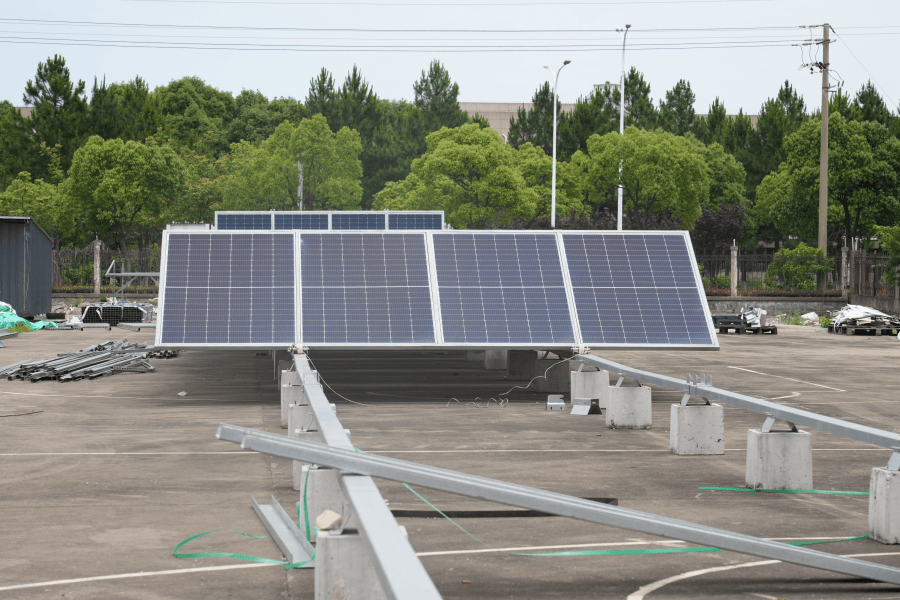
- Solar Array: PV combiner boxes must be NEMA 4X rated. We recommend a slight negative tilt on lower module frames to encourage salt runoff.
- Genset Link: The automatic transfer switch (ATS) is housed inside the all-in-one unit. We run conduit from the genset pad with drip loops and sealed entry boots. The fuel line is also routed and protected from UV and salt.
- Grid Connection: All external disconnects are specified with stainless steel or polymer housings.

Phase 4: Commissioning & System Baptism
With the physical work done, we power up the system in a controlled sequence. The integrated controller is the brain. We configure it for the site's specific priority: maximize solar self-consumption, ensure critical load backup, or participate in grid services (where market structures allow, like in California or Germany). We simulate failures: kill the grid, shade the solar array, and watch the system seamlessly transition to battery and then to diesel. We verify that the environmental controls (positive pressure, cooling) activate correctly. Only after a full 24-hour load cycle test do we sign off.
Beyond Installation: Ensuring Longevity and ROI
The installation is just day one. The real test is year five, year ten. Our service model for these environments is predictive, not reactive. The system's BMS and SCADA data are monitored remotely. We track trends in internal humidity, coolant temperature delta, and insulation resistance. A gradual rise in internal humidity might indicate a filter needs changing before it becomes a problem.
We also plan for the periodic heavy maintenance: the filter changes, the external wash-down with deionized water to remove salt crust, and the torque check on external electrical connections. Having a single, integrated unit from a single vendor like Highjoule simplifies this immensely - one service contract, one point of contact, and spare parts designed for that specific ecosystem.
Look, the business case for hybrid power in coastal facilities - from telecom hubs to resort islands to port operations - is stronger than ever. But the wrong execution can turn that promise into a money pit. The step-by-step process for an all-in-one integrated system isn't just about following a manual; it's about adopting a philosophy of maximum pre-fabrication and environmental defense to deliver what you actually bought: reliable, clean, and cost-effective power.
What's the single biggest corrosion-related failure you've encountered in the field, and how did you solve it? Let's share some war stories - the coffee's on me.
Tags: UL Standard BESS Microgrid Salt-Spray Protection Hybrid Power Systems Solar-Diesel Integration Coastal Energy
Author
James Zhang
20+ years agricultural energy storage engineer / Highjoule CTO