
Tier 1 Mobile Power Container for Data Center Backup: Beyond the Grid
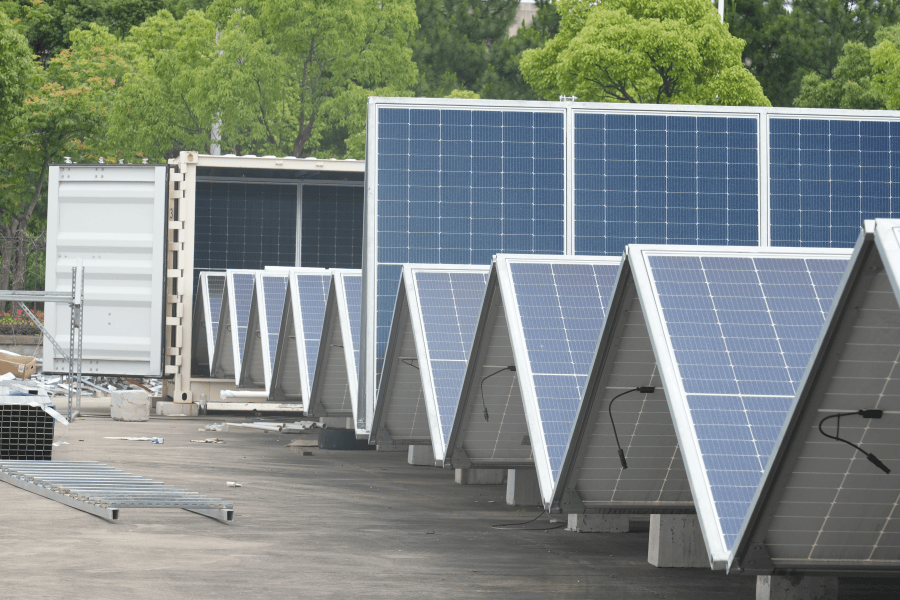
When the Grid Blinks: Rethinking Data Center Power with Mobile BESS
Honestly, if you're managing a data center in North America or Europe right now, you're probably losing sleep over two things: power resilience and power costs. And they're more connected than you might think. I've been on-site for more BESS deployments than I can count, from industrial parks in Texas to co-location facilities in Frankfurt. One pattern is clear C the old way of thinking about backup power, the diesel-genset-in-a-concrete-bunker model, is hitting its limits. It's not just about having backup; it's about having intelligent, responsive, and economically sane backup. That's where the conversation around a true Tier 1 Battery Cell Mobile Power Container gets real interesting.
Quick Navigation
- The Real Problem Isn't Just Outages
- Why "Tier 1" Specs Aren't Marketing Fluff
- A Case in Point: The California Dilemma
- Looking Beyond the Box: The System View
The Real Problem Isn't Just Outages
Sure, a catastrophic blackout is the nightmare scenario. But the daily grind on your power infrastructure comes from the subtler stuff: voltage sags, frequency fluctuations, and those increasingly common grid stability warnings. I've seen firsthand on site how these "grid hiccups" can force sensitive IT loads onto backup systems for seconds or minutes, cycling your generators and creating wear and tear that's just as costly as fuel.
The financial model is breaking down. The International Energy Agency (IEA) has highlighted the soaring demand for data services, with data centers' electricity consumption projected to double in many regions by 2026. Pair that with volatile energy prices, and your backup power strategy suddenly becomes a core operational cost center. You're paying for capacity that sits idle 99% of the time, yet you can't afford for it to fail in that critical 1%.
Why "Tier 1" Specs Aren't Marketing Fluff
This is where the technical specification of a Tier 1 battery cell mobile power container for data center backup power becomes your blueprint for resilience. Let's break down what that really means, in plain English.
First, "Tier 1 Battery Cell." In our world, this refers to cells from manufacturers with proven, bankable track records for quality, consistency, and cycle life. It's the difference between a cell that might deliver 3,000 cycles and one guaranteed for 6,000+ under defined conditions. For you, this translates directly to a lower Levelized Cost of Storage (LCOS) C the total cost of owning and operating the system over its life. You're not buying a battery; you're buying decades of predictable performance.
Then, the container itself. It's not just a metal box. A proper mobile power unit is an integrated system. The thermal management is non-negotiable. I've opened up units where the cooling was an afterthought, and let me tell you, heat is the enemy of battery life and safety. A Tier 1 spec mandates a liquid cooling or advanced forced-air system that maintains cell temperature within a tight window, whether it's -20C in Sweden or 45C in Arizona.
Safety is baked in, not bolted on. This means design from the cell up to comply with UL 9540 (the standard for Energy Storage Systems) and UL 1973 (for batteries). In Europe, it's the IEC 62619 standard. These aren't just stickers; they involve rigorous testing for fire containment, electrical safety, and system controls. At Highjoule, for instance, our container design includes passive fire suppression, gas venting channels, and cell-level fusing C things you hope to never need, but are absolutely critical when specifying.
Finally, the C-rate C a technical term for charge/discharge speed. A 1C rate means the battery can fully discharge in one hour. For data center backup, you often need high power (a high C-rate) to pick up the load instantly, but not necessarily for a very long duration. The right spec balances this power capability with energy capacity, optimizing the system for your specific load profile and generator start-up sequence.

A Case in Point: The California Dilemma
Let me give you a real example. We worked with a hyperscale client in Northern California. Their challenge was classic: wildfire season Public Safety Power Shutoffs (PSPS), high demand charges, and a mandate to reduce diesel usage. They needed backup that could also participate in grid services when not in use.
The solution was a deployment of mobile, Tier 1-spec containers. Their mobility was key C they were initially sited to support construction power, then permanently placed for backup. The high C-rate allowed them to support critical loads for the 90 seconds it took their generators to synchronize and pick up the full load, drastically reducing generator starts. During normal operations, the system's advanced inverter allows it to perform demand charge reduction, saving thousands monthly. Because it's a self-contained, UL 9540-certified unit, permitting was faster than a built-in-situ system.
The lesson? The right mobile BESS isn't a single-point solution; it's a flexible grid asset that happens to provide world-class backup.
Looking Beyond the Box: The System View
So, you're convinced on the container spec. What's next? The integration. A mobile power container must speak the language of your existing infrastructure: your switchgear, your building management system, your generator controls. This is where vendor experience matters immensely.
You need a provider who thinks beyond the delivery. At Highjoule, our job starts with understanding your specific load profiles, your utility tariff structure, and your redundancy requirements. We then configure the container's power conversion system (PCS) and energy management system (EMS) accordingly. The service includes local commissioning support and remote monitoring C because a backup system you can't trust is worse than no backup at all.
The future of data center power isn't static. It's modular, mobile, and intelligent. It's about having a Tier 1 asset that guarantees your uptime today and adapts to your financial and sustainability goals tomorrow.
What's the one power resilience challenge you're facing that your current system just can't solve?
Tags: UL Standard BESS Thermal Management Data Center Backup Mobile Power Container
Author
James Zhang
20+ years agricultural energy storage engineer / Highjoule CTO