
Benefits & Drawbacks of 20ft High Cube Lithium Battery Storage Containers for Military Bases
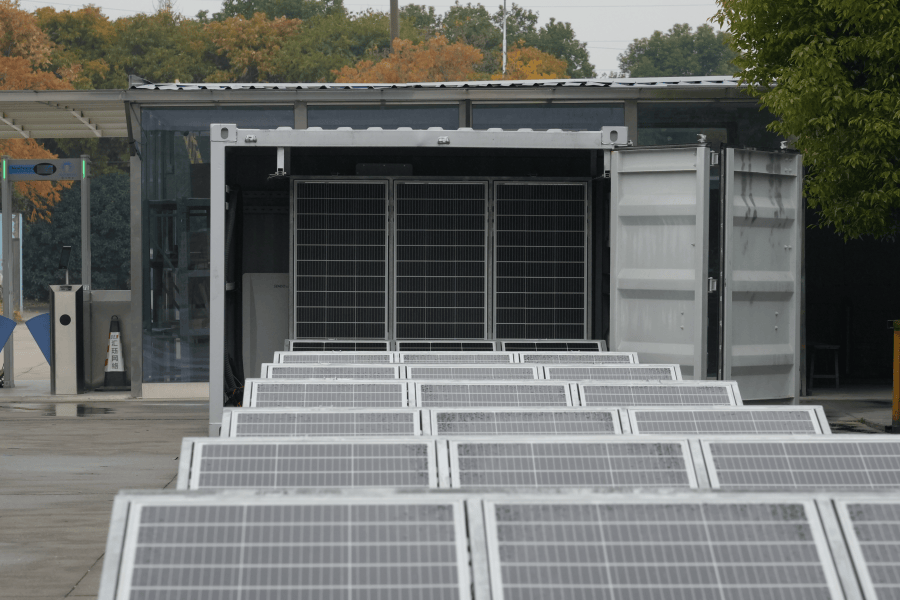
Table of Contents
- The Problem: Power Security in a Mobile, High-Stakes World
- The 20ft High Cube Solution: A Closer Look
- Major Benefits: Why This Format is a Game-Changer
- Key Considerations and Practical Drawbacks
- Real-World Lessons and Getting It Right
The Problem: Power Security in a Mobile, High-Stakes World
Let's be honest. For decades, military bases, especially forward operating locations or temporary installations, have relied on diesel generators. I've been on sites where the constant drone of gensets is just background noise. But the challenges are real: fuel supply lines are vulnerable, the cost is volatile, and the emissions... well, let's just say stealth isn't just about radar signatures anymore. The U.S. Department of Defense itself has highlighted energy resilience as a critical strategic priority, aiming to reduce that logistical tail and enhance independence.
The push for renewables and storage is strong. But here's the aggravation I see firsthand: how do you deploy utility-scale energy storage that's robust enough for mission-critical ops, yet mobile and fast to deploy? It can't be a permanent, poured-concrete building. It needs to be secure, self-contained, and able to withstand diverse climates - from desert heat to Arctic chill. That's where the conversation around containerized battery energy storage systems (BESS), specifically the 20ft high cube format, gets really interesting.
The 20ft High Cube Solution: A Closer Look
So, what are we talking about? A 20ft high cube shipping container is a standard intermodal unit, but about a foot taller than a standard 20ft box. This extra vertical space is crucial. It allows engineers like us at Highjoule to pack in more battery racks, power conversion systems (PCS), and critically, a more sophisticated thermal management and safety system without feeling cramped. It's a self-contained power plant on a skid, ready to be dropped, connected, and energized.

Major Benefits: Why This Format is a Game-Changer
From my two decades in the field, here's where the 20ft high cube lithium BESS truly shines for defense applications:
- Rapid Deployment & Mobility: This is the biggest sell. It leverages global shipping infrastructure. You can move it by truck, rail, ship, or even heavy-lift aircraft. I've seen projects where a base's energy capacity was doubled in under 72 hours from container arrival to grid synchronization. That speed is a strategic advantage.
- High Energy Density in a Fortified Package: The high cube design lets us achieve a remarkable energy density. We're talking about systems that can store 2-5 MWh in a single containerized unit, all within a steel structure that's inherently more secure and weather-resistant than a typical warehouse setup.
- Standardization & Scalability: Need more power? It's a Lego-block approach. You start with one container for a critical communications hub. Later, you add two more to form a microgrid for an entire forward base. The interconnection is designed to be plug-and-play (with proper engineering, of course), which simplifies logistics and training.
- Enhanced Safety & Environmental Control: The enclosed space allows for a dedicated, sealed environment. We can integrate continuous gas monitoring, dedicated fire suppression systems (like FM-200 or aerosol), and most importantly, a precision thermal management system. Keeping lithium-ion batteries within their ideal temperature window is 80% of the longevity and safety battle. Honestly, in a standalone building, managing uniform airflows is a much bigger challenge.
Beyond the Spec Sheet: The LCOE Advantage
Commanders think in terms of mission assurance, but budget officers think in Levelized Cost of Energy (LCOE). This is where a well-designed container pays off. By reducing installation civil works, speeding up commissioning, and extending system life through superior thermal management, the total cost of ownership over 15-20 years drops significantly compared to a bespoke building. You're not just buying batteries; you're buying predictable, lower-cost energy for the long haul.
Key Considerations and Practical Drawbacks
Now, let's have that coffee-chat honesty. It's not a perfect, one-size-fits-all solution. Here are the drawbacks and challenges you need to plan for:
- Thermal Management is THE Critical Subsystem: The high energy density is a double-edged sword. Packing all that power into a metal box creates a significant thermal load. If the HVAC and liquid cooling systems aren't massively over-engineered for the worst-case scenario (think 45C/113F ambient), you'll throttle power output or risk premature degradation. I've seen sites where this was the #1 cause of performance issues.
- Access & Serviceability Can Be Tight: Even with the extra foot of height, it's a confined space. Maintenance access, especially for middle racks, requires smart layout design. At Highjoule, we insist on full front-access racks and removable panels because crawling around isn't a viable long-term service strategy.
- Site Preparation & Foundation: While easier than a building, it's not "drop on dirt." You need a level, reinforced concrete pad for grounding and stability. The weight distribution is intense - a fully loaded container can exceed 30 tons. Proper site planning is non-negotiable.
- Regulatory Hurdles & Standards: This is huge for the U.S. and European markets. Your container system isn't just a battery. It's an electrical enclosure. Every component inside needs to comply with a stack of standards: UL 9540 for the energy storage system, UL 1973 for the batteries, IEC 62619 for stationary applications, and IEEE 1547 for grid interconnection. The entire assembly's certification is complex and costly, but skipping it is not an option for a military client.
- Long-Term Durability in Harsh Conditions: A shipping container is tough, but constant relocation over rough terrain can stress welds, door seals, and internal components. Vibration damping and seismic rating for fixed installations become critical specs, not just nice-to-haves.
Real-World Lessons and Getting It Right
Let me share a slice of experience. We worked on a project for a National Guard facility in California, a site plagued by public safety power shutoffs (PSPS). They needed backup for their emergency operations center, fast. A 20ft high cube BESS was the perfect fit. The challenge? The inland heat. We didn't just spec a standard off-the-shelf HVAC unit. We integrated a dual-mode cooling system: efficient air conditioning for moderate days and an evaporative cooling assist for peak dry heat, all controlled by an algorithm that prioritizes battery lifespan over minimal energy use. The container was pre-fabricated, tested to UL 9540 at our facility, delivered, and was supporting critical loads within 48 hours of arrival.

The key insight here is that the container is just the shell. The real value - and where potential drawbacks are mitigated - lies in the engineering inside. At Highjoule, our focus for military clients is on that internal ecosystem: N+1 redundant cooling, passive fire protection that exceeds code, and using battery cells with a lower inherent C-rate that generate less heat, even if it means a slight cost premium. It's about designing for the 20-year lifecycle, not just the spec sheet.
Your Next Step
So, is a 20ft high cube lithium battery container the right choice for your base's energy resilience project? If your priorities are speed, mobility, scalability, and having a certified, self-contained unit, the answer is leaning strongly yes. The drawbacks aren't deal-breakers; they're simply the checklist for your procurement and site planning teams. The critical question becomes: has your vendor truly engineered a solution for the harsh, long-term reality of your deployment, or are they just selling you a box of batteries?
What's the single biggest operational energy vulnerability you're looking to solve with storage - is it fuel logistics, grid instability, or enabling silent watch capabilities? The answer will dictate how you prioritize the benefits and navigate the challenges we just walked through.
Tags: UL Standard BESS LCOE Microgrid 20ft Container Military Energy Security Lithium Battery Storage
Author
James Zhang
20+ years agricultural energy storage engineer / Highjoule CTO