
Air-Cooled BESS for Farm Irrigation: Pros, Cons & Real-World Insights
Air-Cooled BESS for Farm Irrigation: The Good, The Practical, and What You Really Need to Know
Honestly, if you're managing a farm or an agribusiness and looking at energy storage, you've probably heard a dozen different pitches. Everyone promises reliability and savings. But out in the field, where dust flies, temperatures swing, and every dollar counts, the reality of choosing a system hits different. I've been on-site from California's Central Valley to wheat farms in Germany, and the conversation almost always starts the same way: "We need power for irrigation, but the quotes and options are all over the place. What actually works for us?"
Let's cut through the noise. Today, we're talking about one of the most common and debated choices: the air-cooled lithium battery storage container. Is it the right fit for powering your pivots, pumps, and processing? Let's break it down, not with marketing fluff, but with some hard-won, on-the-ground perspective.
Jump to Section
- The Real Problem: Unreliable Grids & Rising Costs on the Farm
- Why It Hurts: More Than Just an Inconvenience
- Enter the Air-Cooled BESS Container
- The Benefits: Simplicity, Cost, and Deployment Speed
- The Drawbacks: Climate Limits and Long-Term Considerations
- A Real-World Case: Making Sense of the Trade-Offs
- Making the Right Choice for Your Land
The Real Problem: Unreliable Grids & Rising Costs on the Farm
The dream is energy independence: using solar to pump water and store the excess for a cloudy day or peak evening rates. The reality? Many rural grids are aging. A study by the National Renewable Energy Laboratory (NREL) highlights the increasing strain on distribution networks in agricultural regions. This means more frequent brownouts or voltage dips right when you need a consistent power flow for your irrigation system. A pump stuttering because of a voltage drop can mean uneven water distribution and stressed crops. It's not just about backup; it's about quality of power.
Why It Hurts: More Than Just an Inconvenience
Let's agitate that pain point a bit. I've seen a farm in Texas where a single afternoon outage during a critical irrigation window led to a 15% yield reduction on 50 acres of high-value crops. The financial hit was immediate. It's not just lost production. It's also about operational costs. Time-of-use rates are getting sharper. In places like California or parts of Europe, the cost to pump water during peak hours can be 2-3 times higher than off-peak. Without storage, you're at the mercy of the utility's pricing clock. The financial case for storage isn't just a nice-to-have; for many, it's becoming a break-even necessity.
Enter the Air-Cooled BESS Container
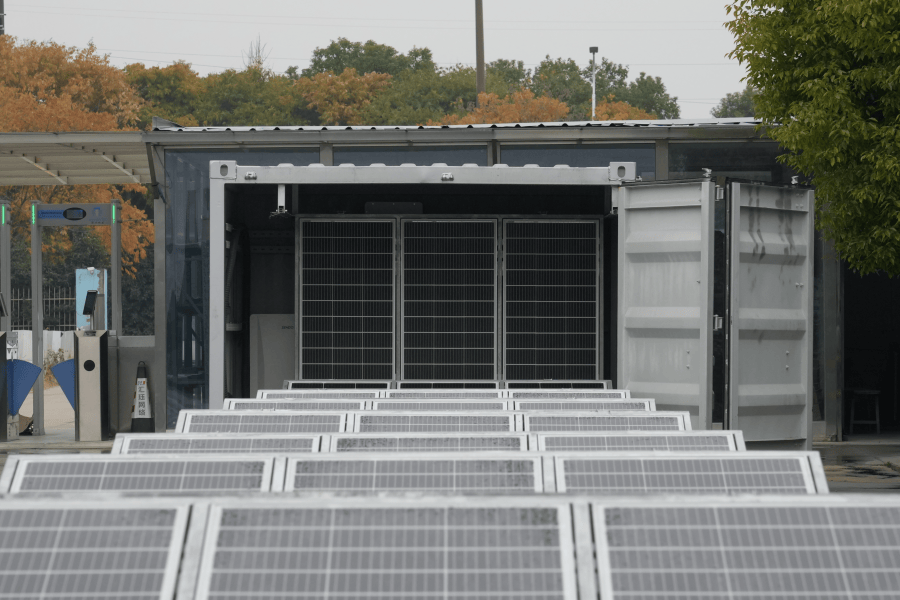
So, what's a practical solution? This is where the standard air-cooled lithium battery container enters the chat. Think of it as the workhorse of the BESS world. It's essentially a shipping container packed with battery racks, where temperature is managed by internal fans and air conditioning units, using the ambient air as the cooling medium. It's a straightforward, packaged solution. For many agricultural applications, this approach hits a sweet spot of cost and complexity, but - and this is a big but - it's not a one-size-fits-all magic bullet.

The Benefits: Simplicity, Cost, and Deployment Speed
Let's talk about the upsides, because they are significant.
- Lower Upfront Capital Cost (CapEx): Honestly, this is the biggest driver. Air-cooled systems have a simpler thermal management design. You're not dealing with complex liquid piping, chillers, and heat exchangers. This translates directly into a lower price tag per kWh of storage. For a farm working within a tight budget, this can make the project feasible where a more expensive system might not.
- Easier & Faster Deployment: These are true plug-and-play containers. We deliver it, place it on a simple concrete pad, connect AC power and communication cables, and you're largely good to go. The civil works are minimal. I've seen sites where we had a container from Highjoule operational in under two weeks from arrival. For a farmer who needs a solution before the next irrigation season, speed matters.
- Reduced Maintenance Complexity: Simplicity extends to O&M (Operations & Maintenance). There are no coolant leaks to worry about, no glycol levels to check. Routine maintenance involves filter changes and checking the HVAC units. It's something most local technicians can handle, which is crucial in remote agricultural areas.
- Proven & Standardized Technology: This is a mature design. The safety standards, like UL 9540 and IEC 62619, are well-established for these containerized systems. At Highjoule, our containers are built with these standards as a baseline, not an aspiration. You're getting a known quantity, which reduces engineering and permitting risk.
The Drawbacks: Climate Limits and Long-Term Considerations
Now, the other side of the coin. Being honest about limitations is what builds trust.
- Climate Sensitivity & Efficiency: This is the #1 drawback. Air-cooling relies on ambient air. In the scorching heat of an Arizona summer or the sustained high temps in Southern Europe, those internal AC units have to work extremely hard to keep the battery at its ideal 20-25C (68-77F) operating temperature. They can consume a significant portion of the system's own energy - we call this parasitic load - which reduces your round-trip efficiency. In very cold climates, heating is required, which also draws power.
- Potential for Uneven Cell Aging: Related to the above. If the cooling isn't perfectly uniform (and in a large container, it's a challenge to make it so), you can get hot spots. Some battery cells might degrade a bit faster than others. Over a 10-15 year project life, this can slightly reduce the overall capacity you can extract. Good design mitigates this with smart airflow and sensor placement, but it's a fundamental engineering challenge of the air-cooled approach.
- Noise: Those large fans and condenser units make noise. In an isolated field, it's usually not an issue. But if the container is near a farmhouse or a property line, it's a factor to consider. Liquid-cooled systems are typically much quieter.
- Footprint & Siting: You need clear space around the container for air intake and exhaust. You can't pack it tightly against a barn or other equipment. And while deployment is fast, you still need a reasonably level, well-drained site.
A Real-World Case: Making Sense of the Trade-Offs
Let me give you an example from our files. We deployed a 500 kWh Highjoule air-cooled container for a mixed fruit orchard in Northern Italy. Their challenge was peak shaving - avoiding brutal demand charges from the grid during irrigation months and using their existing solar PV.
The Scene: Moderate climate, with hot but rarely extreme summer temps (max 35C / 95F).
The Trade-Off Analysis: A liquid-cooled system offered maybe 2-3% better long-term efficiency. But the CapEx was about 18% higher. For the farmer, the financial model was clear: the savings from the lower upfront cost of the air-cooled system far outweighed the marginal efficiency gain of liquid cooling in his climate. The payback period was 1.5 years shorter.
The Outcome: The system has been running for three seasons now. It automatically discharges during their afternoon peak irrigation window, cutting their grid draw by 90% during those hours. Their annual energy bill is down by over 30%. The internal fans ramp up on the hottest days, but the energy draw is within our projected range, and the overall economics are solid.
This case shows the importance of context. In a hotter region like Saudi Arabia or the US Southwest, the math might have flipped towards liquid cooling due to extreme ambient temps.
Making the Right Choice for Your Land
So, how do you decide? It comes down to a few key questions about your specific situation:
| Consideration | Favors Air-Cooled | Favors Liquid-Cooled (Alternative) |
|---|---|---|
| Climate | Mild to moderate temperatures | Extremely hot or cold climates |
| Budget (CapEx) | Tighter upfront budget, prioritizing initial cost | Focus on lifetime efficiency & total ROI |
| Site Conditions | Ample space, remote location | Space-constrained, noise-sensitive, or harsh/dusty environments |
| Usage Profile | Daily cycling for peak shaving, moderate C-rates | Very high power, fast discharges (high C-rate) or constant heavy cycling |
A quick expert insight on C-rate: Think of C-rate as how "hard" you're pushing the battery. A 1C rate means discharging the full capacity in one hour. Irrigation pumps often need high power for short bursts, which might be a 1C or 2C discharge. Air-cooled systems can handle this, but if you're constantly at a very high C-rate, the heat generation goes up, and that's where liquid cooling's superior heat dissipation really shines for long-term cell health.
The goal isn't to sell you on one technology. At Highjoule, we do both. The goal is to match the right tool to the job. For many agricultural irrigation applications in temperate zones, the air-cooled container is a robust, cost-effective, and reliable workhorse. Its benefits in simplicity and cost are real. Its drawbacks around climate sensitivity are manageable with good design and proper siting.
What's the average temperature swing during your irrigation season, and what's the single biggest pain point you're hoping storage will solve? Getting those two things clear is the best place to start the conversation.
Tags: UL Standard BESS LCOE Europe US Market Agricultural Irrigation Renewable Energy Air-Cooled Battery Storage
Author
James Zhang
20+ years agricultural energy storage engineer / Highjoule CTO