
Benefits and Drawbacks of All-in-one Integrated Hybrid Solar-Diesel Systems for Military Bases
Contents
- The Silent Logistics Battle: Fuel, Security, and Cost
- The All-in-One Hybrid Proposition: A Closer Look
- The Benefits, On the Ground
- The Real Drawbacks I've Seen
- Making the Right Call: Is an All-in-One System for You?
The Silent Logistics Battle: Fuel, Security, and Cost
Let's be honest, when we talk about military base energy, the conversation often starts and ends with the diesel generator. It's the trusted, roaring workhorse. But after 20+ years on sites from the deserts to the Arctic, I've seen the real cost of that dependency firsthand. It's not just about the price per gallon. It's about the convoys, the personnel risked to protect those convoys, and the staggering operational expense. The National Renewable Energy Lab (NREL) has highlighted that fuel logistics can account for a huge portion of forward operating base costs and vulnerabilities. Every mile of that fuel line is a potential point of failure.
The problem gets amplified when you think about modern base needs. We're not just powering lights anymore. We're talking about data centers, communications arrays, surveillance systems C loads that demand pristine power quality and 24/7 uptime. A gen-set hiccup during a critical operation isn't an option. Commanders are now grappling with a triple threat: achieving energy resilience, cutting the astronomical long-term LCOE (Levelized Cost of Energy) C which, for remote diesel power, can be through the roof C and doing it all within tightening security and carbon reduction mandates.
The All-in-One Hybrid Proposition: A Closer Look
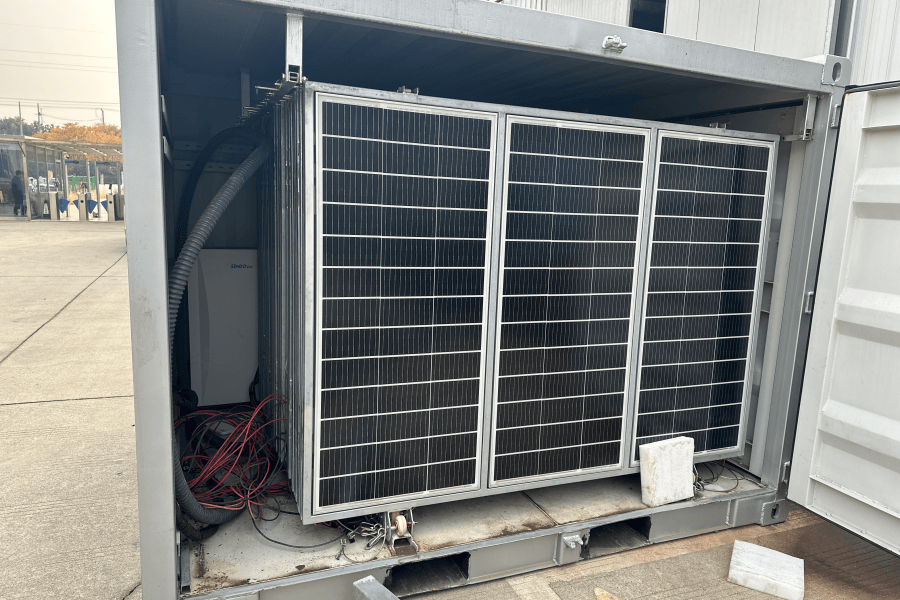
This is where the "all-in-one integrated hybrid solar-diesel system" enters the chat. In essence, it's a pre-engineered microgrid in a box. Picture a standardized container or set of containers housing solar inverters, a battery energy storage system (BESS) with advanced thermal management, a control brain (the power conversion system), and the intelligence to seamlessly integrate with C and optimize C your existing diesel generators.
The core idea is elegant: use solar as the primary energy source when the sun shines, store excess in the BESS, and use those batteries to shave peak loads and provide instantaneous backup. The diesel genset becomes the last line of defense, cycling on less frequently and running at its optimal, fuel-efficient load when it does. It's a shift from a generator-centric to a renewables-centric system, with storage as the critical buffer.

The Benefits, On the Ground
So, what are the real wins? From my project experience, they're tangible:
- Fuel & Logistics Reduction: This is the big one. I've seen sites cut fuel consumption by 40-70%. That means fewer resupply missions, reduced risk to personnel, and direct, massive cost savings. The math here is compelling for any budget officer.
- Enhanced Resilience and Stealth: A BESS provides silent, instantaneous power. During a grid disturbance or a security event where you want to minimize acoustic and thermal signatures, the system can island and run on solar + storage. The generators stay off. This "quiet power" capability is a game-changer.
- Improved Generator Life and Maintenance: Constantly cycling generators on and off for small load changes wears them out. By letting the battery handle load-following and peak shaving, you let the genset run for longer, stable periods. This reduces maintenance cycles and extends its lifespan significantly. Honestly, the maintenance crews love this part.
- Faster Deployment & Standardization: The "all-in-one" aspect is key for rapid deployment. Instead of sourcing and integrating 10 different components from different vendors on-site, you get a pre-tested, UL and IEC compliant system. For a recent deployment we supported in a European NATO country, the plug-and-play nature cut commissioning time by nearly 60%. That's strategic speed.
The Real Drawbacks I've Seen
It's not a magic bullet. Any engineer worth their salt will tell you that. Here are the challenges you must plan for:
- High Upfront Capital Cost: This is the most common hurdle. You're investing capital today to save on operational fuel costs tomorrow. The business case is strong over a 10-15 year period, but it requires capex approval. Financing models and focusing on Total Cost of Ownership (TCO) are crucial here.
- Site-Specific Limitations: "All-in-one" doesn't mean "one-size-fits-all." Solar potential is geography-dependent. You need space for the PV array and the containerized system. If you're in a heavily forested or perpetually cloudy location, the solar yield C and thus the ROI C drops. A detailed site assessment is non-negotiable.
- Technical Complexity & Maintenance: You're adding a sophisticated BESS and power electronics to your team's responsibilities. While these systems are designed for remote monitoring (a core part of our service at Highjoule), you still need personnel trained on basic diagnostics and safety protocols. The thermal management system for the lithium-ion batteries, for instance, is critical for safety and longevity and must be understood.
- Battery Life and End-of-Life: Batteries degrade. Their performance is tied to factors like C-rate (how fast you charge/discharge them) and depth of discharge. Planning for eventual replacement or repurposing after 10-15 years is part of a responsible lifecycle strategy.

Making the Right Call: Is an All-in-One System for You?
The decision isn't just technical; it's operational and financial. Based on what I've seen work, here's my take: These integrated hybrids shine brightest for forward operating bases, training facilities, and remote installations with high fuel costs, strong solar resources, and a critical need for silent, resilient power. They're less compelling for short-term, highly mobile deployments or sites with minimal sun and ample, secure grid power.
The key is to view it as a system, not a product. Success hinges on the intelligence of the controller managing the energy flow between solar, battery, and generator. It's about having a partner who understands not just the UL 9540 safety standard for the BESS, but also the military's unique operational rhythms and security requirements. At Highjoule, we've learned that the real value isn't just in supplying a compliant container, but in the ongoing support and optimization that ensures it delivers on its promise for years.
So, what's the energy pain point keeping your logistics commander up at night? Is it the fuel bill, the vulnerability of resupply, or the need for undisrupted power for a new critical load? The answer to that question is your starting point.
Tags: Renewable Energy Integration BESS Microgrid Hybrid Power Systems Military Energy Security
Author
James Zhang
20+ years agricultural energy storage engineer / Highjoule CTO