
Grid-forming Off-grid Solar Generators for Telecom: Benefits, Drawbacks, and Real-World Insights
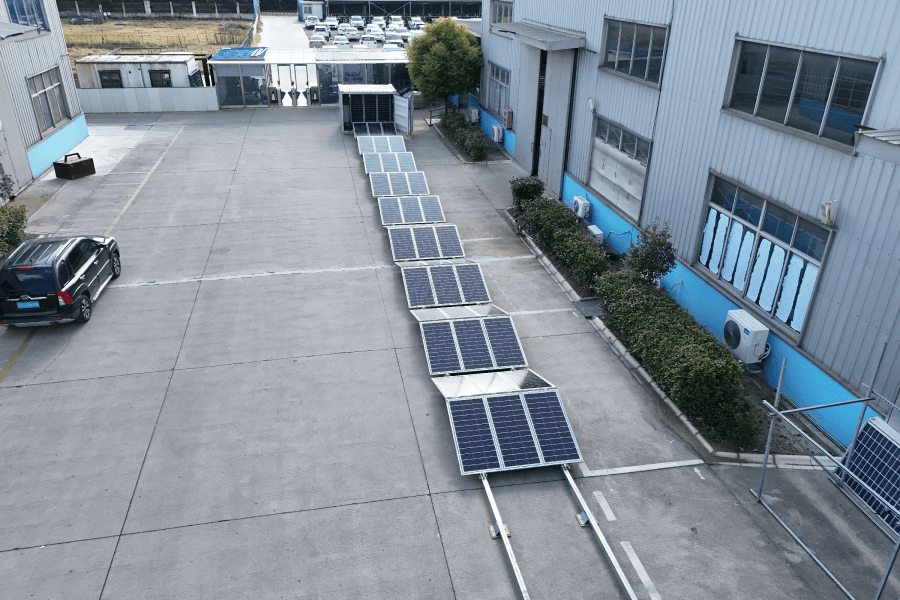
Table of Contents
- The Silent Threat to Your Telecom Network
- Why the Old Diesel Playbook is Failing Us
- Enter the Grid-Forming Off-Grid Solar Generator
- The Real Benefits: Beyond the Brochure
- The Honest Drawbacks (And How We Mitigate Them)
- A Quick Case from the Black Forest
The Silent Threat to Your Telecom Network
Let's be honest. When we talk about telecom base station power, the conversation usually starts and ends with "uptime." But there's a deeper, more expensive problem lurking beneath that simple metric. I've been on site after a grid failure, watching a diesel genset sputter in the rain, or troubleshooting a battery system that couldn't handle the sudden load of a cooling system kicking in. The real pain point isn't just losing power; it's the quality and stability of the power you use to back it up. In remote or extreme weather locations across the US and Europe, the grid isn't just unreliable - it's sometimes non-existent. And legacy backup systems are creating more operational headaches than they solve.
Why the Old Diesel Playbook is Failing Us
We've all relied on diesel gensets. But honestly, they've become a liability. Fuel logistics are a nightmare and incredibly costly in remote areas. Emissions regulations, like those in California or the EU, are tightening every year. The noise alone can cause community relations issues. And the worst part? They often have a slow response time. A base station's sensitive electronics need a clean, stable frequency from the millisecond the grid fails. A chugging diesel engine doesn't provide that.
Then came traditional battery energy storage systems (BESS) paired with solar. A step in the right direction, for sure. But here's the catch I've seen firsthand: most are grid-following. They need an existing grid signal to sync to. In a true off-grid scenario, they're like a musician without a conductor - they can't establish the voltage and frequency themselves. This fundamental limitation forces operators into complex, multi-device hybrid setups that are expensive and tricky to manage.
Enter the Grid-Forming Off-Grid Solar Generator
This is where the technology gets exciting. Think of a grid-forming off-grid solar generator not just as a backup, but as a independent power plant for your base station. It's an integrated system, typically combining solar PV, a battery bank with advanced power conversion (the grid-forming inverter), and smart controls. Its core superpower? It can start from a black state - zero voltage, zero frequency - and create a pristine, stable "microgrid" for the site all by itself. No diesel, no external grid signal needed.

The Real Benefits: Beyond the Brochure
So, what does this mean on the ground? Let's break down the real benefits.
- True Energy Independence: This is the big one. You decouple from fuel supply chains and volatile diesel prices. According to the International Energy Agency (IEA), solar PV is now the cheapest source of electricity in history for most of the world. Harnessing that off-grid directly slashes your Levelized Cost of Energy (LCOE) - that's the total lifetime cost per kWh, which is what your finance team really cares about.
- Rock-Solid Power Quality: Grid-forming inverters provide inherent stability. They act like a spinning generator, providing inertia to buffer against load swings (like multiple users connecting at once). This protects your sensitive telecom hardware from damage due to power fluctuations.
- Simplified, Resilient Design: You're integrating multiple functions - solar MPPT, storage, and grid-forming - into one optimized system. Fewer components, fewer points of failure. The maintenance I've seen needed on these is vastly simpler than managing a diesel-solar-battery trio from different vendors.
- Regulatory & ESG Alignment: Deploying a zero-emission, silent power source makes permitting easier in environmentally sensitive areas and directly boosts your site's ESG credentials, a huge factor for corporate telcos in Europe and North America.
The Honest Drawbacks (And How We Mitigate Them)
No technology is a silver bullet. Being upfront about challenges is what builds trust. Here's what you need to plan for.
- Higher Upfront Capital Cost: Yes, the initial investment for a high-quality, grid-forming BESS with solar can be higher than a diesel genset. The key is the total cost of ownership (TCO). You're trading fuel, maintenance, and carbon costs for a higher upfront capex with minimal, predictable OpEx. At Highjoule, our engineering focus is on optimizing the battery's C-rate and cycle life to maximize ROI - getting every possible cycle out of the asset.
- Energy Density & Site Limitations: Batteries and solar panels need space. For a hyper-remote site with heavy cloud cover or limited space, sizing the system for worst-case weather (like a week of low sun in winter) can be challenging. This is where thermal management is critical. A poorly managed battery loses capacity and lifespan fast. Our containerized solutions, built to UL 9540 and IEC 62485 standards, have climate control as a non-negotiable core feature, not an add-on.
- Technical Expertise for Sizing & Maintenance: This isn't a "plug and play" consumer device. Undersizing the battery bank is a common, costly mistake. You need partners who don't just sell boxes, but who model your specific load profile, solar irradiance (using data from sources like NREL), and autonomy needs. The "smart" in the system is only as good as its initial configuration.
A Quick Case from the Black Forest
Let me share a recent project. A telco needed to upgrade a critical base station in Germany's Black Forest, where grid upgrades were prohibitively expensive and winter storms caused frequent outages. The challenge was providing 99.99% uptime in a forested area with reduced winter sunlight.
We deployed a containerized grid-forming BESS with an integrated, elevated solar canopy. The system was pre-configured and tested to VDE-AR-E 2510-50 (the key German standard for stationary storage) before shipping. The grid-forming capability meant it could seamlessly take over during outages, and its advanced battery management system prioritized cycles to extend lifespan. The result? Zero diesel use, a 40% reduction in annual energy costs versus the old grid-diesel combo, and the site now acts as a resilient node for the regional network. The client was particularly happy they didn't need to build a separate, noisy generator shed.
Your Next Steps: Asking the Right Questions
If you're evaluating this technology, don't start with product specs. Start with these questions for your team and potential suppliers:
- "Can you show me the LCOE/TCO model for my specific site location and load?"
- "Is the core power conversion system certified to UL 1741-SA (for US) or equivalent grid-forming standards in the EU?"
- "How do you guarantee battery lifespan and manage thermal runaway risks in your design?"
- "What does your local commissioning and 10-year service support look like?"
The shift to grid-forming off-grid power isn't just a technical upgrade; it's a strategic move towards resilience and cost predictability. It's about building sites that are assets, not liabilities. What's the one site in your portfolio that keeps you up at night, and what would true energy independence for it be worth?
Tags: UL Standard LCOE Europe US Market Grid-forming BESS Renewable Energy Off-grid Solar Generator Telecom Base Station
Author
James Zhang
20+ years agricultural energy storage engineer / Highjoule CTO