
IP54 Outdoor BESS for Mining: Benefits, Drawbacks & Real-World Insights
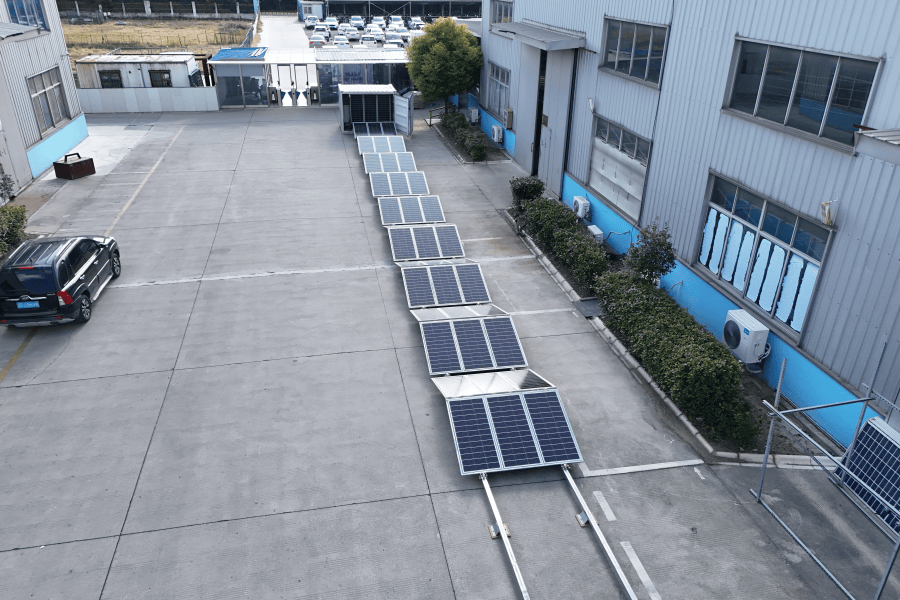
Table of Contents
- The Real Problem: It's Not Just About the Batteries
- Why This Hurts Your Bottom Line and Operational Safety
- Enter the IP54 Outdoor BESS: A Pragmatic Solution
- The Tangible Benefits of an IP54 Outdoor BESS for Mining
- The Honest Drawbacks (And How to Mitigate Them)
- Case in Point: Learning from a Harsh Environment Deployment
- Expert Insight: What We Look For On-Site
- Making the Right Call for Your Operation
The Real Problem: It's Not Just About the Batteries
Let's be honest. When most mining operations, whether in Mauritania, Chile, or Nevada, first consider energy storage, they focus on the battery chemistry C lithium-ion, LFP, and so on. That's important, sure. But from my 20+ years on site, I've seen the real failure point often isn't the cell itself. It's the environment. Dust that clogs cooling fans, sudden desert downpours that find every weak seal, salt-laden coastal air that corrodes connections in months, not years. You're not deploying in a lab; you're deploying in one of the most aggressive environments on the planet. The problem isn't just storing energy; it's storing energy in a way that the system survives to do its job day after punishing day.
Why This Hurts Your Bottom Line and Operational Safety
This environmental challenge isn't a minor nuisance. It amplifies three core pain points for any remote industrial operation:
- Skyrocketing O&M Costs: A standard indoor or poorly protected system in a dusty mine site means weekly filter changes, constant cleaning, and premature component failure. I've seen sites where maintenance crews become de facto full-time BESS cleaners, which completely defeats the purpose of an automated asset.
- Safety and Reliability Risks: Dust ingress on electrical busbars or moisture on DC connections are fire risks. Thermal management systems fighting against clogged filters lead to overheating, reduced lifespan, and potential thermal runaway scenarios. The NFPA 855 and UL 9540 standards are there for a reason, and an unprotected system is a compliance nightmare waiting to happen.
- Unpredictable Performance: When your battery is constantly stressed by environmental factors, its actual discharge capacity (C-rate) and cycle life become unpredictable. Your energy model falls apart. You can't rely on it for critical load shifting or backup power during a grid outage, putting entire operations at risk.
Enter the IP54 Outdoor BESS: A Pragmatic Solution
This is where a purpose-built, outdoor-rated Battery Energy Storage System comes in, specifically one with an IP54 ingress protection rating. Think of it not as a "nice-to-have" but as the essential first layer of defense. IP54 means the enclosure is protected against limited dust ingress (5) and water spray from any direction (4). It's the baseline for industrial outdoor equipment. For many mining contexts, it's the sweet spot between cost and robust protection. It's the difference between a system that is a liability and one that is a resilient, set-and-forget asset.
The Tangible Benefits of an IP54 Outdoor BESS for Mining
So, what do you actually gain by specifying an IP54-rated outdoor unit for a place like the Mauritanian desert or a Canadian mining camp?
- Radically Simplified Deployment: No need to build a dedicated shelter or modify existing infrastructure. You pour a slab, deliver the containerized or skid-mounted unit, connect it, and commission. It's a capex saving that's immediately visible. At Highjoule, our standard UL 9540-certified outdoor units are designed for this exact "plug-and-play" site readiness.
- Inherently Lower O&M Burden: The sealed design keeps the worst of the dust and moisture out from the start. Your maintenance shifts from constant cleaning to scheduled, predictive checks. This directly lowers your Levelized Cost of Storage (LCOS) over the 15+ year lifespan.
- Superior Thermal Management Design: Outdoor BESS units are engineered for this. They use closed-loop liquid cooling or advanced forced-air systems with external, serviceable filters. The heat exchange happens in a controlled environment inside the unit, not with the dusty, hot ambient air directly on the cells. This maintains optimal C-rate performance and longevity.
- Scalability and Mobility: Need to move it as the mine face advances? An outdoor BESS on a skid is a mobile asset. Need to add capacity? Drop another unit next to it. The modularity is a strategic advantage for evolving mining operations.
The Honest Drawbacks (And How to Mitigate Them)
No solution is perfect. A good engineer tells you the downsides upfront so we can engineer around them.
- Higher Upfront Unit Cost: Yes, an IP54-rated, NEMA 3R-equivalent enclosure with proper thermal management costs more to build than an indoor rack. This is the most cited drawback. The Mitigation: You must do a total lifecycle cost analysis. Factor in the eliminated shelter cost, the drastically lower O&M, and the avoided downtime. In 9 out of 10 remote site analyses we've done at Highjoule, the outdoor BESS wins on Net Present Value.
- Environmental Limits are Still Limits: IP54 is not submersible. A direct, high-pressure washdown or a severe flood will compromise it. It's dust-protected, not dust-proof. In a severe, continuous dust storm (like a Haboob), systems can still be challenged. The Mitigation: Proper site selection is key. Elevate the pad, ensure drainage, and for extreme environments, consider a higher spec like IP56. It's about matching the spec to the actual site survey data, not just a map.
- Acoustic and Aesthetic Considerations: The cooling fans and HVAC units make noise. An industrial container isn't pretty. This matters less for a remote mine but can be an issue for operations near communities. The Mitigation: Modern systems use low-speed fans and sound-dampening enclosures. Strategic placement and simple acoustic barriers often solve this.
Case in Point: Learning from a Harsh Environment Deployment
Let me share a scenario that mirrors the challenges of a Mauritanian mine. We deployed a 2.5 MWh Highjoule outdoor BESS for a critical minerals processing plant in the arid southwest United States. The challenge wasn't rain; it was fine, abrasive silica dust and temperature swings from 0C to 45C.
The client initially wanted a lower-cost indoor system for their warehouse. We pushed back, showing the dust infiltration risk to their expensive processing equipment. We went with an outdoor IP54 system with a specialized two-stage particulate filter on the cooling loop.
Two years on, the data speaks: the BESS has maintained 98%+ availability. The filters are changed on a predictable 6-month schedule, a 15-minute job. The indoor plant remains clean. The alternative - constant dusting of an indoor battery bank and risking plant contamination - was avoided. The upfront premium was recovered in under 18 months in avoided facility modifications and cleaner operations. This is the kind of practical, site-specific thinking that defines a successful deployment.

Expert Insight: What We Look For On-Site
When I audit a site or review a spec, the IP rating is just the start. Here's what really matters:
- Thermal Management is King: Ask: "Is the cooling system designed for my ambient dust/heat/humidity?" A system that just meets UL and IEC standards in a lab might struggle in the field. Look for redundancy (dual cooling loops) and easily serviceable external components.
- LCOS Over LCOE: Everyone talks about Levelized Cost of Energy. For mining, the Levelized Cost of Storage is more critical. It includes capex, O&M, degradation, and replacement costs due to environmental failure. An outdoor BESS with a slightly higher LCOE often has a vastly lower LCOS in harsh environments.
- The "Serviceability" Test: Can your local crew easily replace a filter, a fan, or a module? Or does it require a factory-certified specialist? For remote mines, this is operational resilience. Our designs prioritize front-access, tool-common service points for this exact reason.
Making the Right Call for Your Operation
The decision for or against an IP54 outdoor BESS isn't purely technical; it's financial and operational. For mining operations in environments like Mauritania, the benefits of ruggedized, standalone deployment typically far outweigh the drawbacks, provided you partner with a provider that understands the on-the-ground reality, not just the datasheet.
The key is to move beyond the simple spec sheet. Demand a site-specific analysis. Ask for lifecycle cost models that include your unique environmental and labor challenges. Any provider worth their salt should be able to have that conversation over a (virtual) coffee, using real examples, not just marketing promises.
What's the single biggest environmental threat to your site's infrastructure right now, and how is your current power setup holding up against it?
Tags: UL Standard BESS Renewable Energy Outdoor Energy Storage Mining Operations IP54
Author
James Zhang
20+ years agricultural energy storage engineer / Highjoule CTO