
Benefits and Drawbacks of Rapid Deployment Lithium Battery Storage for Military Bases
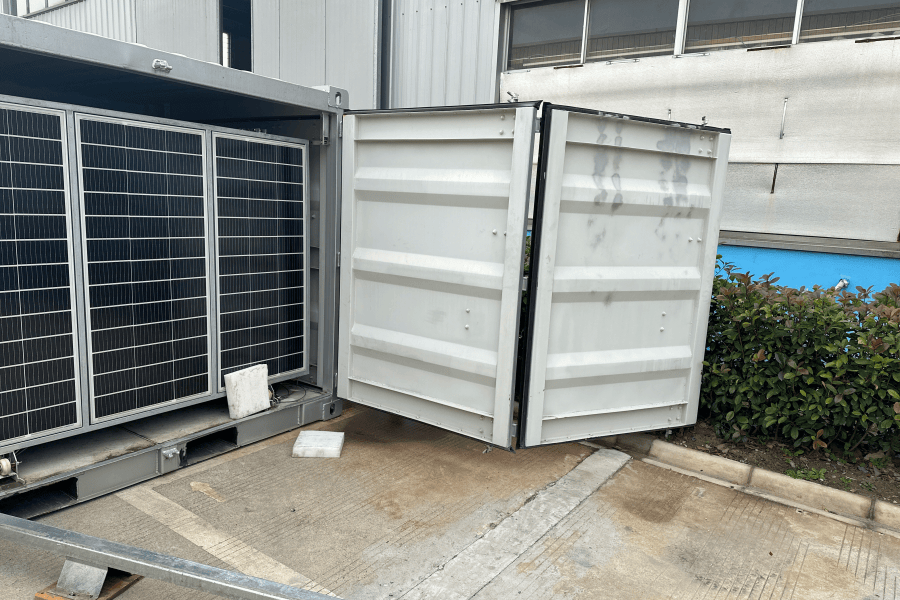
Rapid Deployment BESS for Military Sites: The On-the-Ground Reality from an Engineer's View
Hey there. Let's talk about something that's been a hot topic in my recent site visits with defense contractors and base commanders across the US and Europe: plug-and-play lithium battery containers. Everyone's looking at them for a quick resilience boost, and honestly, I get it. The promise is incredibly compelling. But having been on the hook for deploying and integrating these systems under some pretty tight deadlines, I've seen the full picture - the brilliant advantages and the very real, often unspoken, challenges. It's not just about buying a box of batteries; it's about integrating a critical power asset into a highly complex and secure operational environment. So, grab a coffee, and let's walk through what this really looks like on the ground.
Quick Navigation
- The Problem: Why Military Bases Are Pushing for Rapid Energy Solutions
- The Agitation: When "Fast" Isn't Fast Enough, or Safe Enough
- The Solution: What a Well-Executed Rapid Deployment BESS Actually Brings
- The Drawbacks: The Nitty-Gritty Challenges You Must Plan For
- Expert Insight: Key Specs Your Team Needs to Scrutinize
The Problem: Why Military Bases Are Pushing for Rapid Energy Solutions
Military installations have a unique, non-negotiable problem: mission-critical loads cannot go dark. Ever. We're talking communications, surveillance, cyber-defense hubs, and medical facilities. The traditional grid is a single point of failure, and diesel generators, while reliable, have their own logistical tail (fuel supply, maintenance, emissions). The push for renewables complicates this further - solar and wind are intermittent. Commanders need a bridge, a buffer, that can be deployed not in years, but in months or even weeks to bolster energy security. The pressure is real. According to a National Renewable Energy Laboratory (NREL) report on military microgrids, energy resilience is now directly tied to mission assurance. The "rapid deployment" part isn't a nice-to-have; it's a strategic imperative.
The Agitation: When "Fast" Isn't Fast Enough, or Safe Enough
Here's where I've seen projects stumble. A base procurement officer sees a "containerized BESS" as a commodity product - a box to be dropped and plugged in. The agitation starts when that box arrives. Maybe it's not pre-certified to the local grid codes (like IEEE 1547 in the US). Perhaps its fire suppression system isn't reviewed for the specific installation site, or its cybersecurity protocols don't meet DoD standards. I was on a site in Germany where a nearly-new system sat idle for 6 months because the thermal management design wasn't validated for the local climate's extreme summer heat spikes, raising safety concerns. That's 6 months of delayed resilience, wasted budget, and frayed nerves. The "rapid" deployment promise evaporates, and you're left with a very expensive, silent container.

The Solution: What a Well-Executed Rapid Deployment BESS Actually Brings
When done right - and I mean with meticulous upfront planning - these systems are game-changers. Let's break down the real benefits:
- Unmatched Speed to Resilience: A pre-engineered, factory-tested container can be transported, placed, and connected in a fraction of the time of a built-from-scratch system. This is the core benefit. For a forward operating base or a domestic site facing imminent grid threats, this speed is security.
- Enhanced Energy Security & Black Start Capability: It creates an island. During an outage, the BESS, paired with on-site generation, can form a microgrid to keep critical loads running. Some advanced systems can even black-start - reboot the local grid without external power.
- Cost Stabilization & Load Management: Beyond backup, it's a financial tool. By discharging during peak grid price hours (a tactic called peak shaving), bases with large energy demands can significantly reduce their utility bills. Over time, this improves the Levelized Cost of Energy (LCOE) for the entire site's power mix.
- Silent, Clean, and Scalable Operation: Unlike generators, they operate silently with zero local emissions. This is huge for covert operations and environmental compliance. Need more capacity? The modular nature often allows you to add more containers later.
At Highjoule, our work on a project for a National Guard facility in California is a good example. The challenge was integrating solar with existing backup gensets for a 72-hour resilience mandate. Our containerized solution was pre-approved for UL 9540A (the critical safety standard for energy storage systems) and California's specific rules. We handled the interconnection studies upfront. The system was commissioned in under 14 weeks from contract signing and now manages peak loads daily, saving costs while providing a silent, instant fail-over.
The Drawbacks: The Nitty-Gritty Challenges You Must Plan For
Honestly, to make the benefits stick, you have to stare the drawbacks in the face. I've seen this firsthand:
- Site Preparation is Not "Rapid": The container might be quick, but the pad? The trenching for conduits? The utility interconnection approval? Those take time. If your civil works aren't ready, the box just sits there.
- Total Cost Can Surprise: The unit cost is clear. The "soft costs" - engineering, permitting, grid studies, long-term O&M - are less visible but massive. A system that's cheap upfront might lack the battery management system (BMS) quality, leading to higher degradation and replacement costs down the line.
- Cybersecurity is Paramount: Any grid-connected device is a potential cyber vulnerability. Military specs are stringent. Not all off-the-shelf BESS units are built with this level of hardened, auditable security from the ground up.
- Long-Term Logistics & End-of-Life: What happens in 15 years? Battery recycling and disposal, especially for large military-scale systems, is a developing field. You need a partner with a plan for the full lifecycle, not just the sale.
Expert Insight: Key Specs Your Team Needs to Scrutinize
Let's get technical for a minute, but I'll keep it simple. When you're evaluating a system, don't just look at megawatt-hours. Ask your vendor about these three things:
- C-Rate: This is basically how fast the battery can charge or discharge relative to its size. A 1C rate means a 2 MWh system can output 2 MW for 1 hour. A higher C-rate (like 2C) means it can deliver more power faster - crucial for covering large load steps when a generator kicks in. But it also stresses the battery more. You need the right balance for your duty cycle.
- Thermal Management: This is the unsung hero. Lithium batteries hate temperature extremes. A liquid-cooled system, like we use in our Highjoule H- Series containers, maintains optimal cell temperature far more evenly than air-cooling, especially in desert or arctic conditions. This directly translates to longer lifespan, sustained performance, and lower fire risk.
- Compliance as a Feature, Not a Checkbox: "Compliant" is vague. Demand specifics: Is the system UL 9540 listed? Has it passed UL 9540A test reporting for fire safety? Does it have a UKCA/CE mark for Europe? This isn't red tape; it's your insurance policy. A system built to these standards from the design phase, which is our philosophy, integrates safety rather than adding it on later.

So, where does this leave you? The value of a rapid-deployment lithium battery system for a military base is immense, but it's not a magic bullet. It's a sophisticated piece of infrastructure. The success lies in choosing a partner who understands the deployment grind, the regulatory maze, and the 20-year horizon - not just the product brochure. The right partner will talk to you about site surveys before they talk about pricing, and their solution will be designed to meet the mission, not just a spec sheet.
What's the one site-specific challenge your team is most concerned about when it comes to adding storage?
Tags: UL Standard BESS Rapid Deployment Microgrid Energy Resilience Military Energy Security Lithium Battery
Author
James Zhang
20+ years agricultural energy storage engineer / Highjoule CTO