
The High-Altitude Challenge: Pros and Cons of Rapid-Deploy PV+Storage Containers
Navigating Thin Air: The Real Deal on High-Altitude, Plug-and-Play Solar+Storage
Honestly, if you've ever tried to build anything substantial above 2,000 meters, you know the game changes. The air is thin, the logistics are a headache, and every component you spec has to work harder just to breathe. Over my twenty-plus years on sites from the Rockies to the Alps, I've seen brilliant projects get bogged down by the sheer physical challenge of high-altitude deployment. The promise of rapid-deployment, pre-integrated PV and storage containers is incredibly seductive for these tough locations. But is it the right fit? Let's have a coffee-chat about what you really gain, and what you absolutely must watch out for.
Quick Navigation
- The Problem: Why High-Altitude Projects Are a Different Beast
- The Agitation: When Time and Cost Spirals Out of Control
- The Solution: Enter the Rapid-Deployment Pre-Integrated Container
- The Clear Benefits (It's Not Just Speed)
- The Real-World Drawbacks (What Brochures Don't Tell You)
- Expert Insight: Making It Work on the Ground
The Problem: Why High-Altitude Projects Are a Different Beast
Here's the core issue: traditional stick-built solar and BESS installations at high altitude face a triple threat. First, labor productivity plummets. According to a NREL analysis on construction in remote areas, crew efficiency can drop by 20-30% due to acclimatization needs and harsh weather windows. Second, component derating. Inverters, transformers, and even battery cells see reduced performance and increased thermal stress in low-pressure, high-UV environments. Third, and this is a big one I've seen firsthand, logistical nightmares. Getting multiple trucks with disparate components up winding mountain roads, often with seasonal access restrictions, is a project manager's headache.
The Agitation: When Time and Cost Spirals Out of Control
Let's amplify that pain. It's not just about taking longer. Delays in these remote sites have a compounding effect. You're paying for crew downtime, expensive weather-related demobilizations, and potential penalties for missed commercial operation dates. More critically, safety risks escalate. Assembling high-voltage systems with tired crews in cold, windy conditions is a scenario we must design out. The financial model, your beloved LCOE (Levelized Cost of Energy), takes a direct hit from these soft costs and delays. What starts as a competitive project can quickly become marginal.
The Solution: Enter the Rapid-Deployment Pre-Integrated Container
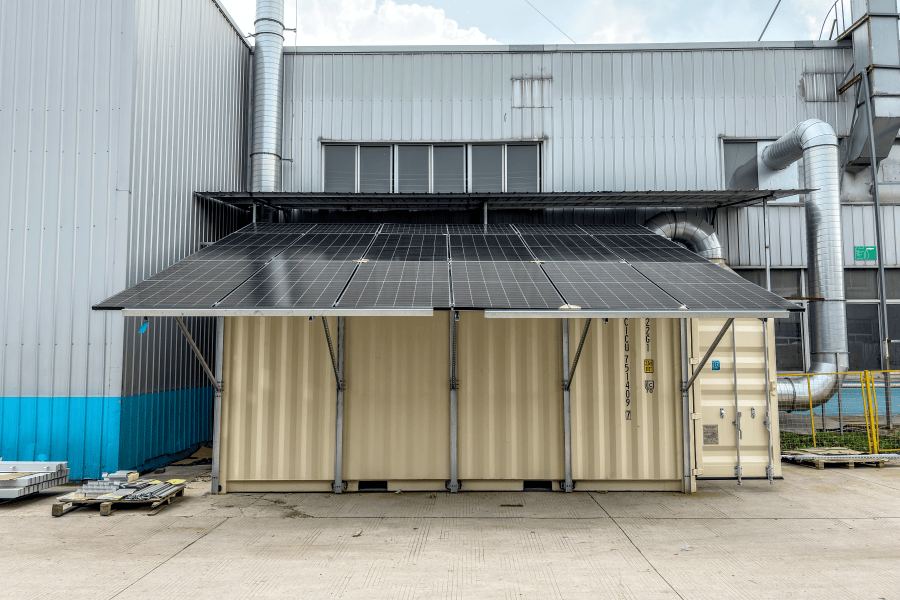
This is where the all-in-one containerized solution shines in theory. Imagine a unit that arrives on-site with the PV mounting structure, modules, inverters, battery racks, thermal management, and safety systems all pre-wired, pre-tested, and housed in a single, ruggedized enclosure. It's lifted off the truck, placed on a prepped foundation, and the primary hookups begin. For a mining operation in the Andes or a grid-support project in the Swiss Alps, the value proposition is clear: drastically reduce on-site labor and complexity.

The Clear Benefits (It's Not Just Speed)
- Deployment Speed & Predictability: This is the big one. Commissioning time can be slashed from months to weeks. I recall a project in Colorado where a Highjoule containerized system was producing power within 48 hours of arrival, a critical factor for their tax credit eligibility.
- Controlled Quality & Safety: The unit is assembled and tested in a factory-controlled environment, adhering strictly to UL 9540 (for BESS) and IEC 62446 (for PV systems) standards. This means fewer field wiring errors and a consistently high safety benchmark, which is non-negotiable for any insurer or site owner.
- Simplified Logistics: One or two major shipments versus dozens. This simplifies permitting, transport, and site coordination immensely.
- Inherent Ruggedization: Designed as a single unit for transport, these containers are typically built tougher than on-site buildings, with better ingress protection (IP rating) and structural integrity for high wind/snow loads.
The Real-World Drawbacks (What Brochures Don't Tell You)
Now, let's get real over a second coffee. This isn't a magic bullet.
- The "Black Box" Conundrum: High integration can mean proprietary designs. If the container's thermal management system has a fault, you might not be able to just swap in a standard chiller. You need the OEM (like us at Highjoule) or a certified partner. This ties into long-term serviceability.
- High-Altitude Specific Engineering: Not all "rapid-deploy" containers are truly built for altitude. You must verify that every internal component - not just the enclosure - is rated for the lower air pressure and wider temperature swings. Does the HVAC system have enough capacity at 0.8 atm? Are the battery's C-rate and cooling profiles adjusted?
- Upfront Cost & Scalability: The premium for this integration is real. For a massive, multi-MW site, a custom-built solution might still have a lower equipment CAPEX. The container model is fantastic for modular adds, but very large-scale deployments need careful economic analysis.
- Foundation & Site Access: You're delivering a 20-40 ton object. You need a strong, level foundation and serious crane access. If your site is at the end of a narrow forest road, this might be a non-starter.
Expert Insight: Making It Work on the Ground
So, how do you balance this? The key is in the specification and partnership. When we work with a client for a high-altitude site, the conversation goes beyond the brochure. We dive into the thermal management specs: we might oversize the cooling loop and select low-pressure-loss fans. We talk about C-rate not at sea level, but at the project's specific elevation, adjusting the battery's charge/discharge profiles to reduce heat generation. We calculate a site-specific LCOE that factors in the avoided soft costs of a traditional build.
The takeaway? A rapid-deployment pre-integrated container is a powerful tool, especially for high-altitude regions where time, safety, and labor are huge constraints. But its success hinges on it being more than just a shipping container with gear thrown in. It must be a purpose-engineered system, with every component validated for the environment and backed by a partner who understands the on-site realities, not just the factory floor.
What's the biggest site access challenge you're facing in your next project?
Tags: UL Standard BESS LCOE Rapid Deployment Renewable Energy IEC Standard High-altitude Deployment Solar PV Container
Author
James Zhang
20+ years agricultural energy storage engineer / Highjoule CTO