
Rapid Deployment Solar Containers for Coastal Sites: Benefits, Drawbacks & Salt-Spray Solutions
Contents
- The Coastal Challenge: Why Salt Air Keeps Project Managers Awake
- The Rapid Deployment Container: A Game-Changer or a Compromise?
- The Benefits: Speed, Scale, and Simplicity
- The Drawbacks: It's Not Just About the Box
- A Real-World Case: Learning from a North Sea Project
- Making It Work: The Expert's Checklist for Coastal Success
The Coastal Challenge: Why Salt Air Keeps Project Managers Awake
Let's be honest, if you're looking at deploying battery storage near the coast, you've already won half the battle. The resource is fantastic, and the grid connection points are often there. But then you walk the site, you feel that mist, you see the patina on nearby fences, and the real question hits: how do I put a multi-million dollar, sensitive piece of energy infrastructure here and expect it to last 15+ years? I've seen firsthand on sites from the Gulf of Mexico to the North Sea how salt spray doesn't just cause cosmetic issues; it's a relentless, conductive, corrosive agent that attacks electrical connections, heatsinks, and structural integrity. The National Renewable Energy Laboratory (NREL) has highlighted corrosion as a leading cause of increased operational costs and reduced performance for coastal renewables. This isn't a maybe; it's a guaranteed operational headache if not designed for from day one.
The Rapid Deployment Container: A Game-Changer or a Compromise?
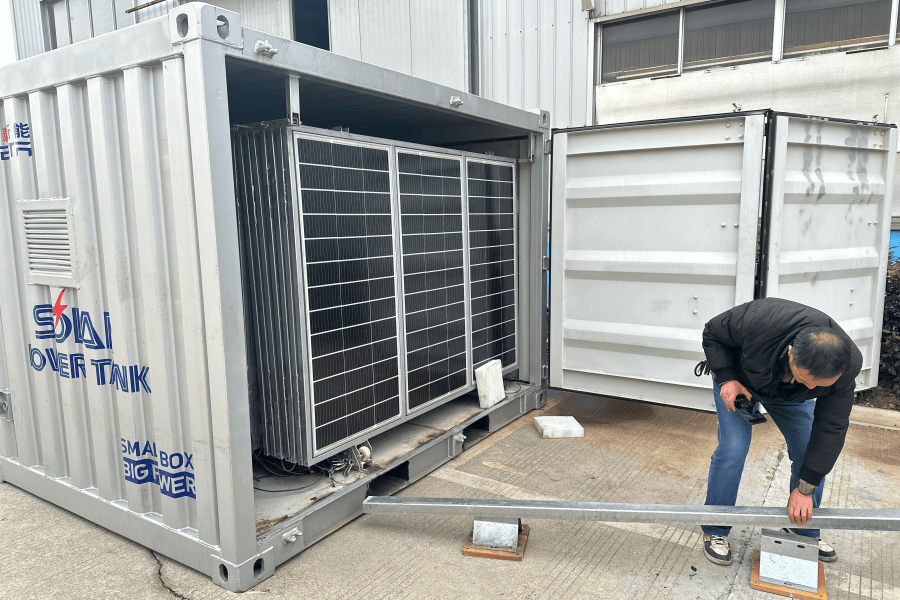
Enter the rapid-deployment solar or BESS container. The promise is incredibly seductive, especially in today's market where time-to-revenue is critical. Instead of a 12-18 month custom design and build, you get a pre-engineered, pre-assembled unit shipped to your site, often in a matter of months. For a developer facing tight interconnection deadlines or a utility needing to shore up grid reliability fast, it's a lifesaver. But here's the core of the discussion we need to have: Is "rapid deployment" synonymous with "coastal-ready"? Honestly, not always. The benefits are real, but so are the drawbacks if the specific "coastal salt-spray" part is treated as an afterthought.

The Benefits: Speed, Scale, and Simplicity
Let's start with the upside, because it's significant.
- Time-to-Market (The Biggest Win): This is the primary driver. A standardized, containerized solution can shave 6-9 months off your project timeline. You're not waiting for custom civil works; you're placing a finished product on a prepped foundation. For every month you delay, you're losing revenue and potentially missing incentive windows.
- Predictable Cost & Scalability: The financial model is cleaner. You're dealing with a known capex for a known capacity. Need more storage? Order another container. It's modular. This scalability is perfect for phased projects common in microgrids or expanding industrial sites.
- Factory-Quality Control: When the entire system is integrated and tested in a controlled factory environment, you avoid a lot of the quality issues I've seen in field-built systems. Wiring, busbar connections, and thermal system assembly are done right the first time, under ideal conditions.
- Simplified Permitting (Sometimes): In many jurisdictions, presenting a UL 9540 or IEC 62933 certified container as a single, pre-approved unit can streamline the permitting process. Authorities Having Jurisdiction (AHJs) are increasingly familiar with these standardized designs.
The Drawbacks: It's Not Just About the Box
Now, let's have that coffee-chat reality check. These drawbacks aren't deal-breakers, but they are cost and performance factors you must account for.
- The "Off-the-Shelf" Corrosion Problem: A standard ISO container, even a "weatherproof" one, is not designed for continuous salt-spray immersion. The ventilation system is a major vulnerability. It will pull in that salty, moist air directly over your battery racks and power electronics, leading to accelerated corrosion and potential for internal condensation. I've seen inverter failures on a coastal site in under 18 months because of this.
- Thermal Management Trade-offs: This is a big one. Effective thermal management is key to battery lifespan and safety (preventing thermal runaway). In a salt-spray environment, you can't just use standard air-to-air heat exchangers with external fins - they'll clog and corrode. The solution is often a sealed, liquid-cooled system. Not all rapid-deployment containers offer this as a default, and the ones that do carry a premium. Your Levelized Cost of Energy (LCOE) calculation must factor in this higher upfront cost against long-term performance gains.
- Structural & Material Limits: The steel used in many standard modules may not have the appropriate galvanization or coating (think ASTM B117 salt-fog test compliance). Fasteners need to be stainless steel or similarly treated. It sounds basic, but you'd be surprised how often it's overlooked in a rush to deploy.
- Site Flexibility (The Hidden Cost): While the container itself is mobile, preparing the site isn't trivial. Coastal sites often have high water tables or soft soil. You need a substantial, level foundation that can handle the weight and mitigate flooding risk. That civil work can sometimes negate the "rapid" part of the deployment if not planned early.
A Real-World Case: Learning from a North Sea Project
A few years back, we were brought into a project on the German North Sea coast - a containerized BESS meant to provide grid stability for a small harbor microgrid. The initial supplier provided a standard "hardened" unit. Within 8 months, the external cooling fans were seizing, and internal sensors showed alarming humidity spikes. The salt was literally building up inside the electrical panels.
Our team at Highjoule had to retrofit the system. We replaced the air-handling system with a closed-loop, corrosion-resistant liquid cooling system, re-sealed all cable entry points with marine-grade glands, and applied a protective coating to internal structural members. The fix worked, but it was costly and caused downtime. The lesson? Pay for the right specifications upfront. Now, our own rapid-deployment line, the Highjoule "Seablock" series, is built from the ground up for these environments. We start with marine-grade aluminum alloys, integrate NEMA 4X/IP66 rated cooling units, and use only conformal-coated PCBs and plated connectors inside. It costs more than a bare-bones container, but honestly, the total cost of ownership is lower when you avoid that mid-life crisis retrofit.

Making It Work: The Expert's Checklist for Coastal Success
So, how do you balance the benefits and drawbacks? Here's my field engineer's checklist for evaluating a rapid-deployment container for a salty environment:
- Ask for the Specific Standard: Don't just accept "corrosion-resistant." Demand compliance with UL 50E for enclosures or IEC 60068-2-52 (Salt Mist testing). This is your baseline.
- Interrogate the Thermal Design: Is it air-cooled or liquid-cooled? If air-cooled, how are the air intakes filtered and protected? If liquid-cooled, what is the material of the external dry cooler? It must be aluminum or coated copper.
- Understand the C-rate in Context: A high C-rate (fast charge/discharge) is great for grid services, but it generates more heat. In a sealed coastal container, managing that heat is harder. Ensure the thermal system is rated for the continuous C-rate you need, not just peak.
- Demand Material Transparency: Request a bill of materials for critical components: cabinet steel gauge and coating, fastener grades, gasket materials. If a supplier hesitates, see it as a red flag.
- Plan for the Foundation & Access: Engage a civil engineer early. Factor in corrosion-resistant anchor bolts and consider raising the pad above the 100-year flood level plus a safety margin.
The bottom line? Rapid-deployment containers are a powerful tool to accelerate the energy transition, even in harsh coastal zones. But the keyword is deployment, not design. The design must be meticulously tailored to the environment from the outset. The right partner won't just sell you a box; they'll understand the chemistry of salt, the physics of heat, and the economics of LCOE over a 20-year partnership. What's the one specification you now realize you need to double-check on your next coastal RFP?
Tags: UL Standard BESS LCOE Rapid Deployment Europe US Market Renewable Energy Salt-Spray Corrosion
Author
James Zhang
20+ years agricultural energy storage engineer / Highjoule CTO