
Scalable Modular Energy Storage for Data Centers: Benefits, Drawbacks & Real-World Insights
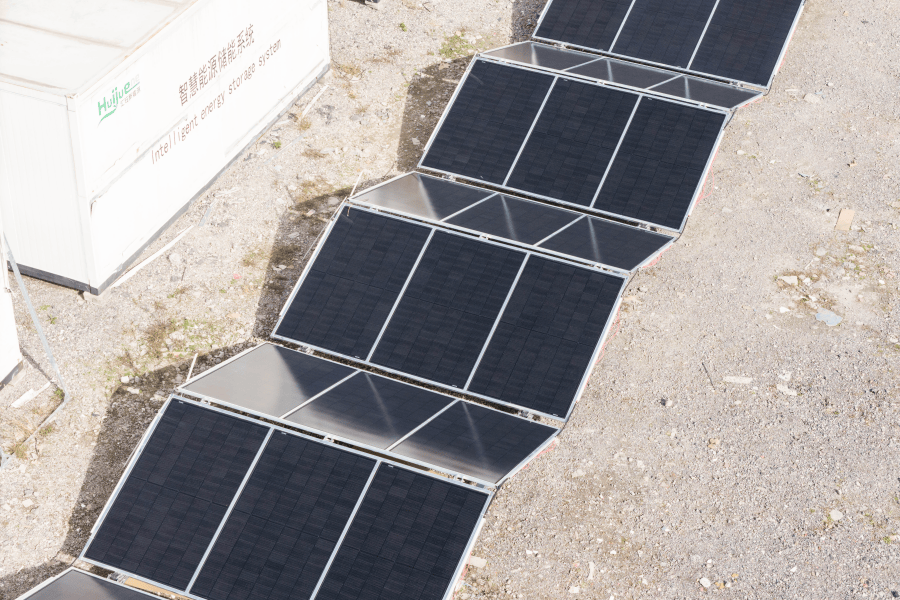
The Real Talk on Scalable Modular BESS for Keeping Your Data Center Online
Honestly, if you're managing a data center's power strategy, you're not just thinking about uptime anymore. You're navigating a perfect storm: skyrocketing power demands, grid instability that seems to be the new normal, and sustainability mandates that are more than just PR talk. Over my 20+ years on sites from California to North Rhine-Westphalia, I've seen the backup power conversation shift from "Do we need generators?" to "How do we build a resilient, efficient, and yes, profitable, energy ecosystem?" That's where the buzz around scalable modular energy storage containers comes in. Let's grab a coffee and talk about what this really means on the ground - the genuine benefits, the often-overlooked drawbacks, and how to think about it for your next project.
Quick Navigation
- The Problem: It's More Than Just a Power Outage
- The Solution: Enter the Scalable Modular Container
- The Real Benefits (Beyond the Brochure)
- The Honest Drawbacks & How to Mitigate Them
- A Real-World Case: Learning from the Field
- An Expert's View: Thermal Runaway, C-Rate, and LCOE Explained Simply
The Problem: It's More Than Just a Power Outage
The traditional approach - massive diesel gensets - is becoming a strategic liability. It's not just about the fuel logistics and emissions. I've been on calls during grid events where the real cost was the downtime during transfer and the operational rigidity. Your data hall's load isn't static, but your backup system often is. Furthermore, according to the National Renewable Energy Laboratory (NREL), commercial grid interruptions in the US are increasing in frequency, costing the digital economy billions annually. The problem isn't just backup; it's about creating a flexible, responsive power asset that can also reduce your operating expenses when the grid is fine.
The Solution: Enter the Scalable Modular Container
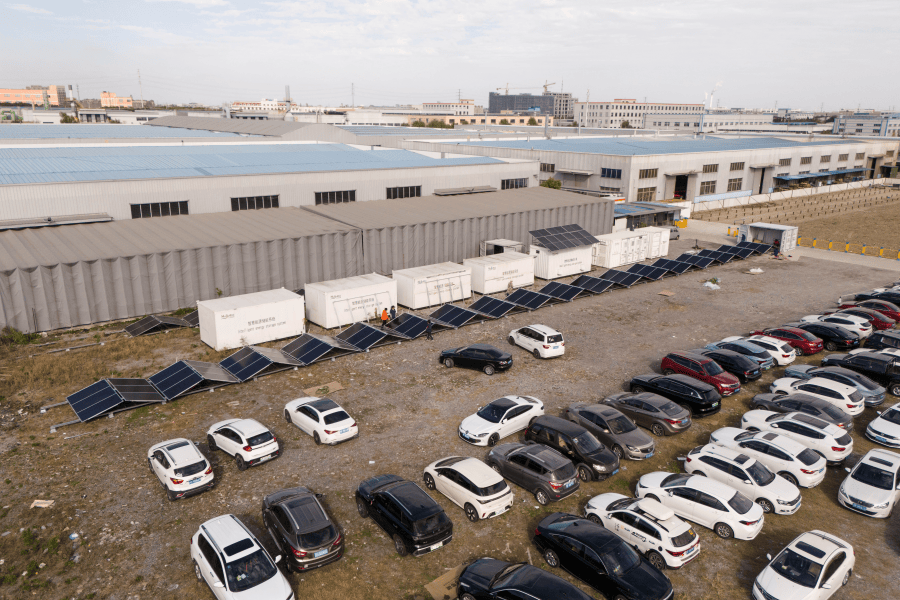
This is where the scalable modular Battery Energy Storage System (BESS) container steps in. Think of it as a "data center for power" - pre-engineered, factory-tested, and shipped in standard ISO container footprints. You start with what you need today, and as your rack density grows or your sustainability goals tighten, you simply add another container module. It's a fundamentally different philosophy: from a monolithic insurance policy to a scalable, revenue-grade asset.

The Real Benefits (Beyond the Brochure)
Let's break down the advantages I've seen deliver real ROI:
- Future-Proof Scalability: This is the big one. Adding 500 kW or 1 MW of backup capacity becomes a construction project, not a re-engineering nightmare. It aligns CAPEX with your growth curve.
- Financial Agility & Lower LCOE: The Levelized Cost of Energy (LCOE) - basically the total lifetime cost per kWh - often beats gensets when you factor in active use. These units can participate in demand charge management or grid services programs when not in backup mode, creating a revenue stream. I've seen sites shave 15-20% off their peak demand charges consistently.
- Speed & Predictability of Deployment: Because they're pre-assembled and tested against standards like UL 9540 and IEC 62933, the on-site timeline and risk drop dramatically. We're talking months faster than a built-from-scratch solution.
- Enhanced Safety & Compliance: A modern container from a reputable provider like Highjoule isn't just a box with batteries. It's an integrated system with dedicated thermal management, gas detection, and fire suppression that's certified as a unit. This takes a huge burden off your site team for compliance, especially under evolving NFPA 855 and local fire codes.
The Honest Drawbacks & How to Mitigate Them
No technology is a silver bullet. Here's what you need to plan for:
- Upfront Spatial Footprint: Per MW, a modular container system might require more land than a centralized battery room. The trade-off is flexibility. Smart site planning is key.
- Interconnection & Balance of Plant (BOP): Each new module needs electrical interconnection, cooling, and communication links. The container itself is plug-and-play, but the site BOP work must be designed for expansion from day one. This is where a provider with deep EPC experience is crucial.
- Long-Term Technology Evolution: Battery chemistry is improving. Committing to a containerized architecture means you're somewhat locked into its internal tech. The mitigation? Work with partners whose containers are designed with modularity inside the box - allowing for future battery rack upgrades without replacing the entire container.
- Perceived vs. Actual Lifetime: People worry about cycle life. Honestly, for a backup application where deep cycles are rare, calendar aging is often the bigger factor. A high-quality, properly maintained LiFePO4 system in a controlled environment can easily support a 15-year design life with proper cycling for grid services.
A Real-World Case: Learning from the Field
Let me share a project we did for a hyperscale client in Frankfurt, Germany. Their challenge was twofold: achieve 99.99% uptime to meet SLAs and reduce their carbon footprint to comply with local regulations. They started with a 2 MW/4 MWh Highjoule modular container, UL and IEC compliant, right next to their substation.
The system was sized for critical load backup but programmed to primarily perform peak shaving and frequency regulation for the German grid. In the first year, the revenue from grid services covered over 30% of the system's annual financing cost. When a regional grid disturbance occurred, the transition was seamless - no diesel fumes, no transfer lag. The key learning? Dual-use strategy is non-negotiable for economic justification. The modular design is now their blueprint, with space allocated for two additional containers as their campus expands.
An Expert's View: Thermal Runaway, C-Rate, and LCOE Explained Simply
Let's demystify some jargon you'll hear.
Thermal Management isn't just cooling. It's about uniform temperature distribution. A poor design creates hot spots, accelerating degradation. I've opened containers after 5 years of service; the difference in cell health between a well-designed and a cheap system is stark. Look for liquid cooling or advanced forced-air with precise zone control.
C-Rate is simply how fast you can charge or discharge the battery. A 1C rate means discharging the full capacity in one hour. For backup, you need a high discharge C-rate to handle the sudden load. For daily cycling, a moderate C-rate is better for longevity. A good system balances both.
Finally, LCOE. Don't let it intimidate you. When evaluating, ask for the model that includes: all capital costs, installation, 20-year maintenance, expected degradation, and projected revenue from grid services. That final number, in cents/kWh, is what you should compare against your current cost of outages and peak demand charges. Honestly, that's where modular BESS almost always wins.
The journey to a more resilient data center power system is complex, but the scalable modular container is proving to be a profoundly practical step. The right question isn't just "What are the benefits and drawbacks?" but "How do we implement this to maximize the former and engineer out the latter?" That's a conversation worth having over another cup of coffee. What's the biggest power resilience headache you're facing in your facility right now?
Tags: UL Standard BESS LCOE Data Center Backup Power Modular Energy Storage Microgrid
Author
James Zhang
20+ years agricultural energy storage engineer / Highjoule CTO