
Scalable Modular PV Containers for Utilities: Benefits, Drawbacks & Real-World Insights
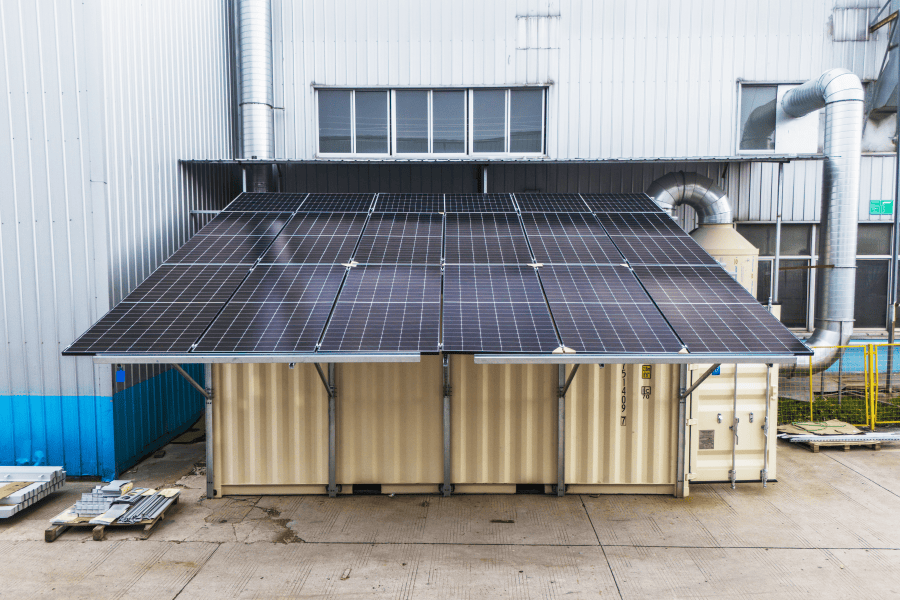
Let's Talk Utility-Scale Storage: The Modular Container Conversation
Hey there. Grab your coffee. If you're making decisions about grid-scale storage, you're probably buried in specs, RFPs, and a dozen different "perfect" solutions. I've been in your shoes, and I've been on the other side of the table for over two decades, deploying BESS from the deserts of Arizona to the windy plains of Northern Germany. Lately, one topic keeps coming up in every serious conversation: the move towards scalable, modular, pre-integrated PV and storage containers. Everyone's talking about them, but what's the real story on the ground? Let's cut through the marketing and look at the genuine benefits, the not-so-obvious drawbacks, and what it all means for your next project.
Quick Navigation
- The Grid's New Growing Pains
- The Modular Promise: More Than Just Plug-and-Play
- The Flip Side: What They Don't Always Tell You On Site
- Making It Work: An Engineer's Field Notes
The Grid's New Growing Pains
Honestly, the challenge isn't just adding more renewables anymore. It's about managing the wild, intermittent dance of solar and wind on a grid built for steady, predictable power. The IEA reports that renewables are set to become the largest source of global electricity by 2025. That's fantastic, but it puts immense strain on transmission infrastructure and grid stability. I've seen firsthand on site in California how a passing cloud bank can cause a 500 MW ramp need in minutes. Traditional, one-off engineered BESS solutions can be slow to permit, expensive to scale, and a nightmare to maintain consistently.
The real pain point? Time and flexibility. Utilities need capacity now, but they also need the ability to adapt tomorrow. A fixed, 100 MW system might be overkill for today's needs but insufficient in three years. This rigidity hits the bottom line hard, impacting the all-important Levelized Cost of Storage (LCOS) C the true measure of your project's economic viability over its lifetime.
The Modular Promise: More Than Just Plug-and-Play
This is where the concept of scalable, modular, pre-integrated containers shines. Think of them as building blocks. Instead of a custom-built power plant, you get a standardized, factory-assembled unit that contains the batteries, thermal management, power conversion, and safety systems all in one tested box.
Tangible Benefits You Can Bank On
- Speed to Market (The Big One): We're talking about cutting deployment timelines by 40-60% in my experience. Because the container is pre-integrated and tested to standards like UL 9540 and IEC 62933 off the factory floor, much of the complex on-site integration work is eliminated. It's not just installation speed; it's faster permitting with known, certified components.
- True, Painless Scalability: Need an extra 2 MWh next year? Drop another container. This modularity allows you to match capital expenditure precisely with demand growth. It de-risks the initial investment and improves your project's financial agility. The scalability is in the design philosophy, not just the hardware.
- Predictable Performance & Safety: A container from a reputable manufacturer arrives with a known C-rate (its charge/discharge speed), a proven liquid or air-cooled thermal management system, and built-in fire suppression. This standardization means you know exactly how it will perform and how to keep it safe, which is non-negotiable. At Highjoule, for instance, our modular platform is designed with a "safety cell" architecture and full compliance footprint from day one, because we've seen what happens when that's an afterthought.
- Lower Lifetime Costs (LCOS): While the upfront cost per kWh might be similar to a traditional build, the savings in construction, ongoing O&M (operations and maintenance), and future expansion are massive. Swapping a faulty module in a container is a half-day job for a trained crew, not a week-long site shutdown.
Take a project we supported in West Texas. The utility needed to firm up wind power and provide frequency regulation. They started with a 10 MWh modular container system. Two years later, when a new industrial park came online, they added another 15 MWh of capacity in the same footprint during a scheduled maintenance window. The scalability wasn't a brochure feature; it was a business-saving reality.

The Flip Side: What They Don't Always Tell You On Site
Now, let's be real over this coffee. No solution is perfect, and a blind rush to modular can backfire. Here are the drawbacks you need to engineer around:
- The Density Trade-off: Pre-integration can sometimes mean less energy density compared to a perfectly optimized, site-built system. You're trading some spatial efficiency for deployment speed and flexibility. This matters if your site footprint is extremely constrained and every square meter counts.
- Upfront Design Rigor: "Modular" doesn't mean "no planning." You absolutely must design the site infrastructure C the pad, the electrical interconnections, the cooling loops C with future expansion in mind from day one. I've walked onto sites where the first container was placed dead-center, blocking all logical paths for the second. Future-proof the site layout, not just the finance model.
- Vendor Lock-In Potential: Your scalability is often tied to the original manufacturer's platform. Ensure your contracts and technical agreements have clear clauses about future module availability, compatibility, and competitive pricing for expansion. This is a strategic partnership choice, not just a procurement decision.
- One-Size-Fits-All... Sometimes: For highly specialized applications requiring extreme C-rates or unique environmental controls, a fully custom solution might still be the better fit. The modular approach excels in covering 80-90% of utility use cases.
Making It Work: An Engineer's Field Notes
So, how do you maximize the benefits and minimize the drawbacks? It comes down to thinking like a systems integrator, even when buying a pre-integrated product.
First, sweat the thermal management specs. The C-rate (how fast you push energy in and out) directly generates heat. A container's cooling system must handle your specific duty cycle, not just a lab peak. In Arizona, ambient temperature is your enemy; in Scotland, it might be humidity. The thermal system isn't a sidebar spec; it's the key to battery longevity and safety.
Second, calculate Total Cost of Ownership (TCO), not just Capex. Build a model that includes:
| Initial hardware & deployment | + |
| Site prep & future-proofing | + |
| O&M over 15-20 years | + |
| Cost of future expansion ease | + |
| De-risked revenue (from faster commissioning) | = Your Real LCOS |
Finally, partner with providers who offer depth, not just boxes. Look for a partner with proven local deployment experience who understands your grid codes (like IEEE 1547 in the U.S.) and can provide lifecycle support. The value isn't just in the container they deliver on Tuesday; it's in the engineer they have on call next year when you're ready to plug in container number five, and in the software updates that keep the entire fleet optimized.
The transition to a resilient, renewable grid isn't waiting. The scalable modular container isn't a magic bullet, but it's arguably the most practical, bankable tool we have right now to build it faster and smarter. The question isn't really whether to consider them, but how to implement them with your eyes wide open to both their power and their constraints.
What's the biggest hurdle you're facing in your next storage deployment? Is it the permitting timeline, the scalability uncertainty, or something else entirely?
Tags: UL Standard BESS LCOE Renewable Integration Utility-Scale Energy Storage Grid Stability Modular Design Scalability
Author
James Zhang
20+ years agricultural energy storage engineer / Highjoule CTO