
Smart BESS for High-Altitude Sites: Benefits, Drawbacks & Real-World Insights
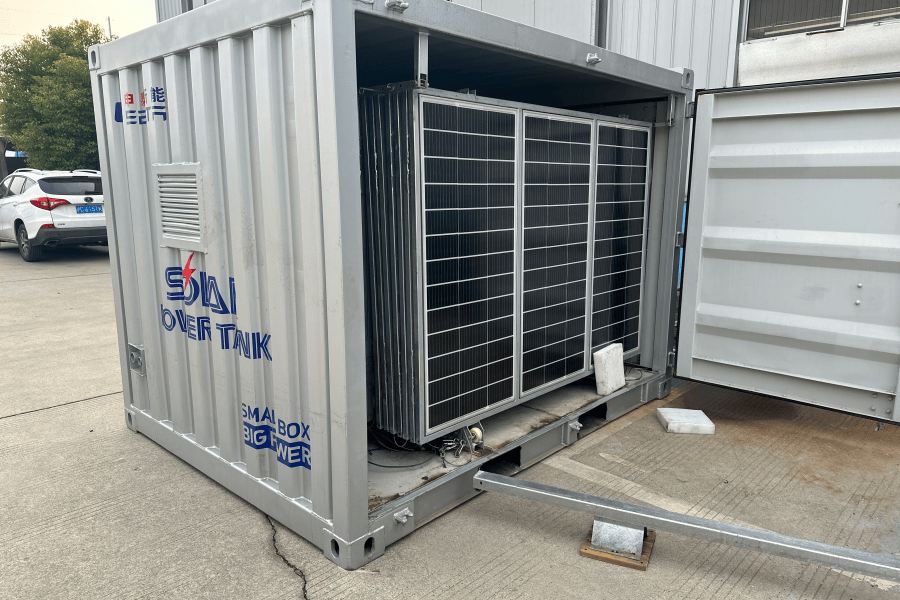
Table of Contents
- The High-Altitude Problem: It's More Than Just Thin Air
- The Smart BMS Difference: Your Container's Brain and Nervous System
- The Tangible Benefits: Why Smart BMS Containers Shine at Elevation
- The Honest Drawbacks & How to Mitigate Them
- A Real-World Case: Lessons from the Rockies
- Making the Right Choice for Your Project
The High-Altitude Problem: It's More Than Just Thin Air
Let's be honest. When we talk about deploying Battery Energy Storage Systems (BESS) in high-altitude regions - think mining sites in the Rockies, ski resorts in the Alps, or remote telecom towers pretty much anywhere - the conversation often starts and ends with "the air is thinner." But after 20 years on sites from the Andes to the Himalayas, I can tell you that's just the tip of the iceberg. The real pain points for project developers and asset owners are far more granular: unpredictable performance decay, a nightmare for OPEX forecasting; thermal management that conventional systems simply can't handle, leading to premature aging; and safety concerns that keep everyone up at night when the site is a 4-hour helicopter ride away. The NREL has highlighted how extreme environments accelerate battery degradation, and honestly, I've seen this firsthand on site where a 10-year design life gets cut in half because the BMS wasn't smart enough to adapt.
The Smart BMS Difference: Your Container's Brain and Nervous System
So, what's the solution? It's not just a "solar container." It's a Smart BMS Monitored Solar Container. Think of the standard BMS as a basic thermometer - it tells you if you have a fever. The smart BMS we're talking about is like a full-body MRI combined with a predictive doctor. It doesn't just monitor voltage and temperature; it analyzes cell-level impedance, predicts state-of-health (SOH) trends, manages charge/discharge rates (C-rate) dynamically, and orchestrates a complex thermal management system. This is the core tech that makes or breaks a high-altitude deployment.
Why This Matters for UL/IEC/IEEE Compliance
In the US and EU markets, standards like UL 9540 and IEC 62933 aren't just checkboxes. They're frameworks for safe operation. A smart BMS is your primary tool for continuous compliance. It's the system that ensures your container operates within the strict safety parameters defined by these standards, logging every data point for audits and providing the active protection layers that insurers and authorities look for. At Highjoule, designing to these standards isn't an afterthought - it's the foundation. Our containers are built from the ground up with the smart BMS as the central nervous system, ensuring every component, from the HVAC to the fire suppression, is intelligently controlled.
The Tangible Benefits: Why Smart BMS Containers Shine at Elevation
Let's get specific about the advantages, because in boardroom decisions, vague promises don't cut it.
- Extended Battery Life & Lower LCOE: The biggest cost driver is battery replacement. At high altitudes, low pressure reduces the efficiency of air-cooling, and large temperature swings (hot days, freezing nights) stress the cells. A smart BMS proactively adjusts the cooling system and modulates the C-rate based on real-time cell conditions. This smooths out thermal cycles and reduces degradation. The result? A significantly lower Levelized Cost of Storage (LCOS) over the asset's lifetime. You're not buying more batteries; you're getting more life from the ones you have.
- Predictive Maintenance & Operational Certainty: Instead of unexpected, catastrophic failures, you get actionable alerts. The system might flag a slight imbalance in a specific module or a trend showing rising internal resistance. This allows for planned, low-cost interventions during scheduled downtime. For a remote site, this is the difference between a minor service visit and a six-figure emergency repair mission.
- Enhanced Safety Margin: Thermal runaway is the ultimate risk. A smart BMS with distributed temperature sensors can detect a single cell beginning to overheat long before it becomes a problem. It can then isolate that module, ramp up targeted cooling, and alert operators - all automatically. This multi-layered, active safety approach is what modern standards demand.
- Optimized Performance in Thin Air: The BMS can compensate for the reduced cooling efficiency by managing discharge rates. If the cooling system is working harder on a hot, low-pressure day, the BMS can intelligently limit peak power output to keep temperatures in the safe zone, ensuring reliability without guesswork.
The Honest Drawbacks & How to Mitigate Them
No technology is a silver bullet. Let's have that coffee-chat honesty about the challenges.
- Higher Upfront Capital Cost: Yes, a container with an advanced, smart BMS and a robust thermal system designed for extreme environments costs more upfront than a standard, off-the-shelf unit. This is the most common hurdle.
- System Complexity & Integration: You're dealing with more sophisticated software and hardware. This requires proper commissioning and technicians with higher skill levels for troubleshooting.
- Data Overload: The system generates vast amounts of data. Without the right software platform to visualize and interpret it, you can end up with "data rich but information poor" syndrome.
The Mitigation Strategy: This is where total cost of ownership (TCO) analysis is crucial. You must weigh the higher CapEx against the OpEx savings from longer life, fewer failures, and lower maintenance. The complexity is mitigated by choosing a provider like Highjoule that offers comprehensive training and remote monitoring support - we essentially become an extension of your ops team. Finally, the data must come with a dashboard that translates it into simple, actionable insights for non-engineers.
A Real-World Case: Lessons from the Rockies
A few years back, we deployed a 2 MWh smart BESS container for a microgrid at a remote mining operation in Colorado, sitting above 9,000 feet. The challenge was brutal: -25C winters, short summer peaks, and a primary goal of reducing diesel generator runtime. The standard container they initially considered had a basic BMS and air-cooling.
We proposed our smart BMS solution with a liquid-cooled thermal system. The initial cost was a point of contention. Fast forward 18 months: The smart BMS identified a gradual coolant pump performance decline before it affected battery temps, allowing a planned replacement. It also dynamically manages the C-rate during winter starts to protect the cells. The mine's energy manager told me the predictive alerts alone saved them an estimated $80k in potential downtime. The project's LCOE is tracking 22% below their initial projection because the degradation rate is slower than modeled. That's the smart BMS paying for itself.

Making the Right Choice for Your Project
So, is a Smart BMS Monitored Solar Container right for your high-altitude project? Ask these questions:
- Is site access difficult or expensive? (If yes, predictive maintenance is invaluable).
- Is your financial model sensitive to battery replacement costs? (If yes, focus on lifespan and LCOE).
- Does your risk profile demand the highest safety standard? (If yes, active, algorithmic safety is non-negotiable).
If you answered yes to any of these, then the benefits overwhelmingly outweigh the drawbacks. The key is partnering with a provider that understands the physics of high-altitude operation and embeds that intelligence into the hardware and software from day one. It's not about selling a container; it's about delivering decades of predictable, safe, and profitable energy storage.
What's the single biggest operational risk you're trying to solve with your next high-altitude storage project?
Tags: UL Standard BESS LCOE Europe US Market Solar Container Renewable Energy Smart BMS High-Altitude
Author
James Zhang
20+ years agricultural energy storage engineer / Highjoule CTO