
20ft High Cube Off-grid Solar Generator Comparison for Remote Island Microgrids
Contents
- The Island Power Dilemma: It's More Than Just Sunshine
- Beyond the Spec Sheet: What Really Matters in a 20ft Container
- A Tale of Two Containers: A Real-World Comparison
- The Highjoule Approach: Engineering for the Real World
- Your Next Step: Asking the Right Questions
The Island Power Dilemma: It's More Than Just Sunshine
Honestly, if you're managing power for a remote island or an off-grid industrial site, you already know the core problem isn't just generating electricity. It's about delivering reliable, safe, and economically sane power when the sun sets, the wind drops, or a storm knocks out your old diesel genset. I've seen this firsthand on sites from the Caribbean to the Scottish Isles. The dream of 100% renewables often hits a harsh reality: solar and wind are intermittent, and traditional diesel is expensive, noisy, and a carbon nightmare.
The data backs this up. According to the International Renewable Energy Agency (IRENA), islands often pay 3 to 10 times more for electricity than mainland grids, with a heavy reliance on imported fossil fuels. The volatility of fuel prices alone can wreck a community's budget or a resort's bottom line.
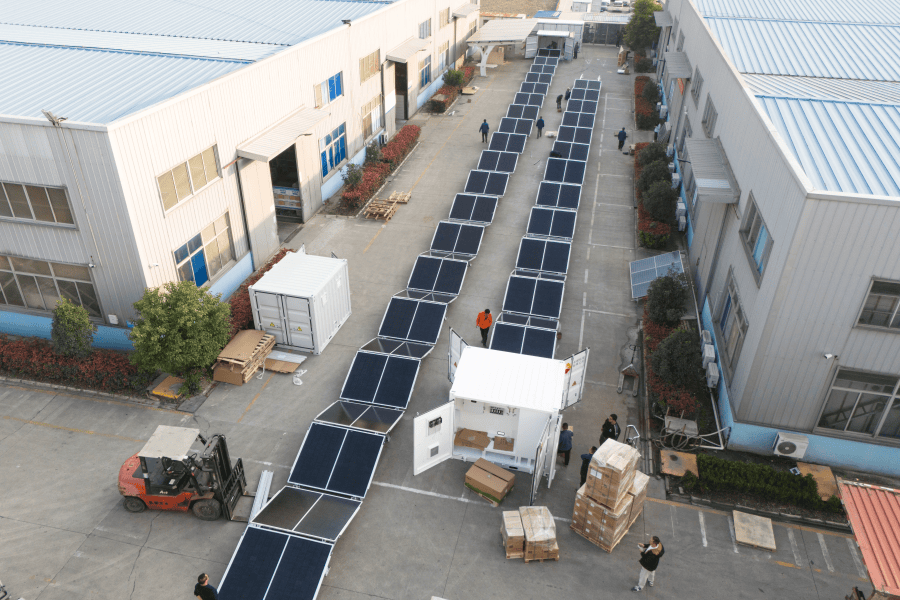
That's where the concept of the all-in-one, containerized 20ft High Cube Off-grid Solar Generator comes in. It's a compelling solution - pre-integrated solar, storage, and power conversion in a shipping-container format. But here's the agitation: not all containers are created equal. Choosing the wrong one doesn't just mean a suboptimal return on investment; it can mean safety risks, premature failure in salty coastal air, and a logistical nightmare when you need service on a remote dock.
Beyond the Spec Sheet: What Really Matters in a 20ft Container
When you look at a comparison sheet, you'll see kWh, kW, and maybe round-trip efficiency. Important, sure. But after 20+ years on site, I look at three things most spec sheets gloss over.
1. Thermal Management (The Silent System Killer)
Batteries, especially lithium-ion, are like athletes. Performance and lifespan depend massively on their operating temperature. A system with poor thermal management - maybe just a simple fan in a hot corner - will see rapid degradation. I've measured cells in poorly designed containers with a 15C (59F) delta across the rack. That imbalance kills the weak cells and drags down the whole system's capacity years ahead of schedule. You need active, liquid-based cooling with precise climate control for true 24/7/365 operation in tropical or desert climates.
2. The Real C-rate and Cycle Life
Manufacturers love to tout cycle life (e.g., 6,000 cycles). But that number is usually at a gentle, lab-perfect C-rate (charge/discharge speed) and a narrow temperature band. On an island, when a cloud bank rolls over the solar field or a ferry dock needs a fast charge, your system needs to handle high C-rates without sacrificing those promised cycles. The difference is in the battery chemistry selection, the power conversion system (PCS) tuning, and the battery management system (BMS) intelligence. A system designed for a steady grid application will struggle here.
3. LCOE - The Ultimate Measure
Levelized Cost of Energy (LCOE) is the metric that makes CFOs smile. It's the total lifetime cost of your system divided by the total energy it will produce. A cheaper upfront container might have a higher LCOE if its batteries degrade fast or it needs constant maintenance. For island microgrids, you must factor in fuel displacement, reduced genset runtime (saving on engine overhauls), and longevity. The right 20ft cube isn't a cost; it's a 20-year energy asset.

A Tale of Two Containers: A Real-World Comparison
Let me give you a non-client example from public domain knowledge. A community in the Pacific Northwest (U.S.) needed to replace an aging diesel plant. They evaluated two 20ft off-grid solar generator proposals.
- Vendor A: Offered a lower upfront cost. Specs looked great on paper: 500 kWh storage, 250 kW inverter. Compliance was "based on" UL standards.
- Vendor B: Came in 15% higher. Same core specs. But the system was UL 9540 and UL 1973 listed, had a detailed thermal management report, and the PCS was certified to IEEE 1547 for seamless grid-forming in their microgrid. The installation plan included a local partner for commissioning.
They chose Vendor B. Why? During due diligence, they discovered Vendor A's "container" was essentially a weatherproof box - corrosion protection was minimal, and the BMS was a basic off-the-shelf unit. Vendor B's container was a C5-M corrosion-protected enclosure (ideal for marine environments) with a proprietary, adaptive BMS. The local service partner sealed the deal. Two years in, the LCOE projection is already beating estimates due to near-zero downtime and better-than-expected battery health.
The Highjoule Approach: Engineering for the Real World
At Highjoule, we've built our reputation on not just selling containers, but selling guaranteed outcomes for tough environments. When we design a 20ft High Cube solution for, say, a Caribbean resort or an Alaskan utility microgrid, we start with the end in mind.
Our core philosophy is safety and longevity by design. Every system we ship is built to full UL/IEC standards - not "designed to meet," but certified and listed. That's non-negotiable for insurance and financing, especially in North America and Europe. Our thermal system is over-engineered because I've seen too many undersized systems fail.
But the real magic, if I can call it that, happens in the software and the support. Our platform doesn't just monitor volts and amps; it predicts based on weather, load patterns, and battery analytics to optimize for the lowest possible LCOE. And because we have boots on the ground through regional partners, a support call doesn't mean a technician is flying from Shanghai next week. It means a local expert can often resolve issues remotely or be on-site quickly.

Your Next Step: Asking the Right Questions
So, when you're comparing these 20ft off-grid solar generators, move beyond the brochure. Get on a call with the engineering team, not just the sales rep. Ask them:
- "Can I see the full UL certification documents for the complete energy storage system?"
- "What is the expected cell temperature variance under full load at 40C ambient?"
- "What is the projected LCOE for my specific site load profile over 15 years?"
- "Walk me through your local commissioning and service protocol for my location."
The right partner will have clear, confident answers rooted in real deployment experience. The market is moving fast, but the fundamentals of good engineering - safety, reliability, and total cost of ownership - haven't changed. What's the one concern about your current or planned off-grid power system that keeps you up at night?
Tags: UL Standard BESS LCOE IEEE 1547 Off-grid Solar Generator Energy Storage System Remote Microgrid
Author
James Zhang
20+ years agricultural energy storage engineer / Highjoule CTO