
Comparing 20ft High Cube PV Storage Systems for Agricultural Irrigation
Contents
- The Real Problem Isn't the Sun, It's the Schedule
- The Hidden Cost Puzzle: More Than Just Panels and a Box
- Safety is Non-Negotiable: Why Your Container Isn't Just a Metal Box
- From Blueprint to Field: A California Vineyard's Story
- Choosing Your 20ft Cube: The 3 Factors That Actually Matter
- What Are Your Energy Independence Goals for the Next Season?
The Real Problem Isn't the Sun, It's the Schedule
Honestly, after 20-plus years on sites from California's Central Valley to the wheat fields of Germany's North Rhine-Westphalia, I've learned one thing: farmers don't buy a "photovoltaic storage system." They buy a reliable, affordable way to run their pumps and pivots when they need to, not just when the sun shines. The core challenge for modern irrigation isn't generating power - it's time-shifting it. Crops need water at specific times; peak solar production often doesn't align with that. That mismatch is the real pain point.
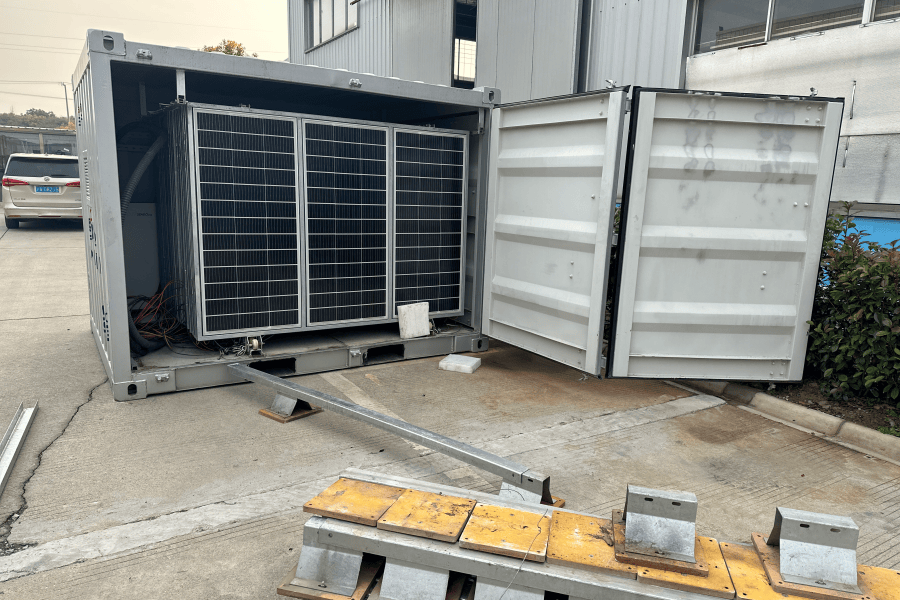
And that's where the concept of a pre-integrated, containerized 20ft High Cube solution comes in. It promises a plug-and-play answer. But here's the on-site truth I've seen firsthand: not all containers are created equal. A simple comparison of price-per-kWh on a spec sheet can lead you wildly astray. The real comparison for agricultural irrigation needs to happen on three levels: operational flexibility, true lifetime cost (LCOE), and unwavering safety.
The Hidden Cost Puzzle: More Than Just Panels and a Box
Let's agitate that pain point a bit. You might see two 20ft containers, both rated for 500 kWh. One is 20% cheaper upfront. Tempting, right? But what if that system uses a lower C-rate battery? In simple terms, the C-rate is how fast you can charge or discharge the battery. For irrigation, you need high power (a high discharge C-rate) to start and run large pumps. A battery with a low C-rate might be cheaper but could struggle to deliver the necessary surge power, causing pump start-up failures or needing you to oversize the system - wiping out that initial savings.
Then there's thermal management. I've opened containers in the Arizona desert where the internal temperature differential was poorly managed. According to a NREL study, every 10C above 25C can halve a battery's lifespan. If a system's cooling isn't robust enough for your local climate - be it Texas heat or a humid Georgia summer - you're not buying a 15-year asset, you're buying a 7-year liability with a costly replacement.
The solution is to compare Levelized Cost of Energy (LCOE) - the total cost of ownership divided by the total energy delivered over the system's life. A slightly more expensive unit with superior thermal management, a high C-rate battery chemistry (like LFP), and intelligent controls that optimize cycle depth will have a far lower LCOE. This is where Highjoule's design philosophy comes from: we engineer for the lowest LCOE, not the lowest sticker price. Our containers use a staged cooling system and active balancing to ensure every cycle is as efficient as the first, directly protecting your investment.

Safety is Non-Negotiable: Why Your Container Isn't Just a Metal Box
This is critical. A container on your farm is part of your livelihood. Safety standards like UL 9540 (for the energy storage system) and UL 9540A (for fire propagation testing) in the US, and IEC 62933 in the EU, aren't just paperwork. They are a blueprint for risk mitigation. I've been part of audits where we looked at everything - from the busbar spacing and insulation class to the smoke detection and venting protocols inside that sealed box.
A true comparison must ask: Is the system listed to these standards? Does the design have passive fire suppression? How does it handle off-gassing? At Highjoule, compliance isn't a checkbox; it's the foundation. Our 20ft High Cube units are built from the cell up to meet and exceed UL and IEC requirements, with segregated battery compartments and multi-layer protection relays. It gives you, and me as the engineer signing off on it, peace of mind.
From Blueprint to Field: A California Vineyard's Story
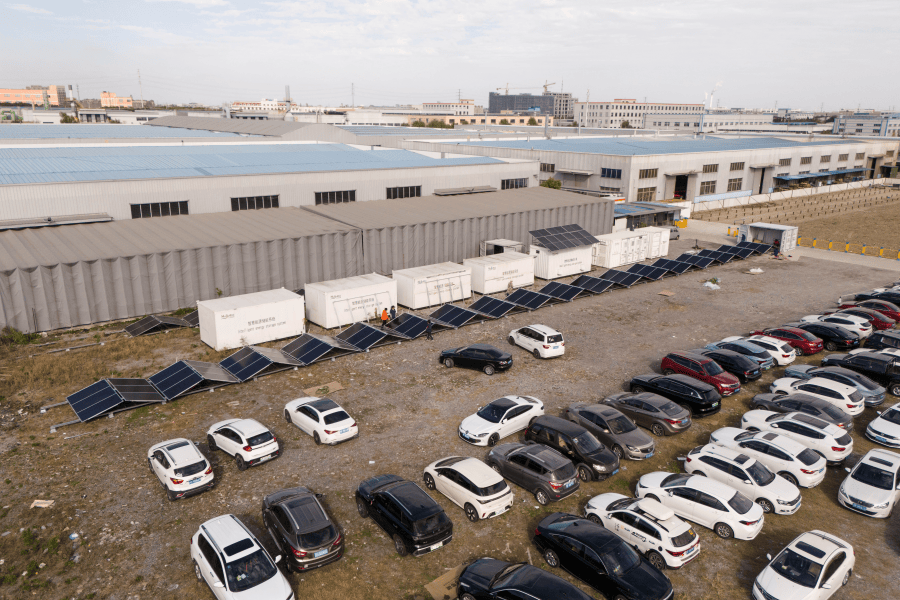
Let me give you a real case. A vineyard in Sonoma County, California, had high daytime grid costs and needed to run frost protection pumps on spring nights. Their challenge was peak shaving and overnight reliability. We deployed one of our 20ft High Cube systems integrated with their existing solar.
The key wasn't just size. It was the system's adaptive energy management software. It learned their irrigation schedule and grid tariff periods, automatically deciding when to store solar excess, when to discharge for irrigation, and when to draw a tiny bit from the grid to keep batteries at an optimal state of charge for cell longevity. This intelligence, often overlooked in a basic comparison, boosted their effective energy usage by over 30% and delivered a payback period under 5 years. The container was commissioned in two days - pre-tested and pre-certified at our facility.
Choosing Your 20ft Cube: The 3 Factors That Actually Matter
So, when you're comparing these systems, move beyond the basic specs. Here's a practical checklist:
| Factor | What to Ask | Why It Matters for Irrigation |
|---|---|---|
| 1. Performance Profile | "What is the continuous and peak discharge C-rate?" "Can the system handle the inrush current of my largest pump?" | Ensures reliable pump operation without oversizing the battery bank. |
| 2. Thermal & Lifetime Design | "What is the cooling method (air/conduit/liquid)? What is the warranted throughput (MWh) over 10 years?" | Directly determines LCOE and reliability in extreme field conditions. |
| 3. Grid Interaction & Compliance | "Is the system UL 9540/IEC 62933 certified? Does the inverter have Rule 21/UL 1741 SB (or EU equivalent) for grid support?" | Ensures safety, permits, and future-proofing for grid services like demand response. |
Our role at Highjoule is to make this complexity simple for you. We provide transparent LCOE models based on your specific irrigation load profile and local weather data, not generic assumptions. And with our localized service hubs in the EU and North America, support isn't a transatlantic phone call away - it's a local technician who understands the regional grid rules and agricultural cycles.
What Are Your Energy Independence Goals for the Next Season?
The right 20ft High Cube system is more than backup power; it's an operational asset that turns sunlight into scheduled, controllable water. It's about predictability in an unpredictable business. As you evaluate your options, look for the partner that talks in terms of your irrigation cycles and total cost of ownership, not just kilowatt-hours in a box. The best system is the one you don't have to worry about after we drive away.
What's the one operational constraint you'd most like to solve with your own on-farm energy storage?
Tags: UL Standard BESS LCOE Photovoltaic Storage Microgrid Agricultural Energy
Author
James Zhang
20+ years agricultural energy storage engineer / Highjoule CTO