
Air-Cooled Hybrid Solar-Diesel Systems for Reliable Data Center Backup Power
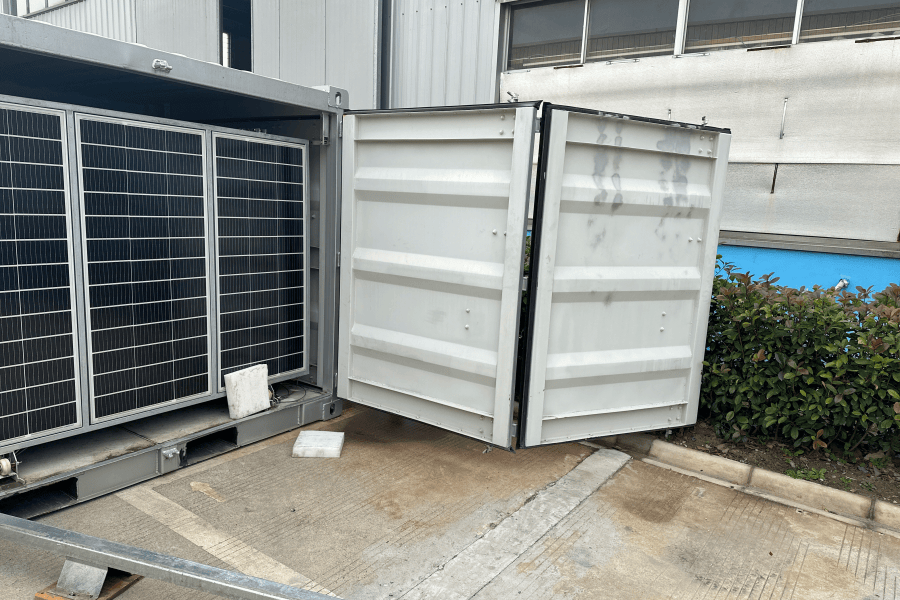
Table of Contents
- The Problem: A Ticking Clock and a Single Point of Failure
- The Real Cost Isn't Just Diesel Fuel
- The Solution: Why Air-Cooled Hybrid Systems Are the Smart Middle Ground
- Making It Work: Thermal Management and Standards You Can Trust
- Case in Point: A German Colocation Facility's Journey
- A Final Thought for Decision-Makers
The Problem: A Ticking Clock and a Single Point of Failure
Let's be honest. When we talk about data center backup power in the US and Europe, the conversation has, for decades, started and ended with one thing: the diesel genset. It's the big, loud, dependable brute in the corner. But after 20+ years on site, from Texas to Bavaria, I've seen the cracks in that model. The core problem isn't that diesel generators don't work - it's that relying solely on them creates a fragile, expensive, and increasingly scrutinized single point of failure.
You know the drill. A grid event happens. Your UPS bridges the gap for a few minutes, and then the diesel fleet is supposed to roar to life, carrying the load indefinitely. But "indefinitely" depends on a just-in-time fuel supply chain that can be disrupted by weather, logistics, or even cyber threats. I've been on site during prolonged outages where the real anxiety shifts from "did the gensets start?" to "how long until the fuel trucks can't get here?" The Comparison of Air-cooled Hybrid Solar-Diesel System for Data Center Backup Power isn't just an academic exercise; it's a direct response to this very real operational vulnerability.
The Real Cost Isn't Just Diesel Fuel
We need to agitate this pain point a bit more. The financial model is breaking. According to the International Energy Agency (IEA), diesel prices, while volatile, face long-term pressure and supply uncertainties. But the cost goes deeper. There's the massive Capex for redundant gensets, the real estate they occupy, the rigorous (and costly) monthly testing mandated by NFPA 110 and similar EU codes, and the emissions compliance headache. In many regions, local ordinances are outright limiting runtime hours for diesel due to NOx and particulate matter concerns.
Honestly, the worst cost is the stranded asset. Those gensets sit idle 99.9% of the time, depreciating. They represent dead capital that isn't providing any value until a crisis hits. Meanwhile, your board and clients are demanding sustainability roadmaps and grid independence. The traditional diesel-only approach answers none of these new market and regulatory demands.
The Solution: Why Air-Cooled Hybrid Systems Are the Smart Middle Ground
So, what's the alternative? This is where the hybrid model shines, specifically the air-cooled hybrid approach. The comparison often boils down to liquid-cooled vs. air-cooled Battery Energy Storage Systems (BESS) integrated with solar PV and a right-sized diesel generator. For most commercial and colocation data centers, the air-cooled hybrid system is the pragmatic, scalable winner.
Think of it as creating a layered defense. Instead of a 48-hour diesel tank, you might have a 4-hour battery buffer coupled with a smaller, more efficient diesel genset and a rooftop solar array. The BESS handles the immediate transition and short-duration outages seamlessly. The solar PV offsets daily consumption and can recharge the batteries during a daytime event. The diesel now becomes the last-resort, deep-backup asset, meaning you can size it down, run it less, and save a fortune on fuel, maintenance, and emissions. At Highjoule, when we design these systems, we're not just swapping components; we're re-architecting the power continuity strategy to be more resilient and financially intelligent.
Key Advantages in the Comparison:
- Lower Total Cost of Ownership (TCO): Reduced diesel capex/opex, fewer runtime hours, and the ability to use the BESS for daily peak shaving or grid services creates a revenue offset.
- Enhanced Reliability: Multiple generation sources eliminate the single point of failure. The BESS provides instant, silent power where diesel has a startup lag.
- Sustainability & Compliance: Drastically cuts carbon footprint and helps meet CSR goals. Simplifies compliance with tightening air quality regulations.
Making It Work: Thermal Management and Standards You Can Trust
I've seen this firsthand on site: the number one concern with containerized or skid-mounted BESS is thermal management. Batteries hate heat. Every degree above their ideal operating range accelerates degradation. This is the crux of the liquid vs. air cooling debate for data center backup.
Liquid cooling is fantastic for ultra-high-density, utility-scale applications where space is ultra-tight. But it's complex - you're dealing with coolant, pumps, and potential leak points. For a data center engineer already managing complex HVAC, adding another liquid loop is a hard sell.
Modern air-cooled BESS, like the ones we deploy at Highjoule, have come a long way. They use intelligent, staged cooling systems with N+1 fan redundancy and advanced battery management software that proactively manages C-rate (the speed of charge/discharge) based on cell temperature. The key is superior cell-to-pack thermal design and ensuring the entire system is built and tested to the right standards - UL 9540 for the energy storage system, UL 1973 for the batteries, and IEC 62933 for overall system safety. This robust, standards-compliant air-cooled approach offers the perfect balance of performance, simplicity, and maintainability that facility teams appreciate.

Case in Point: A German Colocation Facility's Journey
Let me give you a real example from North Rhine-Westphalia. A mid-sized colocation provider faced a dilemma: their diesel gensets needed a costly overhaul to meet new EU emission limits, and their local utility was imposing steep demand charges. They needed a better path.
We worked with them to deploy a 1.5 MW/3 MWh air-cooled BESS, integrated with an existing 500 kW rooftop solar array and their two legacy 1 MW diesel gensets (now kept as final backup). The BESS, certified to all relevant IEC and VDE standards, does three jobs: it provides the first 2 hours of backup for their Tier-3 load, it performs daily peak shaving to cut demand charges by over 30%, and it stabilizes the on-site microgrid. The solar PV directly powers daytime loads and tops up the batteries. The diesel gensets? They haven't run in an emergency in 18 months. Their last monthly test was the only time they spun up. The client's LCOE for backup power plummeted, and they now market their facility as "sustainably resilient." That's the hybrid advantage, quantified.
A Final Thought for Decision-Makers
The conversation about backup power is no longer just about reliability; it's about resilience, intelligence, and fiscal responsibility. The comparison between old-school diesel and modern air-cooled hybrid systems isn't even close when you look at the total picture. The question isn't really if you should integrate storage and renewables into your backup strategy, but how to do it in a way that's safe, compliant, and operationally smooth.
What's the one constraint in your current backup plan that keeps you up at night? Is it fuel logistics, emissions caps, or simply the cost of maintaining readiness? Maybe it's time we chat about how a hybrid layer can address that.
Tags: Renewable Energy Integration UL Standards Data Center Backup Power Hybrid Solar-Diesel System Air-Cooled BESS
Author
James Zhang
20+ years agricultural energy storage engineer / Highjoule CTO