
Air-Cooled Solar Container for Construction Sites: A Cost & Safety Comparison
Contents
- The Construction Power Problem We All Face
- The Hidden Costs (and Headaches) of Diesel
- The Air-Cooled Solar Container: More Than Just a Generator Swap
- From Blueprint to Job Site: A Real-World Case in Texas
- What to Really Look For: A Site Engineer's Comparison Checklist
- It's Not Just About the Box: Deployment and Peace of Mind
The Construction Power Problem We All Face
Honestly, if I've learned one thing from two decades on sites from California to North Rhine-Westphalia, it's this: temporary power is a necessary evil. You need it to run equipment, tools, and site offices, but the traditional diesel generator? It's loud, smelly, increasingly expensive, and frankly, a compliance nightmare with today's emissions regulations. I've seen project managers spend more time worrying about fuel logistics and noise complaints than the actual construction timeline. And now, with ESG goals and local carbon mandates, that diesel genset isn't just an operational cost - it's a reputational risk.
The Hidden Costs (and Headaches) of Diesel
Let's agitate that pain point a bit. We all know fuel is costly. But have you sat down and calculated the total cost? The International Energy Agency (IEA) has consistently highlighted the volatility of diesel prices as a major risk for off-grid operations. It's not just the fuel bill. It's the theft risk, the storage hassles, the twice-daily refueling runs that pull labor off critical tasks. I've seen firsthand on site how a delayed fuel delivery can bring an entire earthworks operation to a standstill. Then there's the maintenance. Those engines need regular oil changes, filter swaps, and overhauls. And the noise? Try holding a crucial safety briefing next to a roaring 250 kVA genset. It's more than an annoyance - it impacts communication and safety.
The real shift, though, is coming from regulations and client demands. In the US, local air quality districts are tightening rules. In the EU, carbon pricing mechanisms are making fossil-fueled temporary power a financial loser. You're not just buying power anymore; you're buying into a liability.
The Air-Cooled Solar Container: More Than Just a Generator Swap
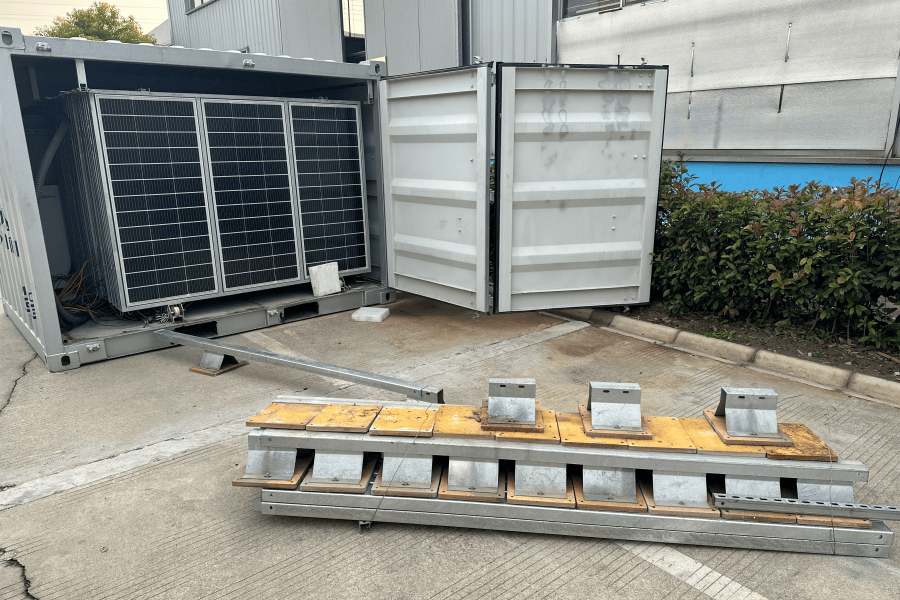
This is where the modern air-cooled solar container for construction site power enters the chat. And I want to be clear: we're not talking about a glorified solar panel setup. We're talking about a fully integrated, containerized Battery Energy Storage System (BESS) that can be paired with a solar canopy. It's a plug-and-play power plant. The core idea is simple: store energy from the grid (or solar) during off-peak, low-cost hours, and dispatch it silently during your workday. For peak sun hours, integrated solar tops up the batteries, slashing your grid draw even further.
The "air-cooled" part is crucial for construction. Liquid-cooled systems have their place, but for the dust, debris, and relative simplicity needed on a temporary site, a well-designed forced-air cooling system is robust and easier to maintain. The key is in the design - ensuring proper ingress protection (IP rating) and dust separation so you're not sucking in construction site and damaging your battery cells.

From Blueprint to Job Site: A Real-World Case in Texas
Let me give you a concrete example. We worked with a mid-sized commercial developer near Austin, Texas. Their challenge: power a 5-acre site for a new retail complex. Diesel quotes were astronomical, and the site was adjacent to a new residential area, making noise a major concern.
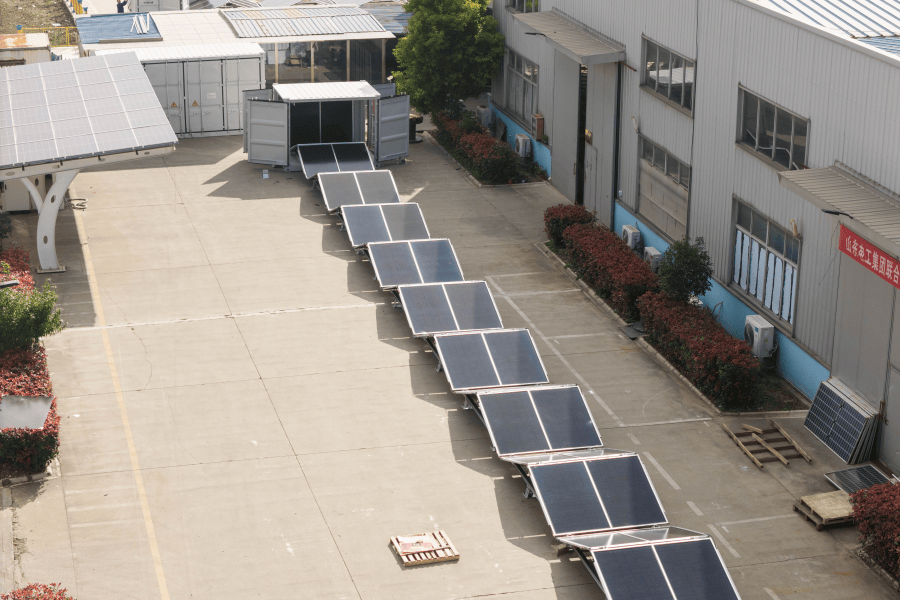
The solution was a 500 kWh air-cooled solar container from Highjoule, topped with a 150 kWp solar canopy. Here's how it broke down:
- Challenge: High fuel costs, strict noise ordinances, 24/7 security lighting load.
- Deployment: The container was delivered, placed on a leveled gravel bed, and was online within 48 hours. All connections were plug-and-play.
- Result: They eliminated daily fuel runs. The system's silent operation kept the neighbors happy. Their energy costs for the site dropped by an estimated 60% compared to the diesel forecast. The solar canopy provided enough day-time power for tools and charging, drastically reducing grid consumption during peak pricing periods. The project manager's main feedback? "It was set-and-forget."
What to Really Look For: A Site Engineer's Comparison Checklist
So, you're comparing options. Look beyond the brochure's kWh number. Here's my insider checklist:
| Factor | What to Ask / Look For | Why It Matters on Site |
|---|---|---|
| Safety & Certification | UL 9540 / IEC 62933 system certification. UL 1973 for cells. Fire suppression system inside. | This is non-negotiable. It ensures the system meets rigorous North American & international safety standards. It affects your site insurance and compliance. |
| Thermal Management | Air-cooling design with high-efficiency fans, IP54+ rating for dust/water resistance, and proper airflow design. | Prevents overheating (which kills battery life) and ensures reliable operation in dusty, hot, or cold site conditions. A poorly designed system will throttle power or fail. |
| C-rate & Power | Continuous and peak C-rate (e.g., 0.5C continuous, 1C peak). Can it run your big welder or crane? | This tells you if the battery can deliver high power bursts. A low C-rate might be fine for lighting, but not for simultaneous heavy equipment. Match this to your site load profile. |
| Levelized Cost of Energy (LCOE) | Ask for a simple LCOE comparison vs. diesel for your project duration and local fuel/electricity rates. | LCOE gives you the true cost per kWh over the system's life. It factors in capital cost, "fuel" (grid/solar), maintenance, and replacement. A good air-cooled BESS should show a significantly lower LCOE than diesel for projects over 6 months. |
| Grid Interconnection | Built-in grid-forming capability or simple AC coupling. Does it need extra hardware to connect to your site transformer? | Simplifies setup. Grid-forming capability allows it to act as a stable voltage source, crucial if the local grid is weak or you want to operate in a microgrid mode with solar. |
At Highjoule, when we design our site power containers, we bake these factors in from the start. For instance, our standard air-cooled containers are built to UL 9540 from the ground up, and we use a proprietary ducting design that maximizes cooling while minimizing dust intake - a lesson learned from years of desert and urban deployments.
It's Not Just About the Box: Deployment and Peace of Mind
The final, and often overlooked, part of the comparison of air-cooled solar container for construction site power is the service wrapper. You're not buying a product; you're renting a power outcome. Key questions: What's the delivery and commissioning timeline? Is remote monitoring included so you can see your power usage and state of charge from your trailer? What's the response time for service if an alarm pops up?
Our model is built on local partnerships. We have technicians trained to UL and IEC standards in key markets, because a manual written in broken English isn't helpful when you need support. We provide a clear dashboard showing your diesel savings and carbon avoidance in real-time - data that's gold for your project's sustainability report.
So, the next time you're budgeting for site power, don't just compare the upfront rental price of a diesel genset versus a battery container. Compare the total ecosystem: cost, risk, compliance, and peace of mind. The math, and the air quality on your site, will speak for itself.
What's the biggest hurdle you've faced with temporary site power? Is it the cost volatility, the noise, or the growing pressure from clients to go green?
Tags: Construction Site Power UL Standard BESS Energy Storage Air-Cooled Container
Author
James Zhang
20+ years agricultural energy storage engineer / Highjoule CTO