
LFP Hybrid Solar-Diesel Systems for Coastal Sites: A Practical Guide
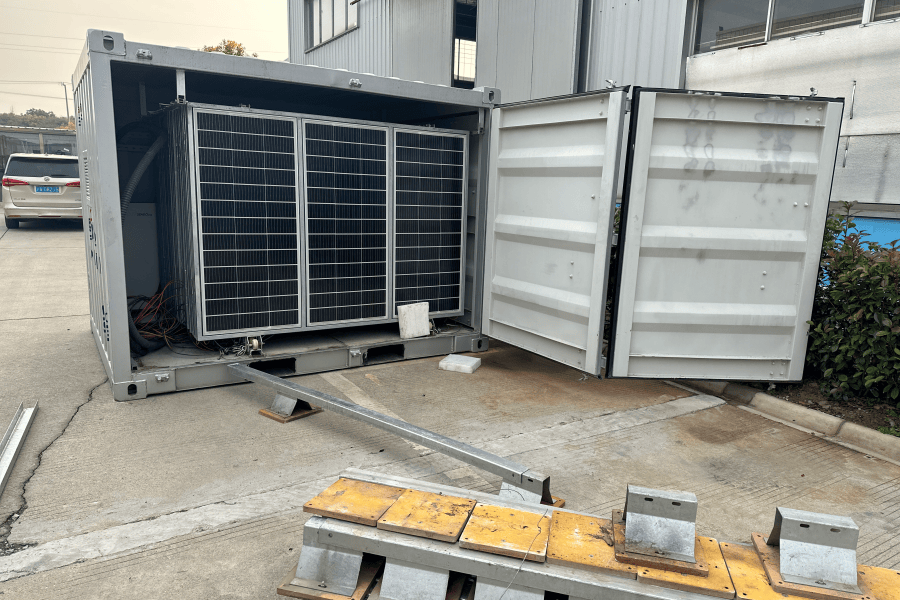
Table of Contents
- The Silent Killer of Coastal Energy Projects
- Why Standard Solutions Fall Short by the Sea
- The LFP Hybrid System: Engineered for the Edge
- From Theory to Reality: A Portside Success Story
- Beyond the Spec Sheet: What Really Matters On-Site
The Silent Killer of Coastal Energy Projects
Let's be honest. When we talk about deploying battery energy storage systems (BESS) in coastal areas - think of those critical ports, remote telecom sites, or island microgrids in Florida or the Mediterranean - most of the initial conversation is about capacity, solar yield, and diesel displacement. But the real conversation, the one that happens six months or a year after commissioning, often revolves around a silent, creeping issue: corrosion. Salt-laden air and spray don't just rust the fence; they aggressively attack the very heart of your energy resilience project.
I've been on-site for post-mortems where a supposedly robust hybrid system started failing prematurely. The culprit? Internal battery component degradation accelerated by salt mist intrusion, leading to thermal runaway risks and, frankly, a scary conversation about safety. It's a problem that isn't always in the glossy brochure but becomes a massive operational and financial headache.
Why Standard Solutions Fall Short by the Sea
Here's the painful truth many learn too late: a standard lithium-ion battery system, even in a NEMA 3R enclosure, isn't built for a continuous salt-spray environment. The chemical cocktail in coastal air accelerates corrosion on busbars, cell casings, and sensor connections. This isn't just about a shorter warranty lifespan. It directly impacts two things every site manager loses sleep over: safety and Levelized Cost of Energy (LCOE).
Increased internal resistance from corrosion leads to heat buildup. Poor thermal management in a compromised system is a recipe for disaster. On the financial side, the National Renewable Energy Laboratory (NREL) has shown that unexpected maintenance and premature replacement can inflate the LCOE of a storage project by 30% or more in harsh environments. You save on diesel, only to pour money into constant battery repairs or a full swap-out years ahead of schedule. That's a business case falling apart.
The LFP Hybrid System: Engineered for the Edge
So, what's the answer? Through two decades of trial, error, and success, the industry has converged on a specific solution for these harsh hybrid applications: the LFP (LiFePO4) battery-based hybrid solar-diesel system. But it's not just about the chemistry scribbled on the cell. It's about a holistic system designed from the ground up for coastal duty.
Let's break down the comparison, practically. An LFP cell is inherently more stable than other lithium-ion types - its phosphate-based cathode material is far less prone to thermal runaway, a critical safety margin when environmental stress is a factor. But the real magic for coastal use comes from the system integration. At Highjoule, for instance, we don't just drop LFP cells into a standard container. We design our BESS units with corrosion-resistant coatings on all internal metalwork, positive pressure filtration systems to keep salt-laden air out, and specify components that meet or exceed UL 9540 and IEC 61427-2 standards for environmental testing. This creates a system where the durable LFP chemistry is protected by an equally durable enclosure and thermal management system.

The hybrid controller is the brain. It's not just about switching between solar, battery, and diesel genset. In a coastal setup, smart cycling is key. We program it to avoid shallow discharges that can increase corrosion stress on battery plates, and to ensure the diesel generator runs under optimal load when needed, preventing "wet stacking" in the humid air - another common issue I've seen firsthand.
From Theory to Reality: A Portside Success Story
Let me give you a real example from the Northern German coast. A medium-sized fishing port wanted to reduce diesel use for its cold storage and lighting loads, but their first attempt with a generic NMC-based storage system led to constant alarm triggers within 18 months. We were brought in to solve it.
The challenge was classic: salt spray, high humidity, and a need for 24/7 reliability. The solution was our tailored LFP hybrid system. We deployed a 500kW/1MWh BESS integrated with their existing solar carport and two legacy diesel generators. The key????? First, we used a C-rate of 0.5C for daily cycling - a gentler, less stressful pace for the batteries that extends life in corrosive conditions. Second, the thermal management was designed for high ambient humidity, using dehumidification loops within the container to keep internal components dry. Three years on, the system has cut diesel usage by over 70%, and the performance data shows zero capacity degradation outside the expected curve. The port manager's main feedback? "It just works. No surprises."
Beyond the Spec Sheet: What Really Matters On-Site
If you're evaluating a Comparison of LFP (LiFePO4) Hybrid Solar-Diesel System for Coastal Salt-spray Environments, look beyond the basic kWh and cycle life numbers. Here's my insider take:
- Ask about the "C-Rate in Context": A 1C rate might look good on paper for faster charging. But in hot, salty air, a lower C-rate (like 0.25C-0.5C) reduces heat generation and electrochemical stress, which is a major win for long-term health. It's about system longevity, not just peak power.
- Thermal Management is THE Differentiator: It's not just air conditioning. It's about sealed, liquid-cooled modules or a positively pressurized air system with corrosion-resistant filters. Does the design keep the salt out and maintain a stable, dry temperature? That's the question.
- LCOE is a Local Calculation: Your LCOE in coastal Maine is different from one in Greece. The right LFP hybrid system lowers it not by having the cheapest upfront cost, but by having the highest predictable performance over 15+ years with minimal downtime. Factor in the avoided cost of a full system replacement in 5 years.
The goal isn't to sell you a battery. It's to deliver predictable, safe power for the next 15-20 years, in an environment that eats metal for breakfast. That requires a partner who understands the physics, the chemistry, and the reality of salt on a Monday morning. So, what's the one reliability risk in your coastal energy plan that keeps you up at night?
Tags: UL Standard BESS LCOE Europe US Market Renewable Energy LFP Battery Hybrid System Coastal Energy
Author
James Zhang
20+ years agricultural energy storage engineer / Highjoule CTO