
Rapid Deployment ESS Containers for Eco-Resorts: Cut Costs & Boost Reliability
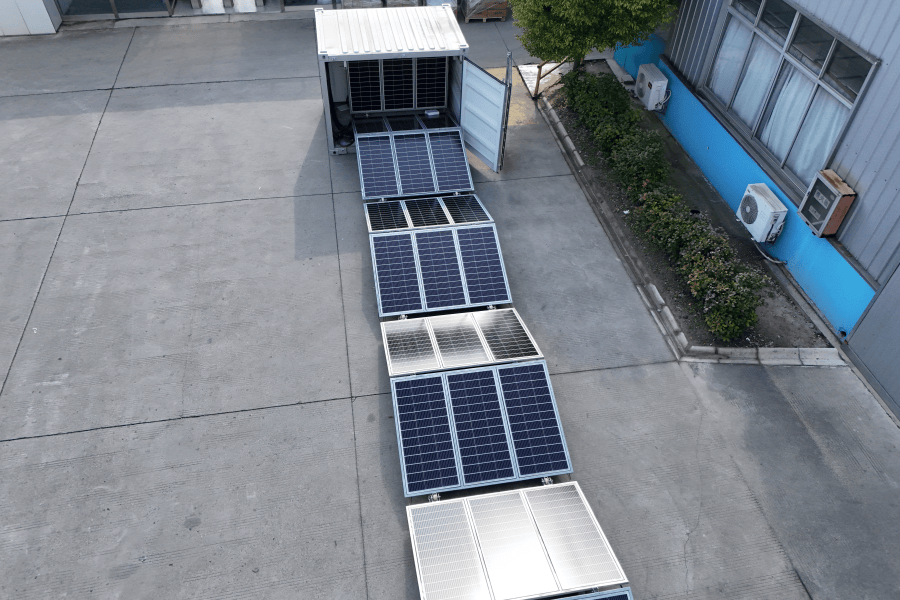
Table of Contents
- The Silent Problem at Your Picture-Perfect Location
- Beyond the Spreadsheet: The Real Cost of "Making Do"
- The Container Advantage: It's Not Just a Steel Box
- Key Comparison Points for Your Rapid Deployment ESS
- A Case in Point: From Blueprint to Reality in Under 90 Days
- Your Next Step: Asking the Right Questions
The Silent Problem at Your Picture-Perfect Location
Let's be honest. When you're running an eco-resort, the last thing you want to think about is the humming substation or the diesel generator tucked behind the bamboo grove. Your guests are here for pristine nature and seamless comfort. But the energy reality? It's often the opposite of serene. I've been on-site at dozens of these projects, from the sun-drenched islands of the Mediterranean to remote mountain lodges in North America. The story is eerily similar: skyrocketing demand charges from the utility, unreliable or non-existent grid connections, and a genuine desire C sometimes a mandate C to run on clean energy. The problem isn't the will; it's the how. How do you deploy robust, industrial-grade energy storage quickly, without turning your resort into a multi-year construction site?
Beyond the Spreadsheet: The Real Cost of "Making Do"
Many operators I talk to initially look at piecemeal solutions or try to scale residential-grade units. It seems cheaper on paper. But then the real costs hit. I've seen a project where poor thermal management in an undersized system led to a 40% capacity loss during peak summer occupancy C right when they needed it most. Another common issue? Safety certifications. A system not built to UL 9540 or IEC 62933 standards might pass local inspection, but it's a liability nightmare waiting to happen. According to the National Renewable Energy Laboratory (NREL), operational inefficiencies and downtime can increase the Levelized Cost of Energy (LCOE) C that's your total lifetime cost per kWh C by up to 30% for poorly integrated systems. That's not just a line item; that's your margin evaporating.
Honestly, the biggest agitation point isn't the upfront price tag of a proper system. It's the lost revenue from guest discomfort during outages, the punitive peak demand tariffs, and the constant operational anxiety for your team.
The Containerized Solution: It's Not Just a Steel Box
This is where the rapid deployment industrial ESS container changes the game. We're not talking about a glorified shipping container. Think of it as a fully integrated, pre-fabricated power plant on a skid. The real value in any comparison lies in what's inside and how it's engineered. At Highjoule, we've spent two decades refining this. The goal is to deliver a solution where the "rapid deployment" isn't a compromise on safety or performance, but its core feature.

Key Comparison Points for Your Rapid Deployment ESS
When you're comparing offerings, don't just look at the kWh and MW numbers. Dig into these practical aspects. They make all the difference on the ground.
- Deployment Speed & Site Footprint: A true rapid-deployment unit should be on-line in weeks, not months. It requires minimal site prep C a level concrete pad is often enough. Compare the total area needed, including safety clearances.
- Safety & Compliance as a Foundation: This is non-negotiable. Every component, from the battery racks to the power conversion system, must be certified to relevant UL or IEC standards. Ask for the certification documents. A system built to UL 9540 has undergone rigorous testing for fire and electrical safety.
- Thermal Management Intelligence: This is the unsung hero. I've seen firsthand how a liquid-cooled system, versus a basic air-cooled one, maintains optimal cell temperature. It extends battery life by years and ensures you get the full power (the high C-rate) you paid for, even on the hottest or coldest days.
- Grid Interaction & Software Brains: Can it do peak shaving, frequency regulation, and black start? The hardware is one thing, but the energy management system (EMS) is what turns a battery into a revenue-generating asset. It should seamlessly integrate with your existing solar PV and backup generators.
- Total Lifetime Value (LCOE Focus): A cheaper system with a 5-year warranty might cost you double over 15 years compared to a premium system with a 15-year performance guarantee. Always model the LCOE, factoring in degradation, efficiency, and expected maintenance.
A Case in Point: From Blueprint to Reality in Under 90 Days
Let me share a scenario from a project we completed in Northern California. A high-end eco-lodge was adding 20 villas and a spa. Their grid connection was maxed out, and a new transformer would cost over $500k and take 18 months. Their challenge was immediate capacity and future renewables integration.
We deployed a 2 MWh Highjoule rapid deployment industrial ESS container, pre-configured to California's strict codes. The container arrived with all electrical work completed internally. On-site, it was a matter of connecting AC and DC conduits to pre-marked points. From site delivery to commissioning, it was 11 weeks. The system now shaves their peak demand by over 70%, saving tens of thousands monthly, and provides 4 hours of backup for critical loads. More importantly, it's ready for the 500 kW solar array they're installing next season. The container was the enabling piece, solving today's problem while building the foundation for a 100% renewable microgrid tomorrow.
Expert Insight: Demystifying the Tech for Decision-Makers
You'll hear terms like "C-rate" thrown around. Simply put, it's how fast you can charge or discharge the battery relative to its size. A 1C rate means you can use the full capacity in one hour. For peak shaving, you need a high C-rate (like 1C or more) to dump power quickly when the grid demand spikes. The thermal system I mentioned is what makes that sustainable. Without it, the battery overheats and throttles back C just when you need it most. It's like a high-performance engine: it needs a superior cooling system to maintain its power.

Your Next Step: Asking the Right Questions
The market is full of options for energy storage. For your eco-resort, the path forward isn't about finding the cheapest battery. It's about finding the most reliable, safest, and fastest-to-deploy power system that aligns with your sustainability and business goals. When you sit down with vendors, move beyond the spec sheet. Ask them: "Walk me through your UL 9540 test report," or "Show me the LCOE projection for my specific load profile over 15 years."
What's the one energy constraint that keeps you up at night, and how quickly do you need it solved?
Tags: Energy Storage Container UL Standard BESS LCOE Europe US Market Renewable Energy Eco-Resort
Author
James Zhang
20+ years agricultural energy storage engineer / Highjoule CTO