
Scalable Modular PV Storage for Data Center Backup: A Practical Guide
Thinking Beyond the Generator: A Real Talk on Scalable PV Storage for Data Centers
Hey there. If you're reading this, you're probably looking at that corner of your data center property or your next project's blueprints, thinking about backup power. Honestly, for years, that conversation started and ended with diesel gensets. But I've been on enough sites - from Silicon Valley to Frankfurt - to see the landscape shifting. The question isn't just about backup anymore; it's about resilience, sustainability, and frankly, long-term economics. Let's chat about what that really means for scalable, modular solar-plus-storage systems.
What We'll Cover
- The Real Problem: It's More Than Just Backup
- Why This Hurts: The Hidden Costs of Traditional & Rigid Systems
- The Solution: The Scalable, Modular Mindset
- A Case in Point: A German Colocation Facility's Journey
- Key Factors in Your Comparison: Beyond the Spec Sheet
- Making It Real: What Deployment Actually Looks Like
The Real Problem: It's More Than Just Backup
The classic mindset is simple: meet the uptime requirement (Tier III, Tier IV) with a generator that can carry the full load. But that's a very one-dimensional view. The real pain points I see with clients in the US and Europe today are about flexibility and value. Data centers are dynamic. Your IT load today isn't what it will be in 18 months. Building a massive, monolithic Battery Energy Storage System (BESS) for a future peak load means you've over-invested for years. Or, you undersize it and face a costly, disruptive upgrade later.
Then there's the grid itself. In California or parts of Germany, the grid isn't just unreliable in a storm-event sense; it's actively managed. Utilities issue curtailment requests or time-of-use rates that make pulling power expensive. Your backup system just sits there 99% of the time, a cost center. That's a tough CAPEX to justify when stakeholders are also demanding you hit ESG targets and reduce your operational carbon footprint.
Why This Hurts: The Hidden Costs of Traditional & Rigid Systems
Let's agitate this a bit, based on what I've seen firsthand. A traditional, large-scale BESS is often a "big bang" installation. It requires a huge upfront footprint, complex utility interconnection studies that can take over a year, and a significant balance-of-system cost for HVAC, fire suppression, and switchgear.
The financial model suffers. According to the National Renewable Energy Laboratory (NREL), system integration and soft costs can account for a major portion of total BESS project costs. Every day of extended commissioning is a day your asset isn't providing value. And from a safety perspective, a large, centralized battery bank presents a single point of failure and a more complex thermal management challenge. Meeting standards like UL 9540 and IEC 62933 becomes a monumental, all-at-once certification effort.

The Solution: The Scalable, Modular Mindset
This is where a true Comparison of Scalable Modular Photovoltaic Storage System for Data Center Backup Power becomes critical. We're not talking about just buying a bigger box. We're talking about a fundamental architectural shift.
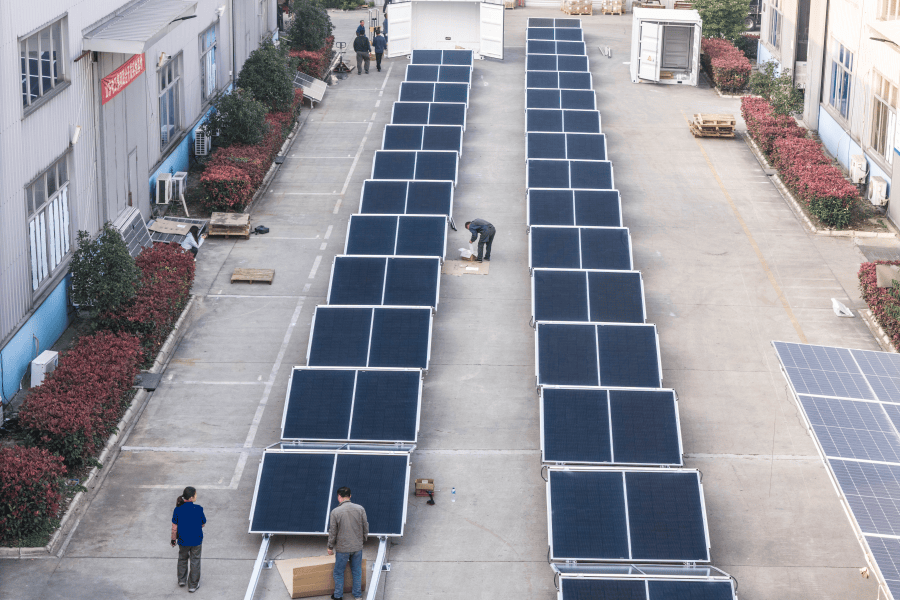
Think of it like adding servers to a rack. A scalable modular system is built from pre-engineered, factory-tested units - power conversion, battery racks, cooling - all in a single containerized or skid-mounted package. You start with what you need for your Phase 1 load. When you build out the next data hall, you drop another identical module next to it, link it to the master controller, and you've scaled your storage and generation in tandem with your IT load. The footprint grows linearly with your needs.
For us at Highjoule, this isn't a new concept; it's the core of how we've designed systems for microgrids for a decade. The beauty is in the operational flexibility. During normal operations, these modules aren't sitting idle. They're performing energy arbitrage, peak shaving to avoid demand charges, and providing grid services like frequency regulation. When the grid dips, they seamlessly island the data center, with the PV providing sustained generation. You've transformed a cost center into a revenue-supporting asset.
A Case in Point: A German Colocation Facility's Journey
Let me give you a real example from a project we were involved in near D1sseldorf. The client was a colocation provider with a 10MW facility, with plans to expand to 20MW in four years. Their challenge was twofold: comply with stringent local grid support codes and provide backup for their Tier III certification, all while showing a positive ROI.
The solution was a modular PV-plus-storage system. We deployed an initial 2 MWh of storage across four 500kWh modular containers, coupled with a 1.5 MWp rooftop PV array. The system was designed for concurrent operation: daily peak shaving, automatic grid frequency response, and backup. The modular design meant the entire system was commissioned and certified to IEC 62933 in under six months. The best part? Their expansion is now a non-issue. The next data hall build will simply get another 500kWh module and more PV panels. The controller already knows how to manage it. The CFO loved the phased CAPEX, and the operations team loved the simplicity.
Key Factors in Your Comparison: Beyond the Spec Sheet
When you're comparing these systems, don't just look at the $/kWh sticker price. Dig deeper with your engineering team or vendor on these points:
- True Scalability: Is it just adding battery racks, or does it include balanced scaling of inverters, cooling, and safety systems? Adding a battery module without proportional power conversion is pointless.
- Thermal Management: This is huge. A module's cooling system must be independently effective and not degrade performance when modules are stacked side-by-side. I've seen systems where the second module's intake is just hot air from the first module's exhaust - a recipe for premature aging.
- C-rate in Context: A high C-rate (like 1C or 2C) means you can discharge fast for short grid outages. But for longer-duration backup where PV can recharge the packs, a moderate C-rate (0.5C) is often more than sufficient and leads to better battery longevity and a lower Levelized Cost of Storage (LCOS). It's about matching the discharge profile to your real risk scenario.
- Safety & Compliance by Design: Each module should be a self-contained, pre-certified unit (UL 9540 in the US, IEC 62933 in EU). Ask: "If I have a thermal event in one module, does it isolate itself without taking down the entire storage array?" In a data center, that containment is everything.

Making It Real: What Deployment Actually Looks Like
So, how do you make this work? The advantage of the modular approach is that it turns a construction project into more of a logistics and integration exercise. Site work is standardized: you're preparing a simple, level pad with utility connections. The brains of the system - the master microgrid controller - is where the magic happens. It needs to seamlessly orchestrate between all the modules, the PV inverters, the existing gensets, and the data center's electrical distribution.
At Highjoule, our focus is on that controller intelligence and the service model around it. We provide the system with the software that lets you set priorities: "During a grid outage, prioritize cooling for Hall A for 48 hours." Or, "Maximize energy arbitrage revenue unless the battery SOC falls below 40% reserved for backup." The hardware is important, but the operational intelligence is what delivers the ROI and resilience.
Honestly, the industry is moving this way. The question for your team isn't if a scalable PV-storage hybrid makes sense for data center backup and operations, but how to implement it in a way that aligns with your growth and financial models. The old way of thinking about backup is, well, running out of juice.
What's the one constraint in your next project that makes you think a modular approach could be the answer?
Tags: UL Standard BESS LCOE Modular Energy Storage Data Center Backup US EU Market Scalable PV Storage
Author
James Zhang
20+ years agricultural energy storage engineer / Highjoule CTO