
Environmental Impact of 215kWh Cabinet Lithium Battery Storage for Construction Sites
Beyond the Noise: The Real Environmental Footprint of Your Construction Site Power
Hey there. Grab a coffee and pull up a chair. I want to talk about something we see on every job site we visit: the diesel generator. That constant, rumbling heartbeat of construction. We all know it's necessary, but honestly, after twenty years in this field, I've developed a real love-hate relationship with them. They get the job done, but at what cost? Not just the obvious fuel bills, but the hidden environmental toll that's becoming harder for project managers and site owners to ignore. Today, let's cut through the noise and look at a cleaner, smarter heartbeat for your site: the 215kWh cabinet-style lithium battery storage container. Let's talk about its real, on-the-ground environmental impact.
Quick Navigation
- The Hidden Cost of "Business as Usual"
- Beyond Carbon: The Ripple Effect of Site Emissions
- A Quieter, Cleaner Solution: The 215kWh Cabinet BESS
- Making It Work: Insights from the Field
- Looking Ahead: Is Your Next Site Ready?
The Hidden Cost of "Business as Usual"
Let's start with the problem we're all familiar with. You roll onto a new site, and the first order of business is often setting up temporary power. For decades, that's meant diesel gensets. They're reliable, they're powerful, and they're... incredibly inefficient for the job we typically ask them to do. I've seen this firsthand on site after site. A massive 500kVA generator humming away at 30% load just to power some site offices, lighting, and maybe a couple of electric tools. According to the National Renewable Energy Laboratory (NREL), diesel generators can see a 30-40% drop in fuel efficiency when operating at partial load, which is their most common state. That's not just wasted money; it's wasted fuel and unnecessary emissions poured directly into the local environment.
Beyond Carbon: The Ripple Effect of Site Emissions
When we talk about environmental impact, CO2 gets the headlines. But on a construction site, the story is more complex. We're talking about nitrogen oxides (NOx), particulate matter (PM), and carbon monoxide - all spewing out right where people are working and often near communities. These aren't just greenhouse gases; they're immediate local air pollutants. I remember a project in California where the air quality management district regulations were so tight, we had to constantly monitor and log generator runtime. The administrative burden was almost as heavy as the environmental one. And let's not forget the noise pollution. It's not just an annoyance; it can limit permissible working hours, strain community relations, and frankly, it wears on the crew's wellbeing day after day. This is the full, unspoken cost of traditional site power.
The Data Behind the Dilemma
The International Energy Agency (IEA) has highlighted that decarbonizing "off-grid" applications like construction is a critical, yet often overlooked, piece of the net-zero puzzle. Think about it: temporary power is a perfect use case for storage - it's a defined duration, with predictable load profiles (high during the day, low at night), and a clear need for reliability.
A Quieter, Cleaner Solution: The 215kWh Cabinet BESS
This is where the 215kWh lithium-ion battery cabinet comes in, not as a magic bullet, but as a profoundly practical tool. Its environmental impact is best understood in terms of what it replaces and what it enables.
First, direct displacement. By pairing a battery cabinet with a smaller, optimally-sized generator (or a silent solar array), you create a hybrid system. The generator runs only at its most efficient, high-load point to charge the batteries, then shuts off. The batteries then silently power the site loads. I've seen systems where generator runtime is cut by 70% or more. That's a direct 70% reduction in on-site fuel consumption, emissions, and noise. Suddenly, you're not just complying with regulations; you're exceeding them effortlessly.
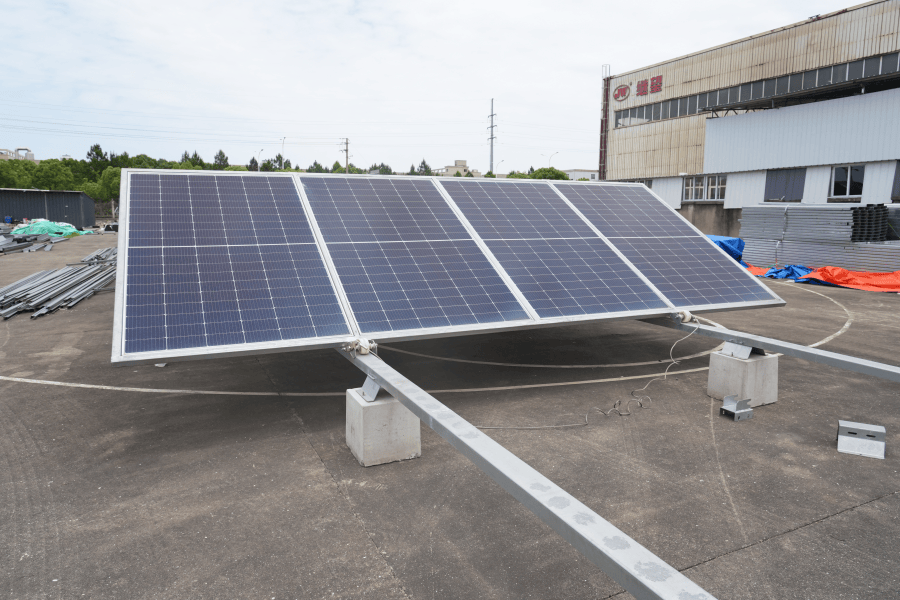
Second, enabling renewables. A 215kWh container is a perfect partner for temporary solar canopies now common on larger sites. It soaks up the midday sun and delivers power through the evening. This isn't a futuristic concept; we deployed this exact setup for a warehouse development in North Rhine-Westphalia, Germany. The goal was to minimize grid connection delays and avoid diesel entirely for base loads. The BESS, charged by a temporary PV array, powered all site offices and security systems, achieving true zero-emission daytime operation. The client wasn't just an environmental champion; they saved thousands on avoided fuel and faster grid approval.

Now, you might be thinking about the battery's own footprint - the "embedded" energy in manufacturing. It's a fair question. The industry term to answer this is Energy Payback Time (EPBT). For modern lithium-ion systems used in cycling applications (like daily charge/discharge on a site), studies show the EPBT can be less than two years. Given that a construction project might use the same BESS unit across multiple 6-12 month sites, its operational carbon savings quickly outweigh its manufacturing footprint. It's a net positive, and it keeps getting better as the grid itself gets greener.
Making It Work: Insights from the Field
Okay, so the environmental benefits are clear. But how do you make sure it works reliably and safely? This is where the engineering details matter. At Highjoule, when we design a system like our 215kHC Cabinet series for construction, we're obsessed with two things: thermal management and longevity.
Thermal Management isn't just a cooling system. It's the guardian of battery life and safety. Lithium batteries hate being too hot or too cold. A poorly managed container in the Arizona sun or a Minnesota winter will degrade fast, undermining both its economic and environmental case. Our cabinets use an active liquid cooling system that maintains an optimal temperature range year-round. This isn't a luxury; it's what ensures the 10,000-cycle lifespan we promise, maximizing the environmental return on investment.
Then there's the C-rate - basically, how fast you charge and discharge the battery. For site power, you don't need explosive power bursts (a high C-rate). You need steady, reliable energy over a shift (a low to moderate C-rate). Designing for the right C-rate reduces stress on the cells, again extending life and safety. It's about right-sizing the technology to the application, not over-engineering it.
And of course, none of this leaves our factory without being built to and tested against UL 9540 and IEC 62619 standards. These aren't just stickers. They represent a rigorous set of safety and performance benchmarks that are non-negotiable for deployment in the US and Europe. They give site managers and insurers the confidence that this new piece of kit is as safe as it is green.
Looking Ahead: Is Your Next Site Ready?
The conversation around construction is shifting. It's no longer just about budget and timeline; it's about the legacy of the project itself. Local communities, investors, and regulators are all asking tougher questions about sustainability. Deploying a 215kWh battery storage container is a visible, measurable step toward a better answer.
The math is becoming undeniable. When you factor in avoided fuel costs, potential carbon tax savings, reduced noise permitting headaches, and the positive PR of a cleaner site, the Levelized Cost of Energy (LCOE) for these hybrid systems is becoming highly competitive with diesel-only setups. And that's before you consider the pure cost of not acting.
So, here's my question for you, based on what I've seen work from Texas to Bavaria: On your next site walkthrough, when you hear that generator rumble, what will you imagine replacing it? What would a quieter, cleaner site make possible for your team, your community, and your bottom line?
Tags: Construction Site Power UL Standard BESS LCOE Europe US Market Renewable Energy
Author
James Zhang
20+ years agricultural energy storage engineer / Highjoule CTO