
Environmental Impact of C5-M Anti-corrosion Energy Storage Container for Eco-resorts
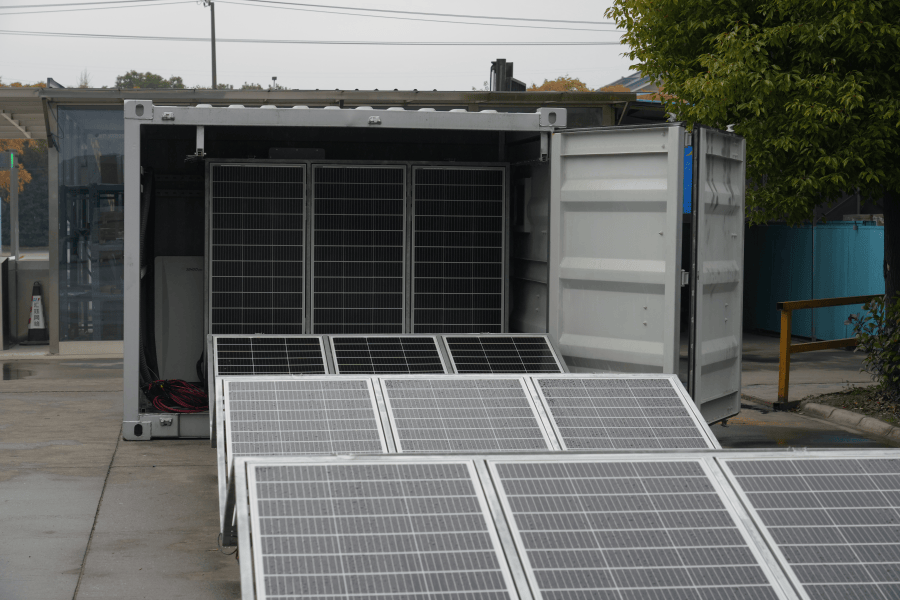
Beyond the Greenwash: The Real Environmental Impact of Your Energy Storage Container
Hey there. Let's be honest for a second. When we talk about sustainability in eco-resorts or remote commercial sites, the conversation is laser-focused on the solar panels and the wind turbines. The shiny, visible stuff. But after 20 years on sites from the California coast to the Scottish Highlands, I've seen the other, often overlooked, piece of the puzzle: the battery storage container sitting quietly in the corner. And honestly, its environmental footprint, especially over a 15-20 year lifespan, can make or break your green credentials. Today, I want to chat about a specific, critical factor that's a huge deal for coastal or humid locations: the Environmental Impact of C5-M Anti-corrosion Energy Storage Container for Eco-resorts.
Quick Navigation
- The Hidden Problem: When "Green" Infrastructure Rusts
- The Real Cost Isn't Just Financial
- The C5-M Solution: More Than Just a Coating
- A Real-World Case: A California Eco-Lodge's Wake-Up Call
- Under the Hood: What Makes a Truly Sustainable Container?
- Making the Right Choice for Your Project
The Hidden Problem: When "Green" Infrastructure Rusts
Picture this. You've invested millions into a beautiful, off-grid eco-resort. Your marketing is all about pristine nature and low impact. Then, five years in, your operations manager sends you a photo. The brand-new battery container you installed near the sea is showing premature corrosion. Flaking paint, rust streaks. It's not just an eyesore; it's a ticking time bomb for system failure.
This is the unspoken headache in coastal, tropical, or high-humidity industrial zones. Standard ISO containers or lightly coated units simply aren't rated for these environments. The ISO 12944 standard defines corrosivity categories. C5-M is the big one C it stands for "Marine and offshore areas with high salinity." Think salt spray, constant moisture, and aggressive chemical atmospheres. If your site is within 5-10 miles of a coast, or in a region with high pollution and humidity, you're likely in a C5-M environment.
The Real Cost Isn't Just Financial
So the container gets a little rusty. Big deal, right? Let me tell you, from firsthand site visits, it's a cascade of problems.
- Premature Failure: Corrosion compromises structural integrity. It can breach seals, allowing moisture and salt ingress directly onto your battery racks, HVAC units, and electrical busbars. I've seen a single leak cause a $200k battery string failure. The Levelized Cost of Storage (LCOS) for that project went through the roof.
- Safety & Reliability Risks: Corroded electrical connections increase resistance, leading to hotspots and potential fire hazards. A compromised container also fails its critical role of containing any thermal event, a non-negotiable for UL 9540 and IEC 62933 compliance.
- The "Green" Paradox: This is the worst part. Replacing a corroded container 10 years early means manufacturing, shipping, and disposing of an entire unit. The embodied carbon footprint is massive. You're literally throwing away a piece of infrastructure, undermining the very environmental benefits your solar+storage system was meant to provide. According to a 2023 NREL report, maximizing the usable lifetime of BESS components is the single biggest lever for minimizing lifecycle environmental impact.
The C5-M Solution: More Than Just a Coating
This is where a purpose-built C5-M anti-corrosion energy storage container shifts from a cost line item to a strategic asset. It's not just a thicker coat of paint. It's a holistic design philosophy for longevity in harsh environments.
At Highjoule, when we engineer for C5-M, we're thinking about the full lifecycle. It starts with the steel substrate C pre-treatment is everything. Then, it's a multi-layer system: epoxy zinc-rich primers, high-build epoxy intermediate coats, and chemical-resistant polyurethane topcoats. Every seam, weld, and bolt gets special attention. We also specify stainless steel or hot-dip galvanized fittings for doors, hinges, and vents. The goal is to create a barrier that lasts the full design life of the internal battery system, often 20 years.

A Real-World Case: A California Eco-Lodge's Wake-Up Call
Let me give you a concrete example. A few years back, we were called to a high-end eco-lodge in Big Sur, California. Stunning cliffs, Pacific Ocean views. They had a 2 MWh storage system installed 6 years prior by another vendor. The container was facing the ocean.
The challenge? Severe pitting corrosion on the sea-facing wall, and moisture alarms were going off inside. The lodge faced a nightmare: potential system shutdown during peak season, a huge unplanned CapEx for replacement, and a real PR risk to their eco-brand.
Our solution wasn't a simple swap. We deployed a pre-fabricated Highjoule C5-M container designed for rapid, minimal-disruption deployment. The key?? details:
- We matched the new container's footprint and interconnection points to minimize civil work.
- The internal racking and HVAC were pre-integrated and tested, cutting on-site commissioning from weeks to days.
- We used the project to upgrade their thermal management to a more efficient, less energy-intensive system, further reducing the site's operational carbon footprint.
The outcome? The system was back online in record time. The financial was saved, but more importantly, the lodge's management now views the storage container as a permanent, resilient asset, not a consumable. Their total cost of ownership projections are now stable for the next two decades.
Under the Hood: What Makes a Truly Sustainable Container?
When I'm evaluating the true environmental impact, I look past the marketing and dig into three technical areas that directly link corrosion protection to sustainability.
1. Thermal Management Efficiency: A corroded or compromised container shell can't insulate properly. This makes the HVAC system work harder, consuming more energy (often from diesel gensets in remote sites) to keep batteries at optimal 25C. A robust C5-M shell with proper insulation maintains stable temps, reducing parasitic load. This directly improves your system's round-trip efficiency and lowers operational emissions.
2. Material Science & End-of-Life: We choose coating systems not just for durability, but for future decommissioning. Some coatings contain heavy metals or are nightmarish to remove. We opt for modern, high-performance chemistries that are more environmentally benign and allow for cleaner steel recycling at end-of-life.
3. The LCOE/LCOS Connection: This is the big one for CFOs. Levelized Cost of Energy (LCOE) for your solar farm looks great. But if your storage container fails early, your Levelized Cost of Storage (LCOS) spikes. The single biggest factor in LCOS is asset life. A C5-M container, by guaranteeing the housing lasts as long as the batteries inside, flattens that LCOS curve dramatically. It turns CapEx into long-term, predictable value.

Making the Right Choice for Your Project
So, if you're planning a project in a sensitive or harsh environment, what should you ask your vendor?
- "Can you provide the corrosion protection certificate specific to ISO 12944 C5-M for the entire enclosure assembly, not just the paint sample?"
- "What is the expected maintenance and recoat schedule for the exterior over a 20-year life? What are the environmental implications of that maintenance?"
- "How does your container design ensure integrity of seals and gaskets against long-term UV and salt exposure?"
At Highjoule, this isn't theoretical. We've built this deep-seated respect for longevity into our product DNA, because we're the ones getting the call a decade later. We design for the full lifecycle, ensuring our containers meet not just the electrical standards like UL 9540 and IEEE 1547, but the unspoken standard of true, long-term sustainability.
The bottom line? The most environmentally friendly battery container is the one you only install once. Choosing the right protection isn't an expense; it's an insurance policy for your investment, your safety, and your green legacy. What's the one question about your site's environment that keeps you up at night?
Tags: Energy Storage Container UL Standard BESS C5-M Anti-Corrosion Environmental Impact Eco-Resort Sustainability
Author
James Zhang
20+ years agricultural energy storage engineer / Highjoule CTO