
Environmental Impact of Grid-forming Photovoltaic Storage for Construction Sites
Contents
- The Hidden Environmental Cost of Your Construction Site Power
- It's More Than Just Carbon: Noise, Spills, and Community Pushback
- A Smarter Way to Power Up: Grid-Forming PV Storage Explained
- Real Numbers, Real Impact: Data from the Field
- From Theory to Job Site: A Case Study in California
- Making It Work: The Tech You Need to Understand
- Your Next Step: A Practical Path Forward
The Hidden Environmental Cost of Your Construction Site Power
Let's be honest. When you're managing a tight construction schedule and budget, the environmental footprint of your temporary power setup is probably not top of mind. The default choice is loud, fume-belching diesel generators. They get the job done, right? But after 20+ years on sites from Texas to Bavaria, I've seen the real, often overlooked, cost of this approach. It's not just about fuel bills; it's about the growing scrutiny from local communities, tightening emissions regulations, and the sheer operational inefficiency of running machines 24/7 that were designed for a different era.
It's More Than Just Carbon: Noise, Spills, and Community Pushback
The problem agitates on multiple fronts. Sure, carbon emissions are a big part of it. The International Energy Agency (IEA) has highlighted construction as a major contributor to urban emissions. But on the ground, the issues are more visceral. Noise pollution that violates local ordinances and strains community relations. The ever-present risk of fuel spills contaminating the site. And let's talk about "fuel security" C the logistical headache and cost of constantly refueling, especially in remote or dense urban areas. This isn't just an environmental issue; it's a project risk and a community relations nightmare waiting to happen.
A Smarter Way to Power Up: Grid-Forming PV Storage Explained
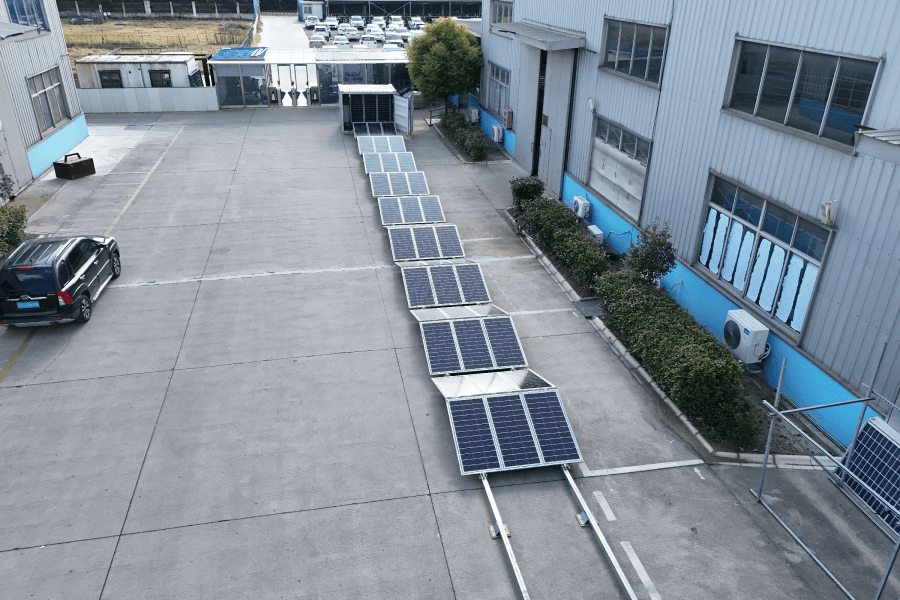
So, what's the solution? This is where the Environmental Impact of Grid-forming Photovoltaic Storage System for Construction Site Power becomes incredibly relevant. It's not just slapping some solar panels on a container. We're talking about an integrated system: solar panels generating clean power, coupled with a battery energy storage system (BESS) that uses advanced, grid-forming inverters. Think of a grid-forming inverter as the "brain" that can create its own stable electrical grid from scratch, unlike traditional grid-following systems that need an existing grid to sync to. This means your solar-storage system can be the primary, stable power source for critical site loads, with generators relegated to silent backup duty only.

Real Numbers, Real Impact: Data from the Field
The potential is backed by hard data. Studies from the National Renewable Energy Laboratory (NREL) show that hybrid renewable systems can reduce generator runtime by over 80% in suitable applications. On a typical 12-month commercial site, that can translate to thousands of gallons of diesel saved and a noise footprint that's barely noticeable. The environmental impact is direct and measurable: drastic cuts in nitrogen oxides (NOx), particulate matter, and CO2. Honestly, the numbers are so compelling that in many regions, using such systems is becoming a prerequisite for winning public tenders or securing permits in environmentally sensitive zones.
From Theory to Job Site: A Case Study in California
Let me give you a firsthand example. We worked with a developer on a mid-rise project in San Jose, California. The challenge was stringent local noise limits and a mandate to minimize air quality impacts. The old plan was a bank of Tier-4 diesel gensets running around the clock. Our solution was a 500kW/1MWh grid-forming BESS from Highjoule, paired with a temporary solar canopy. The system was designed to UL 9540 and IEC 62933 standards C non-negotiable for site safety and insurance. The result? The diesel generators only kicked in for about 2 hours a day during peak tool use. The site was quieter, the air was cleaner, and the project manager reported a 40% reduction in fuel costs, which directly improved the project's bottom-line LCOE (Levelized Cost of Energy) for temporary power.
Making It Work: The Tech You Need to Understand
For a non-technical decision-maker, the key is understanding a few simple concepts. First, Thermal Management: A safe, reliable BESS for a dusty, variable construction site needs a robust cooling system (we use liquid cooling) to maintain optimal temperature and longevity. Second, C-rate: This is basically the "power rating" of the battery. A higher C-rate means it can discharge faster to handle big, sudden loads like cranes or concrete pumps C crucial for construction. Finally, think about serviceability. You need a provider that offers local deployment support and 24/7 remote monitoring. At Highjoule, our systems come with a digital twin for real-time performance tracking, so you're never in the dark. The goal is to make clean power as reliable and worry-free as the diesel you're replacing.

Your Next Step: A Practical Path Forward
The shift to cleaner site power isn't just a "green" checkbox. It's a smart business and operational decision that addresses cost, community, and compliance in one move. The technology, backed by standards like UL and IEEE 1547, is here and proven. The real question is, what's the first load on your next site you could confidently power with the sun and a battery, and what would silencing a diesel generator do for your team's productivity and your community's perception of the project? It's a conversation worth having over your next coffee.
Tags: Construction Site Power UL Standard BESS LCOE Europe US Market Renewable Energy Environmental Impact Grid-Forming Inverter
Author
James Zhang
20+ years agricultural energy storage engineer / Highjoule CTO