
Environmental Impact of LFP (LiFePO4) Energy Storage for Construction Sites
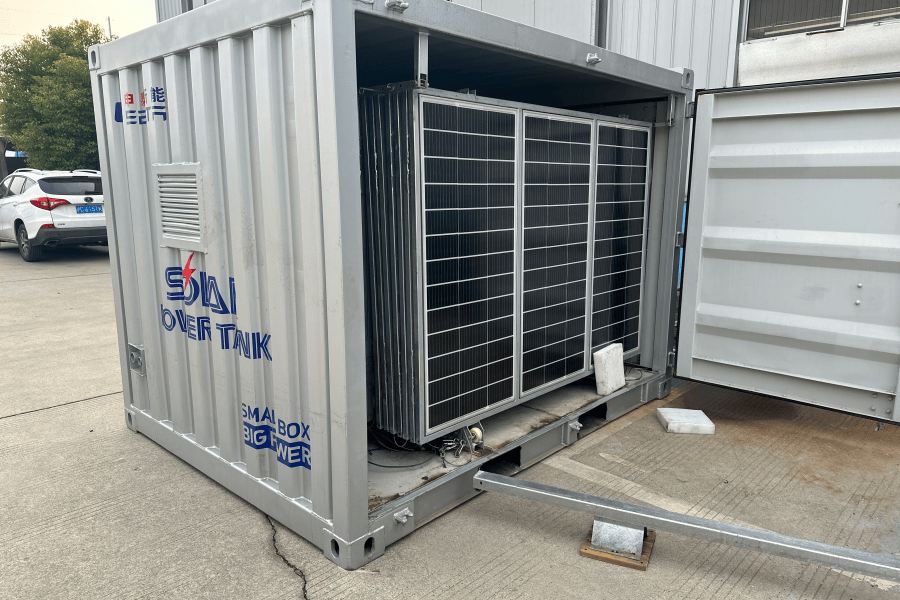
Table of Contents
- The Diesel Habit We Can't Seem to Kick
- The True Cost of "Business as Usual"
- A Cleaner Path Forward: Why LFP is the Game-Changer
- Beyond the Chemistry: Real-World Impact on Site
- Making the Switch: What You Need to Know
The Diesel Habit We Can't Seem to Kick
Let's be honest. If you've been on a construction site in the last 20 years, you know the soundtrack. It's the constant, low rumble of diesel generators. They're reliable, they're familiar, and frankly, they're a massive environmental headache we've all learned to tolerate. We're in an era where project sustainability reports are scrutinized as much as the budget, yet our primary source of temporary power remains a technology that's essentially unchanged for decades. The disconnect is glaring, especially here in North America and Europe where local emissions regulations and corporate ESG goals are tightening by the quarter.
The True Cost of "Business as Usual"
The problem isn't just the exhaust you can see and smell. It's the full lifecycle impact. I've been on sites where the generator is placed downwind as a "solution," but that does nothing for the CO2 emissions or the sheer noise pollution that impacts worker communication and community relations. The financial cost is also more than just the fuel line item. You have fuel delivery logistics, spill containment risks, constant maintenance, and the looming specter of carbon pricing mechanisms that are becoming a reality in more jurisdictions.
Consider this data point from the International Energy Agency (IEA): the construction sector accounts for nearly 40% of global energy-related CO2 emissions. While a big chunk is from materials like steel and cement, off-grid site power is a significant and often overlooked contributor. Every gallon of diesel burned is a direct hit to a project's environmental footprint.

It's More Than Just Carbon
The agitation, if you will, comes when you look at the missed opportunities. That diesel generator isn't just emitting. It's a single-purpose asset. Meanwhile, renewable sources like temporary solar arrays are becoming more viable for sites. But without storage, that solar power is wasted when the sun isn't shining, and the diesel genny has to kick back in. You're left with two parallel systems, doubling the complexity without truly solving the core problem.
A Cleaner Path Forward: Why LFP is the Game-Changer
This is where the solution crystallizes around a specific technology: the Lithium Iron Phosphate (LFP) battery energy storage system, deployed in a rugged, plug-and-play container. Honestly, in my two decades, the shift to LFP for mobile and temporary power is one of the most significant practical advancements I've seen.
LFP chemistry, compared to other lithium-ion types, offers inherent stability and a longer lifecycle. But for the construction site, its environmental advantages are what make it transformative:
- Zero Operational Emissions: This is the big one. Once on site and charged (from the grid or renewables), an LFP container runs silently with zero tailpipe emissions. Full stop.
- Material Safety & Longevity: LFP batteries are cobalt-free, which addresses major ethical sourcing concerns. They're also more thermally stable, reducing fire risk - a critical factor for insurers and site safety officers. This inherent safety translates to a longer, more useful life. We're regularly seeing our Highjoule LFP systems designed for 6,000+ cycles with minimal degradation.
- Circular Potential: At end-of-life, LFP batteries have a clearer path for second-life applications (like grid support) and recycling. The chemistry is more forgiving, which matters for the total lifecycle assessment.
Beyond the Chemistry: Real-World Impact on Site
Let me give you a case from my own experience. We worked with a heavy civil contractor on a bridge project in California. Their challenge was threefold: meet strict air quality district rules, power critical overnight curing processes, and maintain a positive relationship with a sensitive residential neighborhood adjacent to the site.
The solution was a 1 MWh Highjoule LFP storage container. It was charged during the day via a combination of a temporary grid connection (during off-peak, lower-carbon hours) and a small, temporary solar canopy. At night, it powered the entire site, replacing two large diesel generators. The outcome? A 100% reduction in overnight NOx and particulate emissions, the elimination of 58,000 liters of diesel consumption over the project phase, and - I kid you not - a thank-you note from the neighborhood association for the quiet operation.
The technical magic here isn't just the battery. It's the thermal management system that keeps the LFP cells in their ideal temperature range efficiently, and the smart inverter that manages the C-rate (the speed of charge/discharge) to optimize battery health. Getting this right is what brings the Levelized Cost of Energy (LCOE) down over the system's life, making it competitive with, and often cheaper than, the true all-in cost of diesel.

Expert Insight: The Standards Are Your Safety Net
For any EU or US project manager, the alphabet soup of standards is crucial. An LFP container isn't a magic box; it's a sophisticated piece of electrical equipment. You must insist on systems certified to UL 9540 (the standard for energy storage systems in the US) and IEC 62619 for the battery cells. These aren't just stickers. I've seen firsthand how these certifications dictate everything from spacing between modules to the fail-safes in the battery management system (BMS). They are your guarantee that the environmental and safety promises of the brochure have been rigorously tested by a third party.
Making the Switch: What You Need to Know
So, how do you integrate this? The beauty of the containerized approach is its simplicity. It's a drop-in replacement for generator sets in many applications. The key considerations are:
- Power Profile: Work with your provider to analyze your site's daily load profile. The goal is to right-size the storage to cover your critical loads, especially during peak or silent hours.
- Charging Strategy: Will you charge from a grid connection, a renewable source, or a hybrid setup? This decision maximizes both your cost savings and carbon reduction.
- Local Support: This is where companies like Highjoule focus. A container delivered from overseas is one thing. Having local, certified technicians available for commissioning and support, who understand the NEC (National Electrical Code) or equivalent local codes, is what makes a deployment smooth and compliant.
The transition to cleaner site power isn't a distant future concept. The technology is here, proven on sites from Texas to Bavaria. The question is no longer "if" but "how soon." What's the first project in your pipeline where silencing the diesel genny could become a major project milestone - for your budget, your team's well-being, and your environmental goals?
Tags: Construction Site Power UL Standard BESS Renewable Energy LFP Battery IEC Standard Environmental Impact
Author
James Zhang
20+ years agricultural energy storage engineer / Highjoule CTO