
Environmental Impact of Scalable Modular Mobile Power Containers for Grids
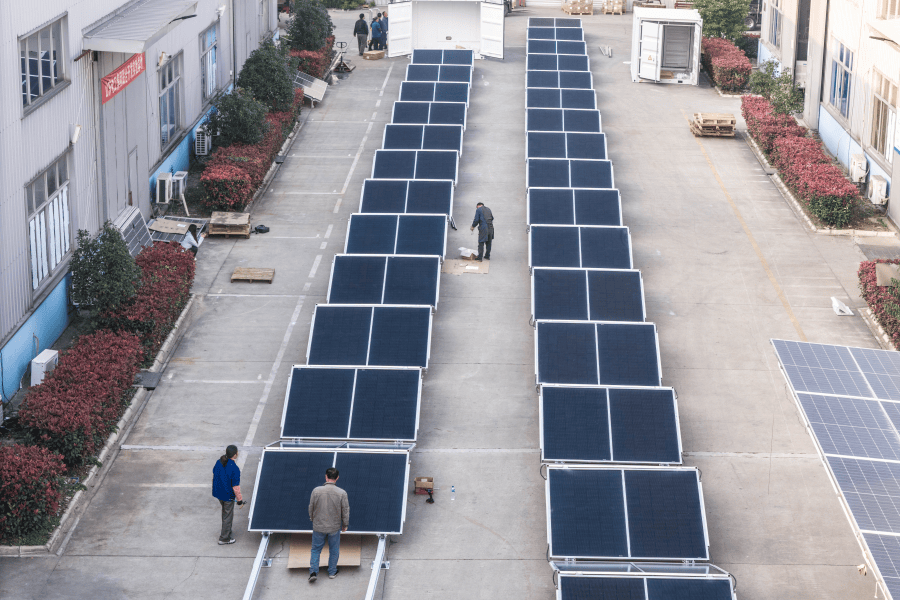
Beyond the Hype: The Real Environmental Footprint of Mobile Power for the Grid
Honestly, when we talk about battery energy storage for utilities, the conversation usually jumps straight to megawatts, response times, and revenue stacking. That's all crucial, sure. But after 20 years on sites from California to North Rhine-Westphalia, I've learned that the smartest grid operators are now asking a more fundamental question first: "What's the real, full-cycle environmental impact of putting this thing on our land?" It's no longer just about being green by enabling renewables; it's about the footprint of the storage asset itself.
Table of Contents
- The Hidden Problem: Static Systems in a Dynamic World
- Agitating the Issue: The Carbon and Land Cost of "Permanent"
- The Modular, Mobile Solution: A Paradigm Shift in Deployment
- Breaking Down the Environmental Impact
- Case in Point: A German Grid Stability Project
- Expert Insight: It's More Than Just Batteries
- Looking Ahead: The Sustainable Grid's Building Block
The Hidden Problem: Static Systems in a Dynamic World
The traditional model for utility-scale BESS has been, frankly, a bit like pouring concrete. You find a site, conduct extensive (and expensive) civil studies, pour a massive foundation, build a permanent structure or set of enclosures, and install a fixed, monolithic battery system. It's designed to sit in one place for 15-20 years. The National Renewable Energy Laboratory (NREL) has noted that site preparation and balance-of-system costs can eat up 15-30% of total project CAPEX, much of it tied to earthworks and permanent structures.
The environmental issue here is rigidity. What happens if grid needs shift in five years? What if the local distribution network evolves, or a new renewable generation hub pops up 50 miles away? That static asset is now stranded, or at least operating sub-optimally. The embodied carbon in that concrete and steel is locked into a single location, regardless of changing grid dynamics.
Agitating the Issue: The Carbon and Land Cost of "Permanent"
Let's agitate this a bit. I've seen this firsthand: a utility builds a storage facility to support a specific solar farm. Two years later, transmission upgrades elsewhere reduce the local congestion. That BESS is now underutilized, but it can't be moved. The land is tied up. The resources are committed. It becomes a stranded environmental asset as much as a financial one.
Furthermore, the construction phase itself is impactful. Heavy machinery running for weeks, transporting thousands of tons of material, and the manufacturing of custom, one-off structural components. The International Energy Agency (IEA) emphasizes the need to reduce embedded emissions in energy infrastructure to meet net-zero goals. A traditional, site-built BESS starts its life with a significant carbon debt from construction before it even offsets its first gram of CO2.
The Modular, Mobile Solution: A Paradigm Shift in Deployment
This is where the concept of the scalable, modular, mobile power container fundamentally changes the game. Think of it not as a power plant, but as a fleet of ultra-high-tech, grid-ready "assets on wheels." Each container is a fully integrated, plug-and-play storage system - battery racks, thermal management, fire suppression, and power conversion - all built, tested, and certified (to UL 9540 and IEC 62933 standards) in a controlled factory environment.
How This Shrinks the Footprint
- Factory Precision: Building in a factory cuts material waste dramatically. We optimize every steel beam and cable run. Quality control is tighter, which means fewer failures and longer life - a huge sustainability win.
- Radically Reduced Site Disturbance: Instead of months of groundwork, you prepare a simple, level pad. The containers are delivered and connected. I've seen sites go from empty lot to operational in weeks, not months. Less noise, less dust, less local ecosystem disruption.
- Inherent Flexibility & Lifespan Extension: This is the big one. If grid needs change in 2030, you don't decommission the asset. You literally disconnect the containers and move them to a new optimal location. You're reusing 95% of the system, effectively giving the core technology multiple lives across different grid applications. This circular economy approach slashes the lifecycle environmental cost per MWh delivered.
Breaking Down the Environmental Impact
So, let's get tangible. What are the real impact levers?
| Impact Area | Traditional Site-Built BESS | Modular Mobile Container |
|---|---|---|
| Construction Emissions | High (on-site welding, concrete, extended crew travel) | Low (factory-optimized, minimized on-site work) |
| Land Use & Disturbance | Permanent, irreversible change | Temporary, reversible, can use brownfield sites easily |
| Material Efficiency | Higher waste due to on-site conditions | High factory precision, less waste |
| End-of-Life / Repurposing | Difficult, often requires demolition | Easy to relocate, refurbish, or redeploy entire units |
| Grid Optimization | Fixed location can become sub-optimal | Can follow renewable generation or demand shifts, maximizing clean energy utilization |
Case in Point: A German Grid Stability Project
We partnered with a regional grid operator in Germany facing a classic problem: rapid coal plant retirements left a voltage stability gap in a specific corridor, but a major grid reinforcement was still 5+ years out. They needed a solution now, but couldn't justify a permanent asset for a potentially transient need.
Our solution was a fleet of three modular, UL/IEC-compliant 2 MWh containers. They were deployed on a temporary lease plot near a key substation within 10 weeks of contract signing. The site work was minimal - just grading and cable trenches. For three years, these containers provided critical inertia and voltage support. When the new transmission line was finally completed, the containers were disconnected, trucked 120km away, and are now being integrated into a solar-plus-storage microgrid for an industrial park. That's asset utilization and a avoided building two separate systems.

Expert Insight: It's More Than Just Batteries
From a technical perspective, the environmental advantage is locked in the design. Let me give you two insider points:
1. Thermal Management is Key: Battery degradation is a primary environmental waste stream. A poorly managed system degrades faster, needing replacement sooner. Our containers use a closed-loop, liquid-cooling system that maintains optimal temperature with 40% less energy than standard air-con systems. This extends battery life, improving the Levelized Cost of Storage (LCOS) and the energy-in/energy-out environmental payback ratio. Every cycle is more efficient.
2. The C-Rate Sweet Spot: There's a push for ultra-high power (high C-rate) batteries. But honestly, for most grid applications (frequency regulation, peak shaving), you don't need extreme C-rates. Opting for a moderate C-rate battery chemistry often means better cycle life, less thermal stress, and a lower degradation curve. We design for the real-duty cycle, which means the system lasts longer and delivers more total clean MWh over its life before recycling. It's about right-sizing the technology to the application.
Looking Ahead: The Sustainable Grid's Building Block
The future grid won't be built on monuments of concrete and steel. It'll be a dynamic, adaptive network. Scalable modular mobile power containers are the physical embodiment of that principle. They offer a way to deploy storage rapidly, with a dramatically lower upfront environmental footprint, and the built-in flexibility to evolve with the grid's needs.
For utility decision-makers, the question is shifting. It's not just "What does this storage system do?" but "How does it align with our long-term sustainability and resilience goals?" The mobile, modular approach provides a compelling answer: deploy clean energy infrastructure that is itself designed for a circular, adaptable, and lower-impact future.
What's the biggest grid constraint in your service territory today - and could it be solved in a way that doesn't lock you (and the carbon footprint) into the next 20 years?
Tags: UL Standard BESS Environmental Impact Modular Design Grid Energy Storage
Author
James Zhang
20+ years agricultural energy storage engineer / Highjoule CTO