
20ft High Cube Solar Container Cost for Industrial Parks | Highjoule
Let's Talk Real Numbers: The True Cost of a 20ft Solar Container for Your Industrial Park
Honestly, if I had a nickel for every time a plant manager or a sustainability director asked me this exact question over a coffee... well, you get the idea. "How much does it cost for a 20ft High Cube Solar Container for my industrial park?" It's the million-dollar question, or rather, the several-hundred-thousand-dollar one. And the answer is never a single number. It's a conversation. Having been on-site from California to North Rhine-Westphalia, I've seen firsthand how a simple price tag can be misleading, leading to budget overruns or, worse, safety compromises. So, let's have that conversation. Let's peel back the layers on what you're really paying for when you invest in a containerized Battery Energy Storage System (BESS) for your industrial facility.
What We'll Cover
- The Real Problem: It's Not Just About the Sticker Price
- The Cost Breakdown: More Than Just a Box of Batteries
- The Game Changer: How LCOE Tells the True Story
- A Real-World Case: From Blueprint to Power
- Your Next Steps: Asking the Right Questions
The Real Problem: It's Not Just About the Sticker Price
Here's the phenomenon I see all too often. A company gets a quote for a "20ft solar container." The number looks good, fits the CAPEX budget, and the project gets a green light. Fast forward to commissioning, and suddenly there are change orders for upgraded fire suppression, unexpected costs for a reinforced concrete pad, or delays because the local utility requires additional grid-interconnection studies. The initial "sticker price" becomes a distant memory.
This happens because the initial quote often covers just the container unit itself - what we call the "BESS in a box." But deploying it is a different ball game. The National Renewable Energy Lab (NREL) has great data showing that "soft costs" like permitting, interconnection, and engineering can add 20-40% to the total installed cost. For an industrial park, the challenges are amplified. You're dealing with complex electrical loads, demanding uptime requirements, and, crucially, a non-negotiable focus on safety for your personnel and assets.
Agitating this point: choosing a system based on the lowest upfront cost can directly impact your operational efficiency and risk profile. A system with poor thermal management might throttle its output on a hot day, right when you need it to shave peak demand. A design that barely meets local codes might pass inspection but could be a liability down the line. I've seen sites where the "bargain" system ended up with a higher long-term cost of ownership due to inefficiency and higher maintenance. The real cost isn't the purchase price; it's the total cost of ownership over the system's 15-20 year life.
The Cost Breakdown: More Than Just a Box of Batteries
So, let's break down the "solution" - understanding the full cost structure. For a fully operational 20ft High Cube BESS at your industrial park, think in these layers:
1. The Core System (The "Container")
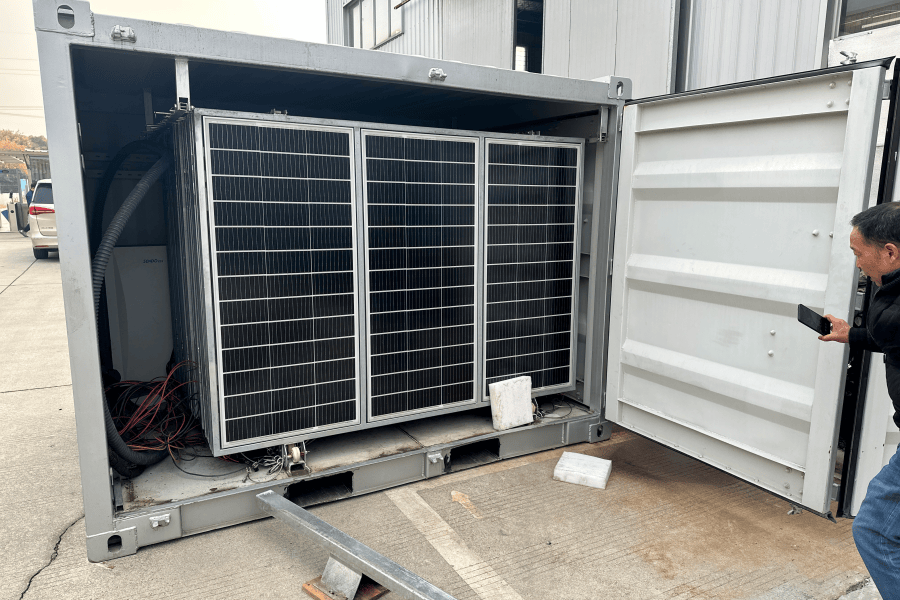
This is the number most folks start with. For a high-quality, UL 9540/UL 9540A listed system (an absolute must for North America and a strong indicator of safety globally), you're looking at the battery cells, the battery management system (BMS), power conversion system (PCS or inverter), and the climate control housed in a 20ft High Cube. Prices here vary massively based on:
- Energy Capacity (kWh): How much energy can it store? A container could be packed with 1 MWh or 3 MWh+, depending on cell density and design.
- Power Rating (kW): How fast can it discharge? This is the C-rate. A 1 MWh system with a 1C-rate can discharge 1 MW in an hour. A 0.5C-rate system discharges 500 kW. Higher C-rate capabilities often cost more but are crucial for fast demand response.
- Thermal Management: This is a big one. Liquid cooling systems are more expensive upfront than air-cooled but offer superior temperature uniformity, which extends battery life and maintains performance. For an industrial setting with 24/7 cycles, this isn't a luxury; it's a necessity for long-term ROI.
As a rough industry range for a premium, safety-certified unit, the core system price can be anywhere from $250,000 to $600,000+. This wide range is why the initial question is so tricky.

2. The "Balance of System" (BOS) & Installation
This is where projects stumble. BOS includes:
- Site Preparation: A level, reinforced concrete pad. For a 20ft container weighing 20+ tons, this isn't a DIY job.
- Electrical Integration: Medium-voltage transformers, switchgear, cabling, and interconnection hardware to tie into your facility's main distribution.
- Safety & Compliance: Fire suppression systems (like FM-200 or aerosol), gas venting, and security fencing. Meeting IEC 62933 and IEEE 1547 standards for grid interconnection is non-negotiable in the EU and US.
BOS can easily add 30-70% to the cost of the core system.
3. Soft Costs & Ongoing Expenses
- Engineering, Permitting & Interconnection Studies: Utility fees and engineering hours to get the green light.
- Shipping & Logistics: Moving a heavy container from port to site.
- Operations & Maintenance (O&M): Annual service contracts, performance monitoring software subscriptions, and potential battery warranty extensions.
The Game Changer: How LCOE Tells the True Story
This is the expert insight I give all my clients: shift the conversation from upfront cost to Levelized Cost of Storage (LCOS) or Levelized Cost of Energy (LCOE).
Think of it like this: two containers might have the same sticker price. Container A uses a basic air-cooling system. Container B, like the ones we engineer at Highjoule, uses a proprietary liquid cooling and advanced BMS. Over 10 years, Container A's batteries degrade faster due to thermal stress, losing maybe 30% of its original capacity. It can't deliver the same peak shaving punch, so your electricity bills creep up. Container B, with tightly controlled temperatures, might only degrade 15%. It's delivering more value, for longer.
The LCOE metric captures this. It's the total lifetime cost of the system divided by the total energy it will dispatch over its life. A higher-quality, slightly more expensive system often has a lower LCOE because it's more efficient and lasts longer. You're buying energy over time, not just a piece of hardware. According to IRENA, focusing on total system value (safety, longevity, performance) is key to unlocking the true economic potential of storage.
A Real-World Case: From Blueprint to Power
Let me give you a non-salesy example from a project we supported in Texas. A large food processing plant had high, unpredictable peak demand charges and wanted backup power for critical refrigeration. Their initial budget was tight, focused on a low-cost container.
Challenge: The Texas heat was a major concern. A cheap, air-cooled unit would derate power output significantly in summer, just when peak shaving was most valuable. Also, local fire codes were getting stricter.
Our Role & The Solution: We didn't just sell a box. We worked with their engineers to model their load profile. We showed them the LCOE projection for a standard unit vs. a thermally-optimized one. The analysis clearly showed the "cheaper" unit would cost them more in lost savings over 8 years. They opted for a system with a robust liquid-cooling loop and UL 9540A certification, which actually streamlined the permitting process with the local authority.
Outcome: The installed cost was about 18% higher than the lowest bid they received. But in the first year alone, their demand charge savings were 22% higher than the initial projection for the basic unit, thanks to consistent full-power output even on 100F+ days. The safety certification also lowered their insurance premium. The ROI was actually faster.
Your Next Steps: Asking the Right Questions
So, when you're evaluating "how much it costs," don't just ask for a price. Have a coffee with your engineering team or potential vendor and ask:
- "What's the projected LCOE/LCOS for my specific load profile and location?"
- "Can you walk me through the thermal management design and its impact on cycle life?"
- "Is the system fully certified to UL 9540/9540A (for US) and IEC 62933 standards? Can you provide the test reports?"
- "What's included in your quote? Can you provide a line-item for BOS, installation, and commissioning?"
- "What's the O&M strategy? Do you offer performance guarantees?"
At Highjoule, our approach has always been to build that full picture with you from day one. It's not about moving containers; it's about delivering reliable, safe, and economically optimal power for your industrial operation for the next decade and beyond. The right system pays for itself. The wrong one becomes a costly lesson.
What's the single biggest cost uncertainty you're facing in your storage project planning?
Tags: UL Standard BESS LCOE Europe US Market Renewable Energy Solar Container Cost
Author
James Zhang
20+ years agricultural energy storage engineer / Highjoule CTO