
Cost of a 215kWh Mobile Power Container for Construction Sites | Expert Insight
Let's Talk About Powering Your Construction Site: Beyond the Sticker Price
Hey there. Grab your coffee. If you're reading this, you're probably knee-deep in planning a project and the question of temporary, reliable, and frankly, sensible power is on your mind. Diesel generators have been the default for decades, but the hum and the fumes are getting harder to justify - both for your bottom line and your ESG reports. Lately, I've been getting a lot of questions that boil down to one thing: "How much does it cost for a 215kWh cabinet mobile power container for construction site power?"
Honestly, that's the right question to start with, but it's like asking "how much does a house cost?" The sticker price is just the entry point. Over 20 years of deploying these systems from Texas to Bavaria, I've seen firsthand that the real conversation is about total cost of ownership, risk mitigation, and operational agility. Let's break it down.
In This Article
- The Real Problem: It's Not Just About Kilowatts
- The Hidden Costs That Eat Your Budget
- The Solution: A 215kWh Mobile Power Container, Decoded
- Case in Point: A Site in Stuttgart
- Making the Decision: Your Next Steps
The Real Problem: It's Not Just About Kilowatts
Here's the scene I see too often. A project manager needs power for a remote site, or a city-center project with strict noise and emissions codes. The traditional gen-set seems cheap to rent. But then the fuel deliveries start - logistics, theft, price volatility. The maintenance intervals get missed in the crunch. The noise complaints roll in, sometimes leading to fines or restricted operating hours. Suddenly, that "low-cost" option isn't so low-cost, and it's definitely not predictable.
The core pain point isn't buying energy; it's buying reliable, compliant, and predictable energy. According to the National Renewable Energy Laboratory (NREL), fuel and maintenance can constitute over 75% of a generator's lifetime cost. You're managing a liquid fuel hazard on-site. You're not future-proofing at all.
The Hidden Costs That Eat Your Budget
Let's agitate that pain point a bit. When we talk cost, we must talk about Levelized Cost of Energy (LCOE). Think of LCOE as the "true north" metric - it accounts for all costs over the system's life: capital, fuel, maintenance, even decommissioning.
- Fuel & Logistics: Diesel prices swing. Every delivery is a cost and a security risk. A 215kWh battery container, once charged, is a sealed asset. You can "fuel" it from the grid at night (low rates) or from onsite solar panels, locking in your energy cost.
- Maintenance & Downtime: A diesel engine has hundreds of moving parts. A modern Battery Energy Storage System (BESS) like a containerized unit has very few. Scheduled maintenance is mostly checking connections and thermal management systems - not oil changes and filter replacements.
- Regulatory & Social License: In places like California or most of the EU, emissions and noise regulations are tightening. I've seen projects get shut down for a day over a complaint. A silent, zero-local-emission BESS isn't just "green"; it's a permit smoother.
So, when you ask "how much does it cost?", you need to be asking about LCOE, not just procurement.
The Solution: A 215kWh Mobile Power Container, Decoded
Alright, so let's get into your solution: the 215kWh cabinet-style mobile power container. This is a sweet spot for many mid-sized sites - powering tool stations, site offices, lighting towers, and small equipment. Here's what goes into its price and value.
The Core Components (Where Your Money Goes)
1. The Battery Cells & Chemistry: This is the heart. Lithium Iron Phosphate (LFP) is the industry standard for good reason - superior thermal stability and longer cycle life. The "215kWh" is the usable energy. We design with a conservative C-rate (that's the charge/discharge speed) to maximize longevity. Pushing cells too hard is a fast way to increase your LCOE.
2. The Brain & Brawn: BMS & PCS: The Battery Management System (BMS) is the guardian. It monitors every cell group for voltage, temperature, and balance. The Power Conversion System (PCS) is the translator, turning DC battery power into clean AC for your tools. Quality here is non-negotiable for safety and efficiency.
3. Thermal Management: This is critical. Batteries perform best, and last longest, within a tight temperature range. An integrated, liquid-cooled or forced-air climate control system isn't an add-on; it's core to the design. I've seen systems fail prematurely because this was an afterthought.
4. The Container & Safety Suite: The steel cabinet isn't just a box. It's a secure, weatherproof (IP54 minimum), and transportable enclosure. Inside, you'll find continuous gas detection, fire suppression systems (like aerosol-based), and physical separation of components. For the US and EU, compliance isn't just a sticker - it's built in. Look for UL 9540 for the overall system, UL 1973 for the batteries, and IEC 62619 for the international benchmark.

So, What's the Price Range?
Given the above, a robust, compliant 215kWh mobile unit from a reputable manufacturer typically falls within a range. You're looking at a capital expenditure roughly equivalent to a high-end diesel generator set, but with a radically different cost profile thereafter. Think of it as CapEx vs. OpEx. The battery system has higher upfront CapEx but dramatically lower OpEx (fuel, maintenance). The generator has lower CapEx but crippling, unpredictable OpEx.
The final number? It depends on your specific configuration, safety certifications required (like for a tunnel project vs. an open field), and the scope of local integration services. But the ROI calculation becomes compelling when you model it over a 12-24 month project, especially if you can pair it with any on-site renewable source.
Case in Point: A Site in Stuttgart
Let me give you a real example. We worked with a contractor on a residential complex build in Stuttgart, Germany. The challenge: zero local emissions rules, tight noise limits after 6 PM, and no easy grid connection for the first phase.
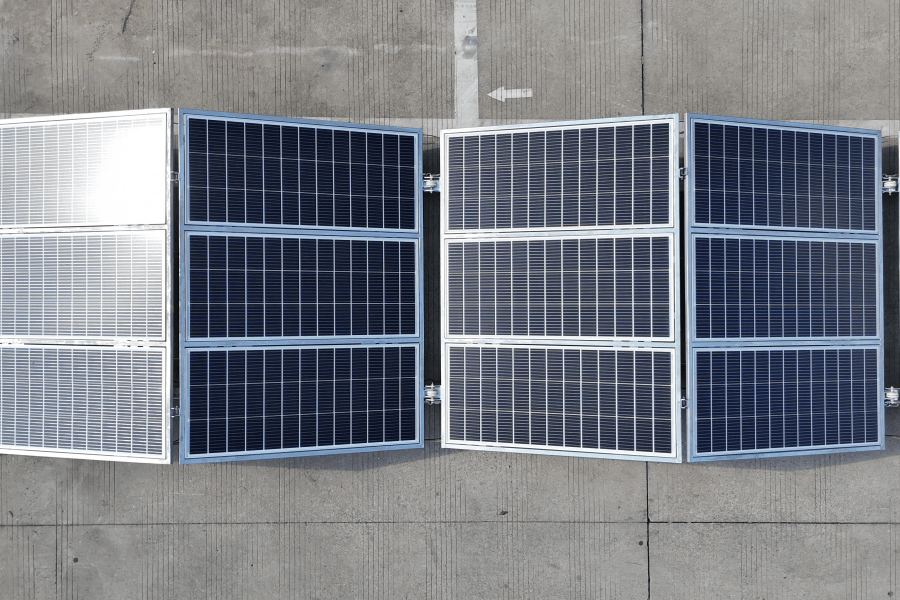
They deployed one of our 215kWh mobile containers. It was charged nightly from the grid (taking advantage of lower tariffs) and supplemented by a temporary solar canopy during the day. The system powered the entire site office, lighting, and electric tools. Over an 18-month period:
- They eliminated ~15,000 liters of diesel fuel.
- Had zero noise or emissions complaints.
- Reduced their "energy admin" time (fuel logistics) to almost zero.
- The unit was then redeployed to their next project, spreading the CapEx further.
The project manager's feedback was telling: "The price per kWh was predictable from day one. That let me focus on building, not on managing a power plant."
Making the Decision: Your Next Steps
So, how do you move from "how much does it cost" to making a smart decision?
1. Audit Your Load Profile: What are you really powering, and when? Peak demand (in kW) matters as much as energy (kWh). A 215kWh unit might be perfect if your peaks are managed.
2. Demand Transparency on Standards: Ask your provider for the UL and IEC certificates. Don't just take their word for it. This is your primary risk mitigation.
3. Run an LCOE Comparison: Model the total cost: diesel (fuel + delivery + maintenance + rental) vs. BESS (lease or purchase + electricity cost to charge + minimal service). The crossover point often comes faster than you think.
4. Think Beyond the Project: Can this asset be redeployed? At Highjoule, we design for a second and third life. After 10-15 years on construction sites, a battery pack might still have 70-80% capacity, perfect for less demanding backup applications. That residual value should be part of your financial model.
Look, the shift from diesel to mobile battery storage isn't just an environmental one; it's a financial and operational upgrade. The right question isn't just about the purchase price of a 215kWh container. It's about the total cost of delivering reliable, silent, and clean power to your site, from day one until the last light is turned off.
What's the one power constraint on your next project that keeps you up at night?
Tags: Construction Site Power UL Standard BESS LCOE Europe US Market Renewable Energy Mobile Power Container
Author
James Zhang
20+ years agricultural energy storage engineer / Highjoule CTO