
C5-M Anti-Corrosion BESS Cost: A 1MWh Solution for Rural & Harsh Climates
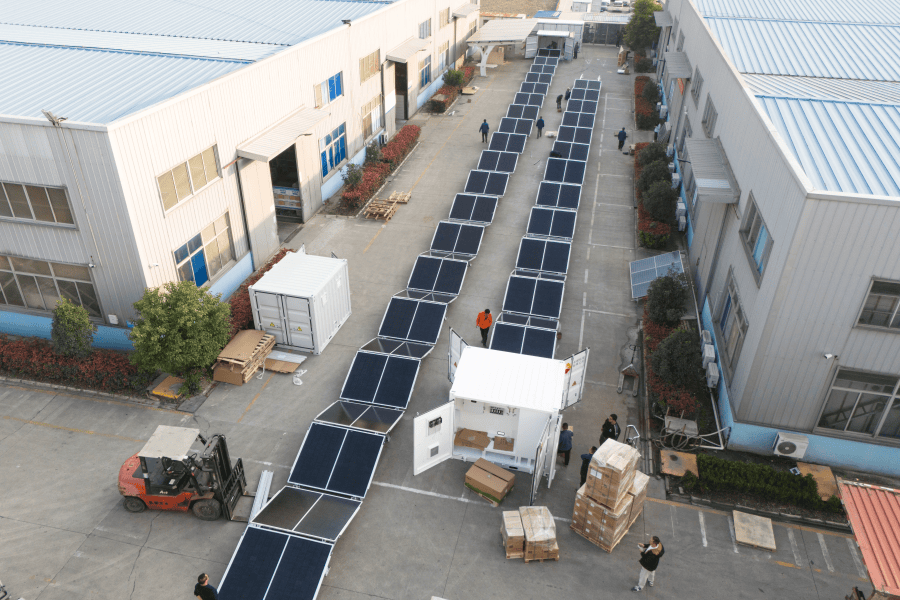
Beyond the Price Tag: What a 1MWh, C5-M Anti-Corrosion BESS Really Costs
Honestly, when a client asks "How much does it cost for a 1MWh solar storage system?", I know they're asking the wrong question first. What they really mean is, "How much will it cost to have reliable, safe power for the next 15+ years, especially when salt spray, humidity, and dust are trying to eat my investment alive?" I've seen this firsthand on site - a beautiful, shiny container in Texas or a coastal microgrid in the Philippines can look identical on a spec sheet, but their real-world costs diverge wildly after Year One if one isn't built for the environment. Today, let's chat about the real economics behind deploying robust, long-lasting storage, especially for challenging climates like those in rural electrification projects.
Quick Navigation
- The Real Problem Isn't Just Sticker Shock
- The Hidden "Corrosion Tax" on Your BESS
- C5-M: More Than a Coating, It's a Cost Strategy
- Breaking Down the 1MWh Cost Structure
- A Case in Point: The Microgrid That Could
- Expert Corner: Thermal, C-Rate, and LCOE in the Real World
The Real Problem Isn't Just Sticker Shock
Here's the phenomenon we see globally: the initial CAPEX (capital expenditure) of a battery energy storage system (BESS) gets all the attention. Procurement teams push for the lowest $/kWh bid. But in the rush to meet budgets and timelines, a critical factor gets downplayed or value-engineered out: environmental durability. A standard, off-the-shelf container BESS might be designed for a generic "moderate" climate. Deploy that same unit in a coastal region with high salt mist (C5-M territory) or in an area with high humidity and industrial pollutants, and you've just signed up for a world of hidden costs.
The Hidden "Corrosion Tax" on Your BESS
Let's agitate that pain point a bit. Corrosion isn't just cosmetic. On a BESS site, it attacks electrical connections, leading to increased resistance, heat buildup, and potential failure points. It compromises structural integrity of enclosures and cooling systems. The result? I've seen it: unscheduled downtime, more frequent and expensive maintenance cycles, reduced system efficiency, and a significantly shortened asset lifespan. What was sold as a 15-year asset might be on its last legs by year 10. According to a NREL report on renewable asset durability, environmental stressors are a leading cause of long-term performance degradation, impacting the Levelized Cost of Energy (LCOE) - the metric that truly matters for your ROI.
This is doubly true for critical applications like rural electrification and microgrids. There's no easy grid backup. System failure doesn't just mean a financial hit; it means a community loses power, clinics go dark, and businesses shut down. The cost of unreliability is astronomical.
C5-M: More Than a Coating, It's a Cost Strategy
This is where the solution, like specifying a C5-M anti-corrosion standard from the get-go, becomes a brilliant financial decision, not just a technical one. The ISO 12944 C5-M standard is a rigorous classification for highly corrosive marine and offshore environments. It dictates everything from surface preparation and paint system thickness to material selection for nuts, bolts, and busbars.
At Highjoule, we don't view this as an "extra." For projects in Southeast Asia, the Gulf Coast, or any harsh environment, it's the baseline. Our engineering team designs from the inside out for this. It means using hot-dip galvanized steel for structural frames, specifying stainless-steel hardware for external fittings, and implementing sealed, corrosion-resistant cooling loops. Honestly, it's about building a system whose maintenance schedule is based on operational hours, not on how quickly the environment is trying to break it down.

Breaking Down the 1MWh Cost Structure
So, back to the original question. "How much does it cost for C5-M Anti-corrosion 1MWh Solar Storage?" Let's talk TCO (Total Cost of Ownership). The initial premium for a C5-M engineered system versus a basic one can range from 8% to 15%. But let's put that in a table against potential hidden costs of a non-protected system in a harsh climate:
When you run the LCOE model, the C5-M system almost always wins in harsh environments. You're trading a known, slightly higher upfront cost for a predictable, lower long-term cost. That's the kind of math that makes CFOs and community stakeholders sleep better at night.
A Case in Point: The Microgrid That Could
Let me give you a non-proprietary example that mirrors the challenges of a project like rural electrification in the Philippines. We worked on an industrial microgrid for a remote fish processing plant in Alaska. The environment? Classic C5-M: salty, windy, cold. The challenge was providing 24/7 clean power in a place where diesel was prohibitively expensive and logistics were a nightmare.
The solution was a 1.2MWh solar-plus-storage system. The crucial?? detail was that the BESS container was specified to C5-M from the initial design. This meant using specific epoxy coatings, desiccant breathers for the thermal management system, and sealed cable entries. Three years in, the performance data is telling. While a comparable, less-protected system at a different site has already undergone two unplanned service calls for electrical issues, this unit's performance has tracked perfectly with expectations. The local manager's feedback was simple: "It just works. We forget it's there." That's the ultimate goal.
Expert Corner: Thermal, C-Rate, and LCOE in the Real World
This is where I want to get a bit technical, but stay with me. People get excited about high C-rates (how fast you can charge/discharge the battery). But in a hot, corrosive environment, a high C-rate operation without impeccable thermal management is a death sentence. It creates more heat, which accelerates corrosion and degrades batteries faster.
Our approach at Highjoule is system-level design. We might pair cells with a moderate C-rate with an ultra-reliable, corrosion-resistant liquid cooling system. This ensures even temperature distribution, maximizes cell life, and maintains safety - all key to a low LCOE. It's not about the sexiest spec on paper; it's about the right, durable balance for the job. And everything is designed and tested to meet the full suite of safety standards like UL 9540 and IEC 62619 that our North American and European clients demand, because safety is non-negotiable, in any climate.
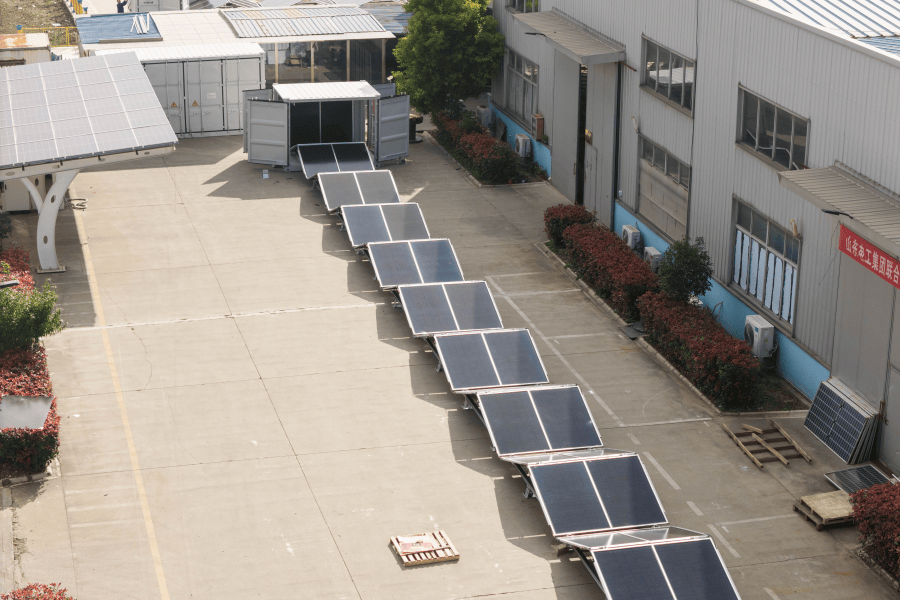
So, when you're evaluating proposals for your next project, whether it's bringing light to a remote village or securing power for a coastal facility, dig deeper than the $/kWh. Ask about the corrosion protection strategy. Request the test certificates for the environmental specs. Calculate based on TCO and LCOE, not just CAPEX. The right partnership and the right engineering from day one don't cost - they save. What's the one environmental challenge in your next project that keeps you up at night?
Tags: UL Standard BESS LCOE Rural Electrification C5-M Anti-Corrosion Microgrid Solar Storage Philippines
Author
James Zhang
20+ years agricultural energy storage engineer / Highjoule CTO