
Understanding the True Cost of C5-M Anti-Corrosion Pre-Integrated PV Containers
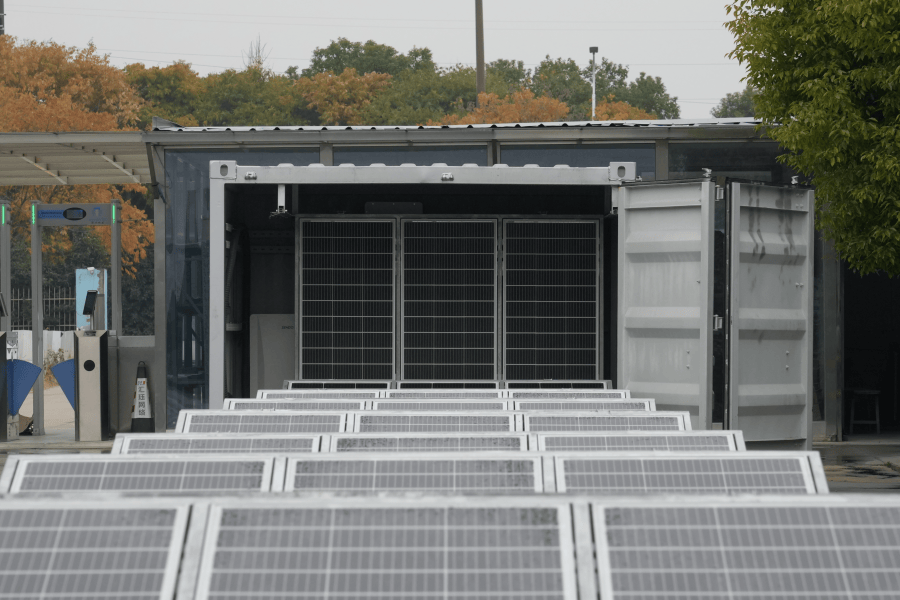
Table of Contents
- The Real Question Behind the Price Tag
- The Hidden Costs of "Standard" Deployments
- The Solution: Pre-Integrated, Purpose-Built Containers
- Breaking Down the Cost: Beyond the Unit Price
- A Case Study: When Environment is Everything
- The Expert View: It's About LCOE, Not Just Capex
- Your Next Step: Asking the Right Questions
The Real Question Behind the Price Tag
Honestly, when a project developer or EPC asks me "How much does a C5-M anti-corrosion pre-integrated PV container cost?", I know they're asking the wrong question first. It's like asking how much a house costs without mentioning the location, size, or materials. The real question we should be asking is: What's the total cost of ownership (TCO) for a reliable, safe, and durable energy storage system in a challenging environment? That's the conversation that actually saves money and prevents headaches down the line. I've seen this firsthand on sites from coastal Texas to industrial zones in Germany - the initial purchase price is just one piece of a much larger puzzle.
The Hidden Costs of "Standard" Deployments
Here's the common phenomenon in our industry, especially when expanding into new markets or tough climates: the temptation to use a "standard" containerized BESS and try to adapt it on-site. The logic seems sound - get a cheaper base unit and customize later. But in practice, this approach creates a cascade of hidden costs that blow up budgets.
Let's talk data. The International Renewable Energy Agency (IRENA) highlights that balance-of-system (BoS) costs and soft costs can represent up to 40-50% of total project costs for standalone storage. What falls into this? Extended on-site labor for integration, unexpected engineering for climate-proofing, delays from component incompatibility, and accelerated wear requiring premature maintenance. For a C5-M environment - which, for those not deep in corrosion standards, is a severe industrial and coastal atmosphere with high salinity and chemical pollution - these hidden costs multiply. A standard steel container might seem fine on paper, but without factory-integrated anti-corrosion coatings, specialized HVAC, and sealed electrical systems, you're looking at corrosion failures within years, not decades.
What This Means on the Ground
- Project Delays: On-site integration and testing can stretch weeks beyond schedule. I've been on projects where we lost three weeks just waiting for the right sealant to arrive for field modifications.
- Safety Compromises: Field-welding or drilling for cable entries can compromise the structural and fire integrity of the container, a major red flag for UL 9540 and IEC 62933 compliance.
- Warranty Voidance: Most manufacturers will void warranties if their core systems are modified outside their controlled factory environment.
The Solution: Pre-Integrated, Purpose-Built Containers
This is where the value of a truly pre-integrated, C5-M certified container comes into sharp focus. The solution isn't just a product; it's a methodology. At Highjoule, we build our systems from the ground up for their intended environment. For a scenario like rural electrification in the Philippines - with its high humidity, salt spray, and remote locations - the container is a fortress and a plug-and-play power plant.
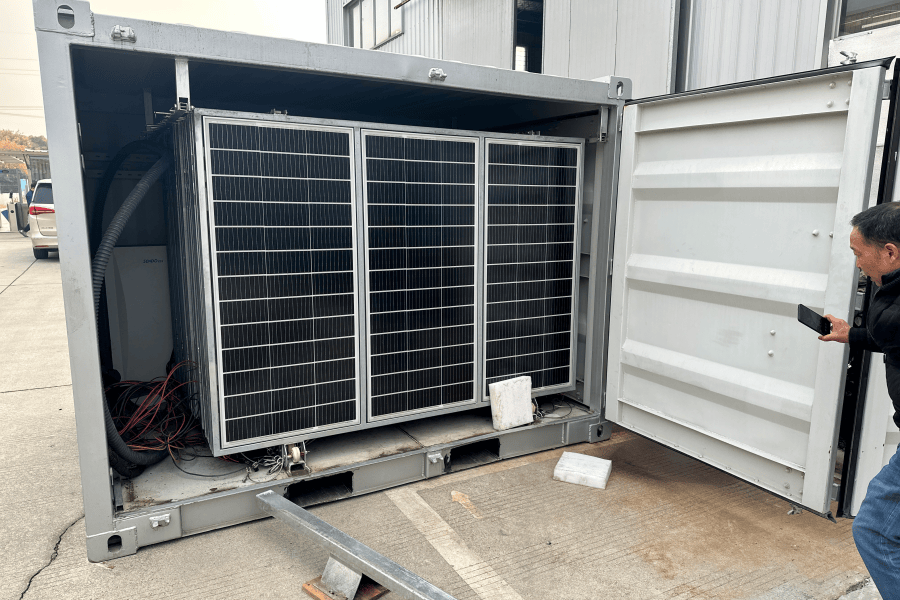
Our approach is to do 95% of the work in our controlled facility: the battery racks (with their precise thermal management systems), the power conversion system (PCS), the fire suppression, and the complex control wiring are all installed, tested, and validated under one roof. We apply the C5-M protective coatings in a proper booth, not in a dusty field. This means when the container arrives on your site, it's literally about connecting AC and DC feeds, commissioning, and going live. The cost premium for this level of integration is real, but it's an investment that pays off from day one of operation.

Breaking Down the Cost: Beyond the Unit Price
So, let's break down the "cost" into its real components for a robust, pre-integrated solution. Think of it in three buckets:
| Cost Bucket | Standard Container (Field-Integrated) | Pre-Integrated C5-M Container |
|---|---|---|
| 1. Upfront Capital (Capex) | Lower unit price, but higher BoS & labor estimates. | Higher unit price, but all-inclusive, predictable BoS. |
| 2. Deployment & Soft Costs | High. Long site works, more crew, weather delays, permit revisions. | Low. Rapid deployment (weeks vs. months), smaller crew, fixed engineering. |
| 3. Lifetime Operational (Opex) | High risk. Unplanned maintenance, early component replacement, potential downtime. | Predictable. Designed for longevity, easier scheduled maintenance, higher uptime. |
The magic metric for financiers and savvy operators is the Levelized Cost of Storage (LCOS) or Levelized Cost of Energy (LCOE). A pre-integrated system might have a 10-15% higher Capex, but it can lower LCOS by 20-30% over 15 years due to higher efficiency, longer life, and lower Opex. That's the real "cost" answer.
A Case Study: When Environment is Everything
Let me give you a relevant example from the US market that mirrors the challenges of a coastal tropical environment. We deployed a 2 MWh containerized BESS for a critical water treatment facility in Corpus Christi, Texas. The site is less than a mile from the Gulf of Mexico - salt air, high humidity, and occasional chemical exposure from nearby industry.
The Challenge: The client's initial bid from another vendor used a standard ISO container. The risk? Corrosion of electrical contacts and cooling systems, leading to reduced battery life and potential safety shutdowns. Their insurance provider demanded compliance with strict corrosion and fire safety standards.
The Highjoule Solution: We provided a pre-integrated C5-M rated container. The HVAC was a specialized corrosion-resistant unit with enhanced filtration. All external fittings were stainless steel. The entire electrical enclosure had a higher IP rating. The fire suppression system was sealed and pressurized.
The Outcome: Deployment took 5 days from offload to grid sync. Two years in, with zero unscheduled maintenance, the system's performance degradation is tracking 30% better than the client's baseline projection for a standard unit. The peace of mind and operational savings have made them advocates for the "right-fit" solution.
The Expert View: It's About LCOE, Not Just Capex
From my two decades in the field, here's the core insight: stop negotiating on the price per kWh of the battery cell alone. Start negotiating on the guaranteed LCOE over the project's lifetime.
Key technical factors that a good pre-integrated container optimizes for LCOE:
- Thermal Management: This is the heart of longevity. A poorly managed system might run 5-10C hotter, which can double the rate of battery degradation. Our systems are designed for stable, uniform temperatures, which directly translates to more cycles and years of service.
- System C-Rate: This is the speed of charge/discharge. A pre-integrated system ensures the PCS, battery management system (BMS), and cooling are perfectly matched to deliver the project's required C-rate (e.g., 0.5C, 1C) efficiently, without overstressing components.
- Compliance by Design: From day one, our containers are built to pass UL 9540, IEC 62933, and relevant IEEE standards. There's no costly and time-consuming retrofitting. This is non-negotiable for project financing and insurance in the US and Europe.
Your Next Step: Asking the Right Questions
So, when you're evaluating solutions for demanding projects - whether in the Philippines, Florida, or North Sea islands - shift the conversation. Don't lead with "How much does the container cost?"
Instead, ask your potential suppliers:
- "Can you provide a projected LCOS/LCOE model for a 15-year period in a C5-M environment?"
- "Is your UL/IEC certification for the complete, integrated unit as it ships, or just for individual components?"
- "What is the expected round-trip efficiency and degradation rate of the fully integrated system, and how does your thermal design support that?"
- "What does your deployment and commissioning timeline look like, and who handles it?"
The answers will quickly separate commodity box-shifters from true technology partners. At Highjoule, we welcome these questions because our entire model is built around delivering the lowest lifetime cost, not the lowest sticker price. What's the one operational headache in your current or planned deployment that keeps you up at night? Maybe we've already solved it.
Tags: UL Standard BESS LCOE Europe US Market Renewable Energy Containerized ESS Energy Storage Cost
Author
James Zhang
20+ years agricultural energy storage engineer / Highjoule CTO