
IP54 Outdoor BESS Container Cost for Rural Electrification: A Practical Guide
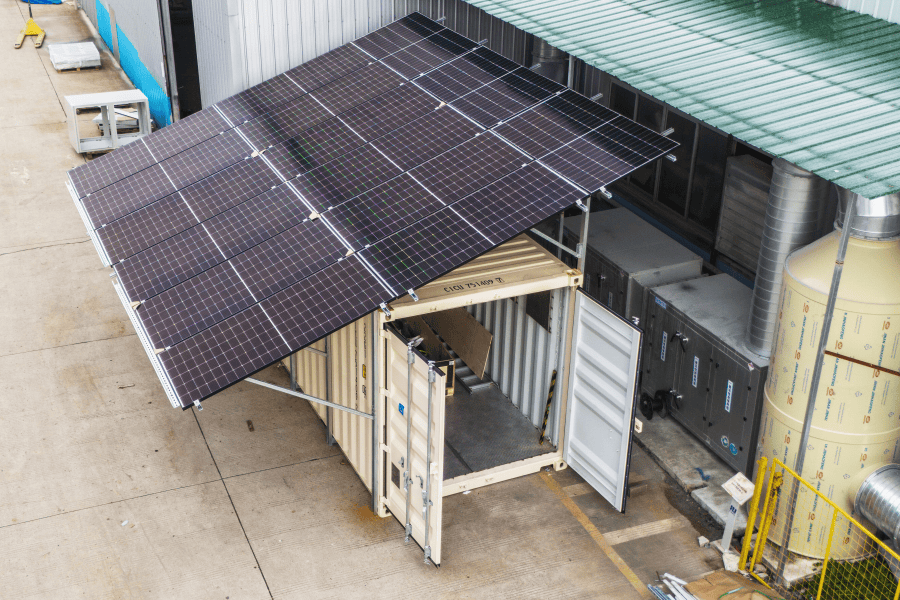
Beyond the Price Tag: What an IP54 Outdoor BESS Container Really Costs for Your Project
Hey there. Let's grab a virtual coffee. If you're reading this, you're probably knee-deep in a project proposal, maybe for a microgrid or a rural electrification initiative, and you've landed on the question of containerized battery storage. Specifically, you're looking at outdoor-rated, IP54 enclosures and wondering, "Okay, what's the damage going to be?" I've been there, on site, unboxing containers in everything from Texas heat to German drizzle. Honestly, the first number you get quoted is just the starting point. The real conversation is about total cost of ownership, and that's where things get interesting.
Quick Navigation
- The Real Problem: It's Not Just a Number
- The True Cost Breakdown: More Than Metal and Cells
- A Real-World Lens: Learning from Global Deployments
- Key Considerations for Your Budget
- A Final Thought from the Field
The Real Problem: It's Not Just a Number
Here's the thing. When a client asks for "the cost of an IP54 container," what they're often really asking is, "What's the cheapest way to get a protected box for my batteries?" I've seen this firsthand on site. The immediate pain point is upfront capital expenditure (CapEx). Budgets are tight, especially for community or rural projects. But focusing solely on that initial purchase order is where the trouble starts.
The agitation, as we call it, comes later. An IP54 rating means it's protected against dust ingress and water splashes from any direction. It's good, it's standard for outdoor commercial gear. But is it sufficient for a coastal Philippine site with salt spray, 95% humidity, and typhoon-season winds? Or for an Arizona site with extreme thermal cycling? A cheap container might meet IP54 on paper, but with thin-gauge steel, poor corrosion coating, or a basic air-conditioning unit that guzzles power and fails in two years, your long-term costs skyrocket. You're not just buying a box; you're buying the reliability of the entire energy asset inside it. According to a National Renewable Energy Laboratory (NREL) analysis, balance-of-system (BOS) costs and ongoing operations and maintenance (O&M) can make up 30-40% of a storage project's lifetime cost. The container is a huge part of that BOS.
The True Cost Breakdown: More Than Metal and Cells
So, let's break down the "cost" into what actually hits your balance sheet. For a robust, UL 9540/UL 9540A-compliant outdoor energy storage container (the standard we work to for North America and respected globally), think in these layers:
- The Core Enclosure & Safety Structure: This is the heavy-gauge steel, the corrosion-resistant paint (think C5-M grade for harsh environments), the proper fire-rated internal partitioning, and the structural certification for your specific wind and seismic zone. This isn't a place to cut corners.
- The Brains and Nervous System: The power conversion system (PCS), the battery management system (BMS), and the thermal management system. This last one is critical. Is it a simple forced-air system, or a liquid-cooled, precision-controlled climate system? Liquid cooling might add 10-15% to upfront cost but can extend battery life significantly, reducing your levelized cost of energy storage (LCOE). I always explain LCOE as the "true rental cost" of every kWh stored over the system's life - you want this number as low as possible.
- Compliance & Integration: The cost of certifying the entire unit to UL, IEC 62933, or IEEE standards. This includes rigorous testing for safety. Then, there's the engineering for grid interconnection, which varies wildly between, say, a project in California (CAISO) and one in Germany.
- The "Soft" Costs: Site preparation, shipping, installation, commissioning, and long-term service. A well-designed container with integrated lifting points and pre-tested modular interfaces might cost more upfront but can slash installation time from weeks to days.
At Highjoule, we've optimized our Orion Series IP54 containers around this total-cost view. We use a proprietary hybrid cooling system that's incredibly efficient, and we build to the highest structural standards from the get-go because, honestly, it's cheaper than dealing with a failed container in five years. Our local partners in key markets handle the last-mile compliance and service, which is a huge hidden cost-saver for our clients.
A Real-World Lens: Learning from Global Deployments
Let me give you a concrete example from a project we supported in Northern Germany, an industrial microgrid. The challenge was similar to many rural settings: provide backup power and peak shaving in a high-humidity, flat, and windy coastal area. The initial bid from a low-cost provider for an IP54 container was about 25% lower than ours.
But look at the details. Their thermal management was basic air conditioning. Over three years, the energy cost to run that AC, especially fighting the humidity to prevent condensation inside the battery racks, was enormous. Condensation is a silent killer for electronics. Meanwhile, our solution used a dehumidifying, indirect liquid cooling loop. Our upfront was higher, but the operational savings on auxiliary load and the preserved battery health meant the project hit its ROI target 18 months earlier than projected under the cheaper model.

The lesson? The project's success wasn't about the cheapest container. It was about the right container for the environment, with a keen eye on lifetime operating costs. This thinking applies directly to a rural electrification project in the Philippines or anywhere else. You need a container built for that specific environmental aggression - be it salt, sand, or heat.
Key Considerations for Your Budget
When you're evaluating costs, turn the conversation around. Ask these questions:
- "What's the C-rate and how does it relate to cooling?" A system designed for a higher, sustained C-rate (charge/discharge power) needs robust cooling. A cheaper system might throttle power in heat, failing when you need it most.
- "Can you show me the 10-year LCOE projection for this specific design?" Any reputable provider should be able to model this.
- "Is the UL/IEC certification for the entire unit, or just components?" This matters immensely for insurance and permitting, especially in the US and Europe.
- "What's the scope of local support for installation and warranty?" A container stranded on a site with no local technician can become a very expensive paperweight.
A Final Thought from the Field
So, how much does it cost for an IP54 outdoor energy storage container? For a robust, safe, and truly reliable unit built to Western standards for a demanding application, you're looking at a significant investment - but one that pays back over decades. The number can range widely based on size, tech, and location, but focusing on that single figure is a trap.
The better question to start with is: "What is the total cost of delivering reliable, safe power for the life of my project?" That shifts the discussion from commodity purchasing to value engineering. What specific challenge in your project's location keeps you up at night - is it humidity, extreme temperatures, or remote maintenance? Let's talk about that.
Tags: UL Standard Energy Storage Rural Electrification IP54 Container BESS Cost
Author
James Zhang
20+ years agricultural energy storage engineer / Highjoule CTO