
How Much Does an IP54 Outdoor Off-Grid Solar Generator for Construction Cost?
Let's Talk About the Real Price of Power on Your Job Site
If you're reading this, you're probably managing a construction project and the question of temporary power is staring you down. You've heard about these "off-grid solar generators" and you're wondering, honestly, "What's this going to cost me?" Let me tell you, after two decades on sites from California to North Rhine-Westphalia, that's the smartest question you can ask. The sticker price is just the beginning of the conversation.
Quick Navigation
- The Real Problem Isn't Just the Price Tag
- What You're Really Paying For: Breaking Down the "Cost"
- The Game-Changer: IP54 and Why It's Non-Negotiable
- A Tale of Two Sites: A Real-World Cost Comparison
- Expert Insight: The Hidden Math of LCOE on Site
- The Right Questions to Ask Your Supplier
The Real Problem Isn't Just the Price Tag
Here's the scene I've seen a hundred times. A project manager needs power for a remote site or a location where the utility connection is months out. The default used to be diesel gensets C loud, smelly, and a constant drain on the budget for fuel and maintenance. The initial rental or purchase price seems low, but that's a trap. According to the National Renewable Energy Laboratory (NREL), fuel and maintenance can constitute over 70% of a generator's total lifetime cost. You're not just buying a machine; you're signing up for a long-term fuel contract and a full-time mechanic.
The new alternative is battery storage paired with solar C an off-grid "solar generator." But when you start looking, the prices are all over the place. One system quotes $15,000, another $45,000 for what seems like similar power. This confusion leads to decision paralysis, or worse, choosing the cheapest option and facing massive cost overruns later from downtime, repairs, or safety failures.
What You're Really Paying For: Breaking Down the "Cost"
So, "how much does it cost?" Let's reframe that. You're not buying a commodity; you're investing in a power reliability asset. The cost breaks down into four pillars:
- The Core Hardware: Batteries (Lithium Iron Phosphate, or LFP, is the industry safety standard now), inverter, charge controller, and the solar array itself. Battery capacity (kWh) and power output (kW) are the main drivers here.
- The "Toughness" Package: This is where IP54 comes in. An enclosure rated IP54 is protected against dust ingress and water splashes from any direction. On a construction site, this isn't a luxury; it's what separates a system that lasts the project from one that fails in the first rainstorm or dust cloud. This ruggedization adds cost but saves a fortune in replacements.
- The Safety & Compliance Brain: This is critical for the US and EU markets. Your system must have built-in protection that meets UL 9540 (ESS standard) and IEC 62619 (safety for industrial batteries). This includes advanced thermal management systems. I've seen cheap systems without proper cooling throttle power output on a hot day just when you need it most, or worse, become a risk. This certified engineering is in the price.
- The Intelligence & Service: Can you monitor it remotely? Does it come with a warranty that includes local technical support? A system that offers proactive alerts and has a service partner nearby might have a higher upfront cost but a drastically lower operational risk.
The Game-Changer: IP54 and Why It's Non-Negotiable
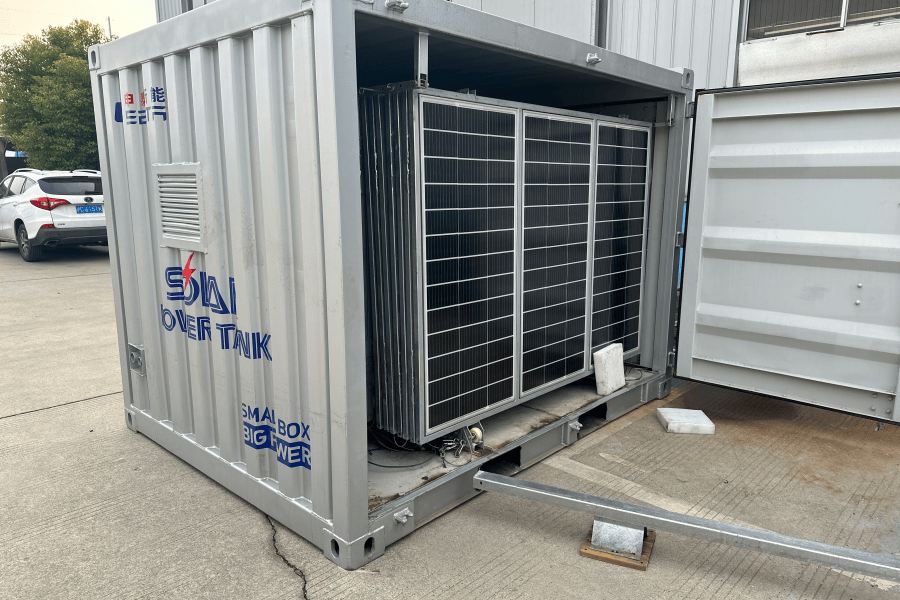
Let me zoom in on IP54 because it's a perfect example of cost versus value. A standard indoor cabinet might be IP20. Putting that on a construction site is asking for trouble. IP54 means sealed connectors, gasketed doors, and filtered ventilation. At Highjoule, when we build our SitePower series for outdoor applications, the IP54 enclosure is integrated into the design from day one C it's not an afterthought. This ensures our thermal management system works efficiently even while keeping dust and moisture out, protecting the battery's lifespan. You're paying for durability that guarantees performance, rain or shine.

A Tale of Two Sites: A Real-World Cost Comparison
Let me share a case from a solar farm construction in Texas last year. The contractor needed power for site offices, tool charging, and lighting. They evaluated two options:
- Option A (Low-Bid "Solar Generator"): A $18,000 system with no clear IP rating or UL certifications. It worked for 6 weeks. Then a dust storm clogged the cooling fans, the inverter overheated and shut down, halting all work for two days. They had to rush-deliver a diesel genset. Total cost: $18k + lost labor + rental + fuel = ~$32,000 and a huge scheduling headache.
- Option B (Our Highjoule Solution): A $28,000 SitePower system with UL 9540 certification, IP54 enclosure, and integrated remote monitoring. It ran autonomously for the entire 8-month project. The only "extra" cost was the natural electricity from the solar panels. They even avoided ~$6,000 in planned fuel costs for a small gen-set. The project manager's feedback? "It was the one thing on site I never had to worry about."
Which one had the lower real cost?
Expert Insight: The Hidden Math of LCOE on Site
Finance folks on your team might talk about LCOE C Levelized Cost of Energy. It's a fancy term for the total lifetime cost of your power divided by the energy you use. For a construction site, the "lifetime" is the project duration. Here's the simple math:
Site LCOE = (Upfront Cost + Fuel + Maintenance + Downtime Cost) / Total kWh Used
A diesel genset has a low upfront but very high fuel, maintenance, and downtime variables. A cheap, unreliable battery system has a moderate upfront cost but a massive potential downtime variable. A robust, fit-for-purpose off-grid solar generator has a higher upfront cost but near-zero fuel, lower maintenance, and minimal downtime risk. When you run this math, the robust solar solution often wins on true cost, not to mention carbon footprint and noise. The key is investing in quality that keeps the "downtime cost" variable at zero.
The Right Questions to Ask Your Supplier
So, when you get a quote, move beyond "what's the price?" Ask these instead:
- "Can you provide the UL 9540 or IEC 62619 certification documents for this exact model?"
- "Is the enclosure rating IP54 or higher for the entire system, not just parts of it?"
- "What is the cycle life of the battery at 90% depth of discharge, and what does the warranty cover?"
- "How does the thermal management system work to prevent power throttling in 40C (104F) heat?"
- "Do you have a local service network, and what is the response time for troubleshooting?"
The answers will tell you everything about the real cost. You'll find that with a partner like Highjoule, we bake these answers into our design philosophy because we've been on site and know what fails. Honestly, we'd rather you have all the facts upfront.
Ready to calculate the true cost for your specific site load and timeline? The conversation starts with your project's unique needs, not a generic price list.
Tags: Construction Site Power UL Standard BESS Europe US Market Renewable Energy Off-grid Solar
Author
James Zhang
20+ years agricultural energy storage engineer / Highjoule CTO