
LFP Hybrid Solar-Diesel System Cost for Telecom Base Stations
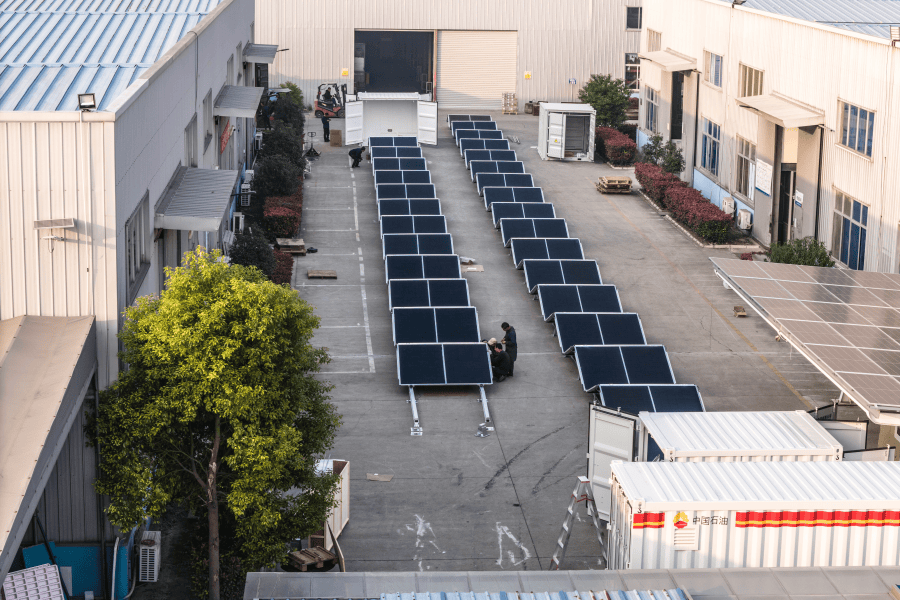
Table of Contents
- The Real Question Behind the Price Tag
- The Diesel Dilemma: It's More Than Just Fuel
- Why LFP (LiFePO4) is the Game-Changer for Remote Sites
- Breaking Down the Cost: From CAPEX to Lifetime Value
- A Case in Point: From Theory to a Texas Telecom Site
- Beyond the Battery: What Truly Drives Your System's Cost
- Making the Decision: Is the Investment Right for You?
The Real Question Behind the Price Tag
Honestly, when a telecom operator asks me "How much does it cost for an LFP Hybrid Solar-Diesel System?", I know they're really asking something else. They're asking, "Can I keep my network up 24/7 without my operational budget going up in diesel smoke?" Or, "How do I future-proof my base stations against volatile fuel prices and tightening carbon regulations?" The upfront price is just one piece of a much larger puzzle. After two decades on site, from the deserts of Arizona to the forests of Scandinavia, I've learned that the most expensive system isn't the one with the highest initial cost - it's the one whose true cost over 10+ years isn't properly understood.
The Diesel Dilemma: It's More Than Just Fuel
Let's talk about the standard setup for an off-grid or bad-grid site. For years, the default has been a diesel generator, often oversized, running far more than it needs to. The International Energy Agency (IEA) has highlighted that diesel generators for telecoms can have a levelized cost of electricity (LCOE) ranging from $0.30 to over $0.70 per kWh, heavily dependent on fuel logistics and runtime. That's high, but the real agitation point isn't just the fuel bill.
I've seen this firsthand on site. The cost comes from:
- Unplanned Downtime: A gen-set fails during a storm. The service truck is 4 hours away. That's revenue loss and SLA penalties.
- Maintenance Marathons: Every 250-500 hours, you're changing oil and filters. In harsh environments, that interval shrinks. The labor and parts add up silently.
- Fuel Theft & Spillage: It happens more than you'd think, a direct hit to both your wallet and your environmental compliance.
- Carbon Costs: Whether it's a direct tax or a corporate sustainability mandate, the cost of emissions is becoming a real line item.
So when we consider a hybrid solution, we're not just adding solar and batteries. We're fundamentally re-architecting the site's energy resilience and cost profile.
Why LFP (LiFePO4) is the Game-Changer for Remote Sites
This is where Lithium Iron Phosphate (LFP) chemistry enters the chat. For telecom, it's almost a perfect match. Compared to older lead-acid or other lithium types, LFP brings three critical things to a remote base station:
- Safety First: The phosphate chemistry is inherently more stable. It's much more resistant to thermal runaway, which is non-negotiable when your battery is sitting unattended for months. This is why major standards like UL 9540 and IEC 62619 are putting immense focus on system-level safety, not just cell-level specs.
- Longevity That Matters: An LFP battery can typically deliver 4000+ cycles to 80% depth of discharge. In a hybrid system where it might cycle once a day, that's over 10 years of service. This directly attacks your long-term LCOE.
- Forgiving Performance: They tolerate wider temperature ranges and partial state-of-charge operation better. In the real world, where a perfect 25C climate-controlled environment is a fantasy, this robustness is worth its weight in gold.
Breaking Down the Cost: From CAPEX to Lifetime Value
Alright, let's get to the numbers. A ballpark figure for a fully integrated, UL/IEC-compliant LFP hybrid system for a typical 5-10 kW telecom load can range from $25,000 to $60,000+. I know, that's a wide range. Let's break down why:
| Cost Component | Typical Range | What It Depends On |
|---|---|---|
| LFP Battery Bank (20-40 kWh usable) | $8,000 - $20,000 | Depth of backup needed, cycle life spec, enclosure (basic vs. thermal managed). |
| Solar PV Array (5-15 kWp) | $4,000 - $12,000 | Local solar resource, mounting structure, wiring complexity. |
| Hybrid Inverter/Controller | $3,000 - $8,000 | Power rating, grid-forming capability, advanced dispatch software. |
| Integration & Balance of System | $5,000 - $15,000 | AC/DC switchgear, fuel transfer controls, UL-certified enclosures, remote monitoring. |
| Installation & Commissioning | $5,000 - $10,000+ | Site accessibility, local labor rates, permitting (crucial in the US & EU). |
The key is the integration. A cheap battery slapped next to a generator without intelligent controls is a liability, not a solution. The brain of the system - the controller that decides when to pull from solar, when to discharge the battery, and when to start the gen-set for optimal efficiency - is where a lot of the value (and cost) of a reputable vendor lies.
A Case in Point: From Theory to a Texas Telecom Site
Let me give you a real example. We worked on a site in West Texas for a regional operator. The challenge: A site with moderate solar, high afternoon load from cooling, and diesel deliveries that were becoming a logistical nightmare. The goal was to minimize generator runtime.
We deployed a 30 kWh LFP system (UL 9540 listed) with a 10 kW solar canopy and a sophisticated controller. The gen-set, now just a backup, was set to only start if the battery dropped below 20% and solar wasn't available. Honestly, the magic was in the software. The system learned the load patterns and weather forecasts.
The result? Generator runtime dropped from 18+ hours a day to under 4. The payback period, factoring in saved fuel and maintenance, came in at just under 5 years. For an asset with a 12-year expected life, the math clicked. The operator isn't just saving money; they've dramatically increased site reliability and have hard data for their sustainability reports.

Beyond the Battery: What Truly Drives Your System's Cost
As a technical expert, I spend a lot of time explaining that the battery cell is just one component. The total cost is driven by:
- Thermal Management: Can the system keep itself at an optimal temperature in a 45C (113F) desert or a -30C (-22F) tundra? Passive cooling is cheaper, but active thermal management (like what we design into Highjoule containers) extends life and guarantees performance, adding cost but delivering more value.
- C-rate and Power Capability: A high C-rate battery can deliver bursts of power quickly, which might allow you to size a smaller generator. This system-level optimization can save upfront gen-set cost.
- Compliance & Insurance: In the US and EU, using UL or IEC-certified assemblies isn't just best practice; it's often required for permitting and insurance. This certification is baked into the cost of quality systems but saves immense headache and liability down the road.
- Localized Support: What's the cost if the system has an alarm at 2 AM? A vendor with local service partners or remote diagnostic capabilities provides peace of mind that has tangible, though hard-to-quantify, value.
Making the Decision: Is the Investment Right for You?
So, how much does it cost? The real answer is: It depends on what you value. If you only look at the purchase order total, you might get sticker shock. But if you model the total cost of ownership - factoring in the guaranteed reduction in diesel consumption, the deferred maintenance on generators, the avoided downtime, and the value of regulatory compliance - the perspective shifts entirely.
The question I leave my clients with isn't "Can you afford this hybrid system?" It's "Can you afford to keep running the way you are for the next decade?" With fuel price volatility and carbon policies being what they are, the business case for a robust, LFP-based hybrid system is stronger today than it's ever been. What's the one site in your network where the numbers would make the most sense to pilot this?
Tags: BESS LFP Battery Solar-Diesel Hybrid Telecom Power Energy Storage Cost
Author
James Zhang
20+ years agricultural energy storage engineer / Highjoule CTO