
LFP Photovoltaic Storage System Cost for EV Charging: A Real-World Breakdown
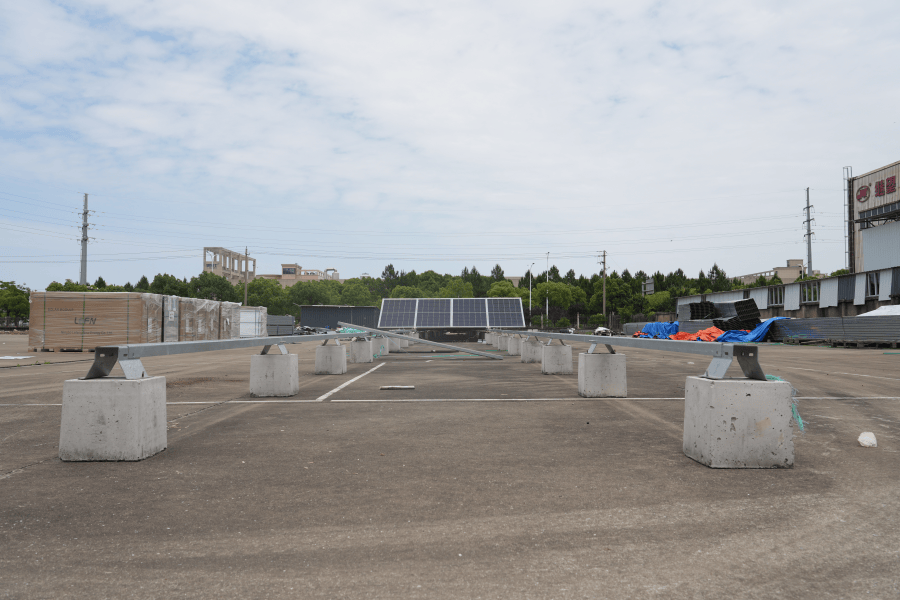
Navigating the Real Cost of LFP Solar Storage for EV Hubs
Honestly, when a business owner or project developer asks me "How much does it cost for an LFP Photovoltaic Storage System for EV Charging Stations?", I know they're looking for a simple number. But after two decades on sites from California to Bavaria, I've learned the real answer isn't a price tag - it's a value equation. The upfront cost is just the entry point. The real question is: what are you saving, what risk are you mitigating, and what opportunity are you unlocking over the next 15+ years? Let's grab a coffee and talk through what this actually looks like on the ground.
Quick Navigation
- The Real Problem: It's More Than Just "Sticker Shock"
- Breaking Down the Cost: From CAPEX to True LCOE
- A Case in Point: The German Logistics Hub
- The Expert Take: What Really Drives Value & Safety
- Making It Work for Your Project
The Real Problem: It's More Than Just "Sticker Shock"
The initial quote for a Battery Energy Storage System (BESS) can indeed cause a sharp intake of breath. I've seen it firsthand. But focusing solely on that number misses the deeper, more expensive pain points my clients face daily:
- Demand Charge Roulette: Commercial and industrial sites with EV charging, especially fast-charging, create massive, unpredictable power spikes. Utilities hit you hard for these peaks with demand charges. Without storage, you're essentially paying a premium for the grid's worst congestion times. One month of unexpected fleet charging can blow your entire energy budget.
- The "Solar Cliff" Problem: You installed solar panels to power your EV stations - great move. But what happens when the sun sets, and EV demand is still high (like at a depot or shopping center)? You fall off a "cliff," buying all your power from the grid at retail rates, negating much of your solar savings.
- Grid Upgrade Delays & Costs: Want to add ten more DC fast chargers? Your local utility might tell you the transformer needs an upgrade - a process that can take years and cost hundreds of thousands, if not millions, of dollars. This is often the single biggest project killer.
- Anxiety Over Battery Safety: Headlines about battery fires have made everyone nervous. You're not just buying a battery; you're bringing a significant asset onto your property. You need confidence it won't become a liability.
So, when we talk about cost, we're really talking about the cost of not solving these problems.
Breaking Down the Cost: From CAPEX to True LCOE
Let's get into the nuts and bolts. For a commercial-scale LFP (LiFePO4) system paired with solar for EV charging, costs are typically measured in dollars per kilowatt-hour ($/kWh) of storage capacity. As of late 2023 into 2024, a fully installed, grid-connected system meeting strict US (UL 9540, IEEE 1547) and EU (IEC 62619) standards can range from $450 to $750 per kWh for the battery system itself. The solar PV add-on is separate.
But that's the hardware. The real story is in the total project cost, which includes:
- Core BESS & Power Conversion (PCS): The LFP battery racks, thermal management system, inverters, and switchgear.
- Balance of System (BoS): This is huge - containerization (if used), HVAC, fire suppression (absolutely critical), cabling, and site-specific civil works.
- Soft Costs: Engineering, design, permitting (which can be lengthy), utility interconnection studies, and commissioning. In mature markets like Germany or California, these can be 20-30% of the total.
- Software & Controls: The brain of the operation. This isn't an add-on; it's what allows the system to autonomously shave peaks, shift solar energy, and participate in grid services.
According to the National Renewable Energy Laboratory (NREL), while battery pack prices have fallen, overall system costs are seeing pressure from supply chains and BoS. This makes choosing a vendor with integrated, pre-engineered solutions crucial for budget control.
The most important metric we use internally at Highjoule with clients is the Levelized Cost of Storage (LCOS). Think of it as the "cost per useful kWh" over the system's life. A cheaper battery with a 5-year warranty and 80% depth of discharge might have a worse LCOS than a slightly pricier LFP system with a 15-year warranty, 95% usable capacity, and higher round-trip efficiency. LFP chemistry, with its inherent stability and long cycle life (often 6,000+ cycles), almost always wins on LCOS for daily-cycling applications like EV charging support.
A Case in Point: The German Logistics Hub
Let me walk you through a recent project we completed in North Rhine-Westphalia. The client was a mid-sized logistics company with a 50-vehicle electric depot. Their challenge was classic: they had rooftop solar, but their evening charging schedule was causing massive demand charges and they were grid-constrained.
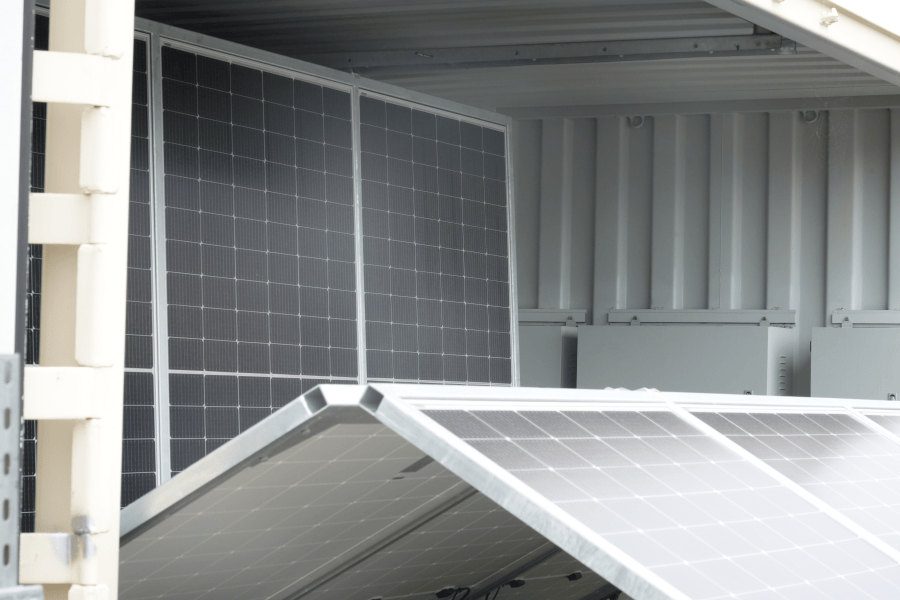
We deployed a 500 kWh / 250 kW LFP system, fully integrated with their existing solar and new charging pylons. The upfront investment was significant. But here's the on-the-ground financial impact after 18 months:
- Demand Charge Reduction: By clipping charging peaks, they cut their peak demand by over 40%, saving approximately ?18,000 annually.
- Solar Self-Consumption: They increased the usage of their own solar power from ~35% to over 80%, slashing grid purchases.
- Grid Service Revenue: During times of low depot activity, their system automatically participates in the German primary control reserve market, generating a modest but meaningful revenue stream.
- Avoided Grid Upgrade: The local utility confirmed the storage system deferred a ?250,000 transformer upgrade for at least 8 years.
The payback period landed at just under 6 years. More importantly, they now have predictable energy costs and a scalable platform for their growing fleet. The LFP chemistry was non-negotiable for them due to local fire safety regulations (requiring IEC 62619 certification) and their need for a 15-year operational horizon.
The Expert Take: What Really Drives Value & Safety
From the field, here are the three technical levers that most directly impact your cost and return:
1. C-Rate Isn't Just a Spec: The C-rate (charge/discharge power relative to capacity) determines how fast you can shave a peak. A 500 kWh battery with a 1C rate (500 kW) can deliver twice the instantaneous power of a 0.5C system for the same energy. For EV charging, where loads can ramp extremely fast, undersizing the C-rate is a common mistake that leads to poor peak shaving. You might save on upfront cost but lose the core financial benefit.
2. Thermal Management is Your Insurance Policy: LFP is safer than NMC, but it's not indestructible. Proper liquid cooling versus basic air cooling adds cost but is worth every penny. It ensures consistent performance in a Texas summer or a Arizona heatwave, prevents premature degradation, and is a cornerstone of any credible safety certification like UL 9540A. I've seen too many air-cooled systems derate (slow down) on hot days, just when you need them most.
3. The Intelligence Layer: The hardware stores energy; the software creates value. Your system's brain needs to understand your specific tariff, your solar production forecast, and your charging schedule. At Highjoule, we spend as much time configuring the energy management system (EMS) as we do installing the racks. It needs to make thousands of decisions to maximize your economic outcome, automatically.
Making It Work for Your Project
So, how do you move forward? Start by shifting the conversation with vendors from "price per kWh" to "value per project." Ask for a detailed pro forma that models:
- Demand charge savings under your specific utility tariff.
- Increased solar self-consumption revenue.
- Potential grid service revenues (where markets exist).
- Estimated savings from deferred grid upgrades.
Insist on full transparency on compliance. For the US, ask for stamped engineering drawings showing compliance with NEC 706, UL 9540, and IEEE 1547. For the EU, it's IEC 62619 and the relevant grid codes. This isn't bureaucracy - it's what ensures your system gets permitted, interconnected, and insured.
The cost of an LFP solar storage system for EV charging is an investment in energy resilience and predictability. The right partner won't just sell you a container; they'll be your guide through interconnection, help you model the financials, and stand behind the system for its long life. What's the one operational headache in your charging strategy that keeps you up at night?
Tags: UL Standard BESS LCOE EV Charging Infrastructure LFP Battery US Market Europe Market Solar Storage Cost
Author
James Zhang
20+ years agricultural energy storage engineer / Highjoule CTO