
Rapid Deployment Off-grid Solar Generator for High-Altitude Regions: A Real-World Cost Breakdown
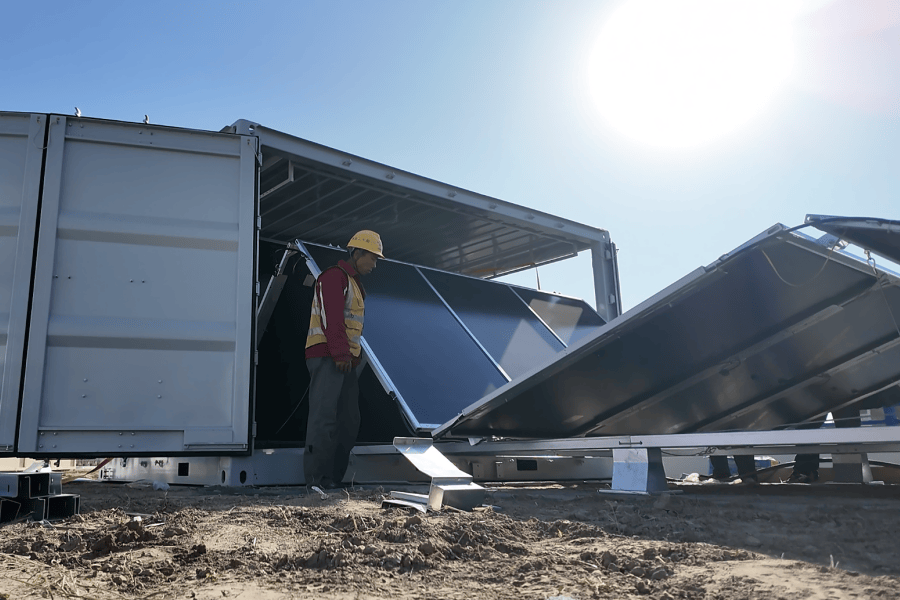
Table of Contents
- The Real Problem: It's Never Just About the Sticker Price
- What Actually Drives the Cost? Breaking Down the "Rapid" and "High-Altitude" Premium
- A Smarter Approach: How We Tackle High-Altitude Rapid Deployment at Highjoule
- A Case from the Field: 72 Hours in the Rockies
- Your Next Step: Framing the Investment
The Real Problem: It's Never Just About the Sticker Price
Let's be honest. When you, as a project manager or business owner, ask "How much does it cost for a Rapid Deployment Off-grid Solar Generator for High-altitude Regions?", you're not just looking for a number. You're asking, "Can I get reliable, safe power to this remote site, on a tight deadline, without the budget spiraling out of control?" I've seen this firsthand on site, from the Colorado Rockies to the Alps. The real pain point isn't just the capital expenditure (CapEx) of the equipment. It's the hidden costs of downtime, complex logistics, and systems that fail under harsh conditions.
You might find a cheaper containerized system, but if it's not engineered for rapid deployment, you're burning money on crane time and specialized labor. If the battery thermal management can't handle the -30C nights and intense UV exposure at 10,000 feet, you're looking at premature degradation or, worse, a safety incident. According to a National Renewable Energy Laboratory (NREL) analysis, improper system design for environmental extremes can reduce battery lifespan by up to 40% - a massive hit to your long-term cost of energy (LCOE). That "cheaper" unit just became the most expensive asset on your mountain.
What Actually Drives the Cost? Breaking Down the "Rapid" and "High-Altitude" Premium
So, let's move beyond the brochure price. A true rapid-deployment, high-altitude off-grid system's cost is built on four pillars:
- Engineering for the Elements: This is non-negotiable. Batteries hate extreme cold. Standard systems lose capacity and charging ability rapidly as temperatures drop. At high altitude, you need a thermal management system that's more like a climate-controlled room than a simple fan. This involves higher-spec insulation, liquid cooling or advanced forced-air systems, and components rated for wider temperature ranges. This adds cost, but it protects your core investment.
- The "Rapid Deployment" Enablers: "Rapid" means plug-and-play. We're talking pre-integrated, factory-tested units that arrive on a skid or container. Key cost drivers here are the level of internal integration (are the PV inverters, battery management system (BMS), and grid-forming inverter already wired and tested?) and the compliance certifications. A unit that's already UL 9540/UL 9540A (for the US) or IEC 62933 (for the EU) certified saves you months of on-site testing and regulatory headaches. You're paying for speed and certainty.
- Power Electronics & C-Rate: In off-grid scenarios, you often need high bursts of power to start heavy machinery. This is where C-rate matters. Simply put, it's how fast a battery can discharge its energy. A higher C-rate capability (like 1C or 2C) means the system can deliver more power instantly, but it requires more robust (and costly) battery cells and power electronics. Sizing this correctly is crucial - oversize and you waste money, undersize and your equipment won't start.
- Logistics & Soft Costs: Getting a 20-ton container to a remote, high-altitude site is a project in itself. Road permits, specialized transport, crane access - these costs can sometimes rival the hardware itself. A good provider will have experience managing this and design the system for easier transport (e.g., modular, lighter sub-units).

A Smarter Approach: How We Tackle High-Altitude Rapid Deployment at Highjoule
At Highjoule, after 20 years in the field, we've learned that optimizing the total lifetime cost is the only metric that counts. For our rapid-deployment units destined for tough environments, we focus on three things:
1. Design for the Worst Day: Our standard "RapidGrid" series for high-altitude comes with a cold-weather package as default. This isn't an add-on; it's baked in. We use battery chemistry with better low-temperature performance and pair it with an active thermal management system that keeps the cells in their happy zone year-round. This upfront investment drastically improves your LCOE because the system lasts longer and performs consistently.
2. Certify Once, Deploy Anywhere: Every unit that leaves our factory for the North American market is UL 9540 certified. For Europe, it's IEC 62933. This means when it arrives on site, your local inspector has a much clearer path to approval. That speed-to-operation is a huge part of the "rapid" value proposition and saves you significant on-site labor and delay costs.
3. Modularity is Key: Instead of one massive container, we often recommend a modular approach for truly inaccessible sites. Think of it as "energy legos." Smaller, standardized battery and power electronic modules can be flown in by helicopter and assembled on-site. It gives you incredible flexibility and can actually reduce those daunting logistics costs.
A Case from the Field: 72 Hours in the Rockies
Let me give you a real example. A client needed a temporary, off-grid power source for a critical environmental monitoring station at 11,000 ft in Colorado. The timeline was brutal - 72 hours from contract to power-on. A traditional diesel generator was noisy, required frequent fuel deliveries (a logistics nightmare), and violated their emission requirements.
We deployed one of our pre-configured "RapidGrid Micro" units. It was solar + storage, all in a single, towable enclosure. Because it was pre-certified (UL), the local authority having jurisdiction (AHJ) approved it based on the documentation we provided. The cold-weather package handled the freezing nights autonomously. Honestly, the hardest part was the final mile transport on a forestry road. The system was online in 70 hours and has been operating autonomously for over 18 months now. The client's cost analysis showed a 30% lower total cost over 3 years compared to the diesel alternative, when you factor in fuel, transport, and maintenance.

Your Next Step: Framing the Investment
So, back to your original question: "How much does it cost?" For a robust, rapidly deployable, off-grid solar generator system for high-altitude use, think in terms of total project cost, not just equipment. For a typical 100kW / 250kWh system (enough to power a small camp or industrial site), in the US or EU market, you should be thinking in a range of $300,000 to $500,000 fully deployed and commissioned. The variance comes from the specifics: site accessibility, the need for extreme cold-weather specs, and the required C-rate for your loads.
The better question to ask a vendor is: "Walk me through the LCOE of this system over 10 years at my specific site, including all deployment and expected maintenance costs." That shifts the conversation from a scary capital number to a manageable operational expense. It reveals the true value of engineering for durability and rapid deployment.
What's the biggest logistical hurdle you're facing for your upcoming high-altitude project? Is it the transport, the local permits, or the fear of system failure in the cold? Let's talk specifics.
Tags: UL Standard LCOE Europe US Market Renewable Energy Rapid Deployment BESS High-altitude Energy Storage Off-grid Solar Generator
Author
James Zhang
20+ years agricultural energy storage engineer / Highjoule CTO