
Smart BESS Cost for Construction Sites: A Real-World Breakdown
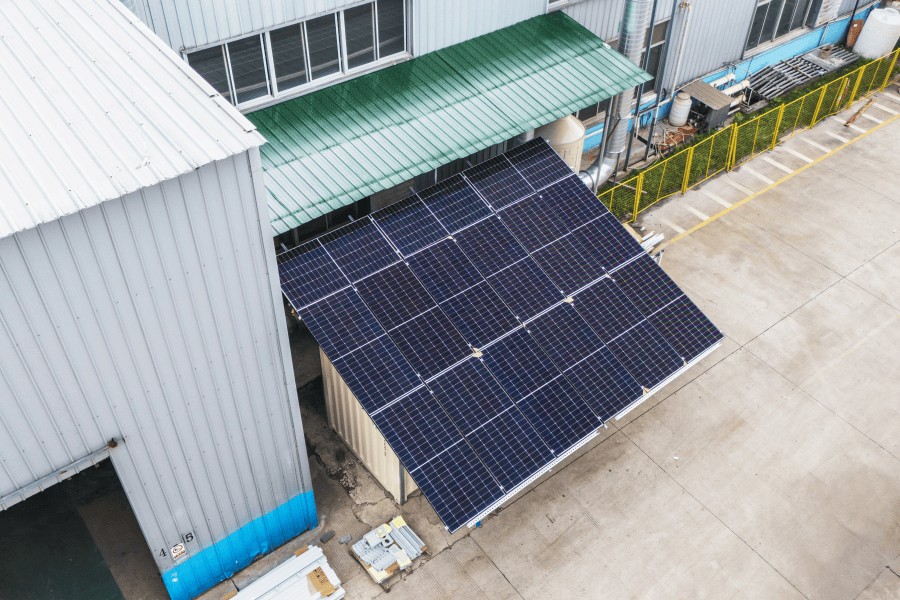
Table of Contents
- The Real Problem: It's Not Just About the Price Tag
- Let's Talk Numbers: A Realistic Cost Breakdown
- What You're Really Paying For: The Smart BMS Difference
- From Blueprint to Reality: A Case Study in Texas
- Thinking Long-Term: The LCOE Perspective
- Making Your Decision: Key Questions to Ask
The Real Problem: It's Not Just About the Price Tag
If you're managing a construction project in the US or Europe right now, and you're looking at power options, you've probably asked the question: "How much does a battery system cost?" Honestly, that's the wrong place to start. I've been on dozens of sites where the initial sticker shock on a quality BESS led to choosing a cheaper, louder, dirtier diesel generator. And then, the real costs started piling up.
The problem isn't the upfront capital expenditure. It's the total cost of not having a smart, reliable, and resilient power source. We're talking about fuel price volatility (remember the spikes?), daily refueling labor, noise violations that halt work, emissions that can restrict operating hours, and the sheer maintenance headache. A study by the National Renewable Energy Laboratory (NREL) highlighted that for remote and temporary power, operational costs can dwarf the initial equipment price within the first year. On a construction site, downtime is the ultimate cost. When your concrete pour gets delayed because a generator failed, you're losing thousands per hour, not just in labor but in cascading schedule impacts.
Let's Talk Numbers: A Realistic Cost Breakdown
Alright, let's get to it. For a typical commercial-scale construction site requiring between 100kW to 500kW of consistent power, a Smart BMS-monitored BESS solution isn't a single-line item. It's a system. Here's how the costs typically structure out for a ready-to-deploy solution:
| Cost Component | Description & Why It Matters | Approx. % of Total |
|---|---|---|
| Battery Cells & Module | The core energy storage (usually Li-ion NMC or LFP). LFP (Lithium Iron Phosphate) is becoming the site favorite for its superior safety and longer cycle life. | 30-40% |
| Smart BMS & Power Conversion (PCS) | The "brain" and "heart." A UL 9540-listed BMS isn't just a monitor; it actively manages cell health, balance, and safety. The PCS (inverter) determines charge/discharge speed (C-rate). | 20-25% |
| Enclosure & Thermal Management | This is critical. A site-rated container (ISO or custom) with proper HVAC isn't optional. Batteries hate extreme heat or cold. Proper thermal management directly dictates lifespan and safety. | 15-20% |
| Engineering, Permitting & Commissioning | This is where local expertise saves you. Ensuring compliance with local fire codes (like NFPA 855 in the US), utility interconnection rules, and proper commissioning. Skipping this is a massive risk. | 10-15% |
| Software & Connectivity | The remote monitoring platform. Being able to see your system's state-of-charge, health, and performance from your trailer or office is a game-changer for site management. | 5-10% |
So, for a robust 250kW/500kWh system designed for the rigors of an 18-month build, you're generally looking at a total project cost in the range of $200,000 to $350,000. I know, that's a wide range. It depends heavily on site specifics, local regulations, and the level of grid independence you need.
What You're Really Paying For: The Smart BMS Difference
Let me zoom in on the "Smart BMS Monitored" part, because this is where the value hides. A basic BMS might just prevent a fire. A smart BMS is your onsite energy foreman. On a project in Germany last year, I saw ours predict a slight voltage imbalance in a module weeks before it could cause a shutdown. We scheduled a swap during a planned off-day. Zero downtime.
This intelligence translates directly into cost. It maximizes the battery's usable life (improving your long-term cost-per-cycle, or LCOE). It ensures you're operating within the safest parameters (non-negotiable for insurance and compliance with standards like IEC 62619). And honestly, it lets you sleep at night. You're not just buying batteries; you're buying predictability.

From Blueprint to Reality: A Case Study in Texas
Let me give you a real example. We deployed a system for a multi-phase residential development outside Austin. Their challenges were classic: noisy diesel gensets were triggering community complaints and time-of-day restrictions, fuel logistics were a nightmare, and they needed clean power for sensitive surveying equipment.
We provided a 400kWh, UL 9540-certified BESS with integrated solar canopy charging. The Smart BMS was key. It allowed the site manager to:
- Pre-program quiet, emission-free overnight power for security and curing.
- Precisely track energy usage per phase of construction for better job costing.
- Receive automatic alerts for any system anomalies, handled by our local service partner.
The upfront cost was higher than a diesel generator set. But over the 22-month project, they eliminated over $85,000 in diesel fuel and maintenance costs, avoided any fines or work stoppages, and even used the system's reliability as a marketing point for future homebuyers. The project manager told me the single biggest benefit was removing the daily "fuel and generator hassle" from his crew's task list.
Thinking Long-Term: The LCOE Perspective
This brings us to the most important metric for financial decision-makers: the Levelized Cost of Energy (LCOE). It's the total lifetime cost of owning and operating the asset, divided by the total energy it will produce. For diesel gensets, the LCOE is wildly volatile - tied to fuel prices. For a BESS, once it's in place, the "fuel" (sun, wind, or off-peak grid power) is cheap or free, and the main cost is the initial system spread over its life.
A smart BMS directly lowers LCOE by extending the battery's operational life. Think of it like this: if a poorly managed battery pack lasts 2,000 cycles and a smart BMS-managed pack lasts 3,000 cycles, you've reduced your cost per cycle by 33%. For a construction firm that might reuse these systems across multiple projects, that's a huge financial advantage.
Making Your Decision: Key Questions to Ask
So, when you're evaluating "how much it costs," don't just ask for a quote on a container. Have a coffee with your vendor and ask:
- "Is the system and BMS UL 9540/IEC 62619 certified for my region?" (This is your safety and insurance baseline).
- "Can you show me the remote monitoring platform? How do I get alerts?"
- "What's the projected cycle life under my specific site duty cycle, and how does the BMS guarantee that?"
- "Do you have local service and commissioning crews? What's the response time?" (At Highjoule, our North American and EU networks mean we typically have a technician on-site within 48 hours for anything critical).
The right system isn't an expense; it's a strategic tool that turns power from a persistent problem into a managed, predictable asset. What's the cost of your next project delay going to be?
Tags: Construction Site Power UL Standard LCOE Energy Storage BESS Cost Smart BMS
Author
James Zhang
20+ years agricultural energy storage engineer / Highjoule CTO