
Cost of 1MWh Solar Storage for Farm Irrigation with Tier 1 Cells
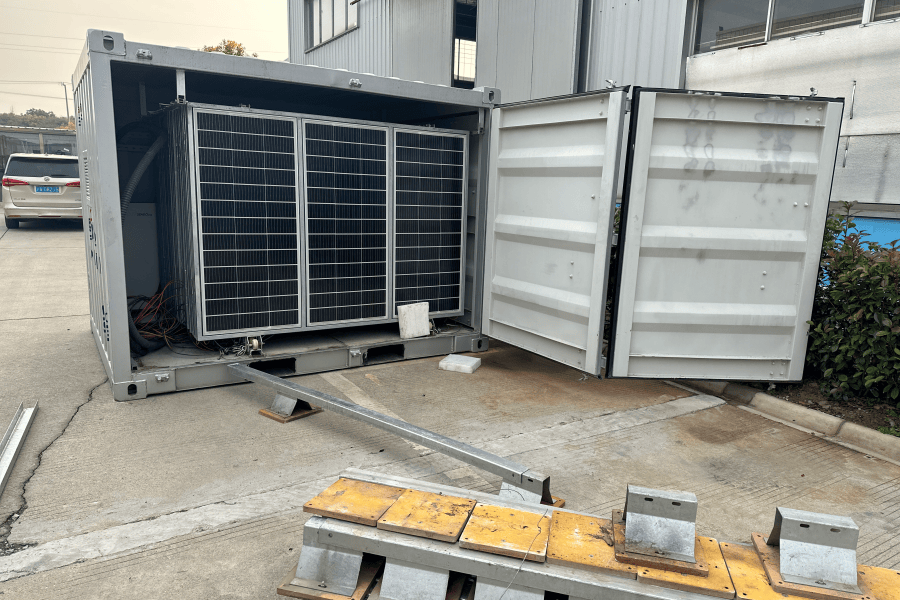
Let's Talk About Powering Your Farm: The Real Cost of 1MWh Solar Storage
Hey there. If you're reading this, you're probably a farm owner, an agribusiness manager, or someone tired of unpredictable energy bills eating into your operational margins. Over my 20+ years on sites from California's Central Valley to the farmlands of Germany, I've had this same conversation countless times over a cup of coffee. The question always starts with, "What's the real cost?" Especially when we're talking about a serious system: a 1MWh solar-coupled battery storage setup for irrigation, built on reliable Tier 1 battery cells. Honestly, it's not a simple sticker price. It's an investment conversation, and getting it wrong on specs can cost you more down the line.
What We'll Cover
- The Real Problem: It's Not Just About Price Per kWh
- The 1MWh System Cost Breakdown: Beyond the Battery Pack
- Why "Tier 1" Battery Cells Aren't a Marketing Gimmick
- From Blueprint to Harvest: Making the System Work for Your Farm
- The Questions You Should Be Asking Your Vendor
The Real Problem: It's Not Just About Price Per kWh
I've seen this firsthand on site. The initial allure is often the quoted "dollars per kilowatt-hour" for the battery pack itself. A procurement team might get three bids and choose the lowest. But for agricultural irrigation, your battery isn't sitting in a climate-controlled lab. It's dealing with dust, temperature swings from day to night, and demanding charge/discharge cycles when you need to water hundreds of acres at once. The problem isn't the upfront capital cost; it's the total cost of ownership and the risk of downtime during a critical growing season.
Choosing a system based solely on the cheapest cell can lead to:
- Faster Degradation: Lower-quality cells may not handle the high C-rate (think of it as the "sprinting speed" of power draw) needed for large pumps, losing capacity much faster.
- Thermal Runaway Risks: Inadequate thermal management in a container baking in the sun isn't a theoretical risk. It's a fire hazard. Compliance with UL 9540 (the standard for energy storage systems) and UL 1973 (for batteries) isn't optional - it's your insurance policy.
- Hidden Integration Costs: That cheap battery might need a fortune in custom engineering to talk to your existing solar inverters and pump controllers.
The 1MWh System Cost Breakdown: Beyond the Battery Pack
So, let's demystify the cost for a robust, compliant 1MWh (1000 kWh) system. Think of it like building a barn. The lumber (battery cells) is a major cost, but the foundation, roofing, and plumbing are just as critical.
| System Component | Cost Range (USD, Approx.) | What It Encompasses & Why It Matters |
|---|---|---|
| Tier 1 Battery Cells & Pack | $140,000 - $220,000 | The core energy storage. "Tier 1" refers to cells from manufacturers with proven, large-scale supply to major OEMs (think CATL, BYD, LG, Samsung). You pay for longevity, consistency, and safety documentation. |
| Power Conversion System (PCS) | $40,000 - $80,000 | The inverter/charger. This is the heart that converts DC from batteries/solar to AC for your pumps. Its efficiency (e.g., 98.5% vs. 97%) directly impacts your Levelized Cost of Energy (LCOE). |
| BMS & Thermal Management | $25,000 - $45,000 | The brain and climate control. A sophisticated Battery Management System (BMS) and liquid/air cooling system are non-negotiable for safety and cycle life, especially in outdoor agricultural settings. |
| System Integration & Container | $50,000 - $90,000 | The "plug-and-play" enclosure (often a 20ft or 40ft ISO container), internal wiring, fire suppression (like FM-200), and integration labor. This is where UL 9540 listing is achieved for the entire assembly. |
| Engineering, Permits, Grid Connection | $30,000 - $70,000 | Site-specific design, civil work, utility interconnection studies, and permits. This varies wildly by location (e.g., California vs. Texas, Germany vs. Spain). |
| Total Installed Cost (Range) | $285,000 - $505,000 | This is the realistic capital expenditure (CapEx) range. The wide band accounts for site complexity, chosen component tiers, and regional labor/permitting costs. |
This is where the industry data gets interesting. A 2022 NREL report on storage costs highlights that balance-of-system (BOS) and soft costs can constitute 40-60% of the total for commercial/industrial projects. For you, the farmer, this means the cell cost is just one part of the story.

Why "Tier 1" Battery Cells Aren't a Marketing Gimmick
Let me be blunt: in agriculture, reliability is yield. When I specify Tier 1 cells for a farm project, it's not about snobbery. It's about risk mitigation. These manufacturers have the R&D budgets and production scale that translate to two things for you:
- Predictable Degradation: They provide extensive cycle life data (e.g., 6,000 cycles to 80% capacity) under specified conditions. This lets us accurately model your LCOE - the true "cost per kWh used" over the system's 15-20 year life. A cheaper cell that degrades in 8 years doubles your effective cost.
- Traceability & Safety: In the unlikely event of an issue, every cell batch is traceable. Their chemistry and manufacturing processes are stable, which is the bedrock of the safety certifications (IEC 62619 for industrial batteries) we build upon.
At Highjoule, our design philosophy starts here. We've seen too many "value-engineered" systems fail the test of time. Our containers use these cells within a meticulously engineered environment, with a thermal system that manages not just peak temps, but ensures even temperature distribution across all modules - a critical factor for longevity that's often overlooked.
From Blueprint to Harvest: Making the System Work for Your Farm
Let's look at a real scenario. We deployed a system for a vineyard in Northern California. Their challenge was peak shaving - avoiding brutal demand charges from the utility during summer irrigation peaks - and providing backup during PSPS (Public Safety Power Shutoff) events.
The Setup: A 1.2MWh DC-coupled system (allowing more efficient use of solar) using Tier 1 LFP (Lithium Iron Phosphate) cells, housed in a UL 9540-listed container. LFP was chosen for its superior safety profile and longer cycle life, perfect for daily cycling.
The Outcome: By shifting irrigation to run on stored solar energy during peak evening hours, they slashed their demand charges by over 60% in the first season. The LCOE of their self-consumed solar power fell below $0.07/kWh, locking in energy costs for decades. The backup power capability? That's peace of mind you can't put a price on when a fire season threatens the grid.
The key was treating it as an integrated energy asset, not just a battery box. We worked with their irrigation scheduler and the existing solar farm controls to automate the entire process.
The Questions You Should Be Asking Your Vendor
So, when you're evaluating proposals for that 1MWh system, move beyond "What's the total price?" Here's what really matters:
- "Can you provide the UL 9540 certification for the complete assembled system, not just component certificates?"
- "What is the projected LCOE of the stored energy over 15 years, based on my specific irrigation load profile and local solar resource?"
- "How does the thermal management system maintain cell temperature uniformity, and what is its guaranteed maximum operating ambient temperature?"
- "What is the round-trip efficiency of the entire system (AC to AC), and how does that impact my usable energy?"
- "What is your local service and maintenance footprint? If a module fails at 2 PM on a Tuesday, what happens?"
For us, the last point is crucial. Our service network is built to support the 20-year design life of our systems. Because a system that saves you money is only good if it's running.
Ultimately, the cost of a 1MWh solar storage system for your farm is an equation balancing upfront CapEx with long-term operational resilience and savings. The right partner won't just sell you a container; they'll help you solve an energy problem. What's the one operational headache you wish your farm's energy system could just take away?
Tags: UL Standard BESS LCOE Europe US Market Agricultural Irrigation Renewable Energy Solar Storage
Author
James Zhang
20+ years agricultural energy storage engineer / Highjoule CTO