
Optimizing 20ft High Cube BESS for Rural Electrification: Lessons for Global Grids
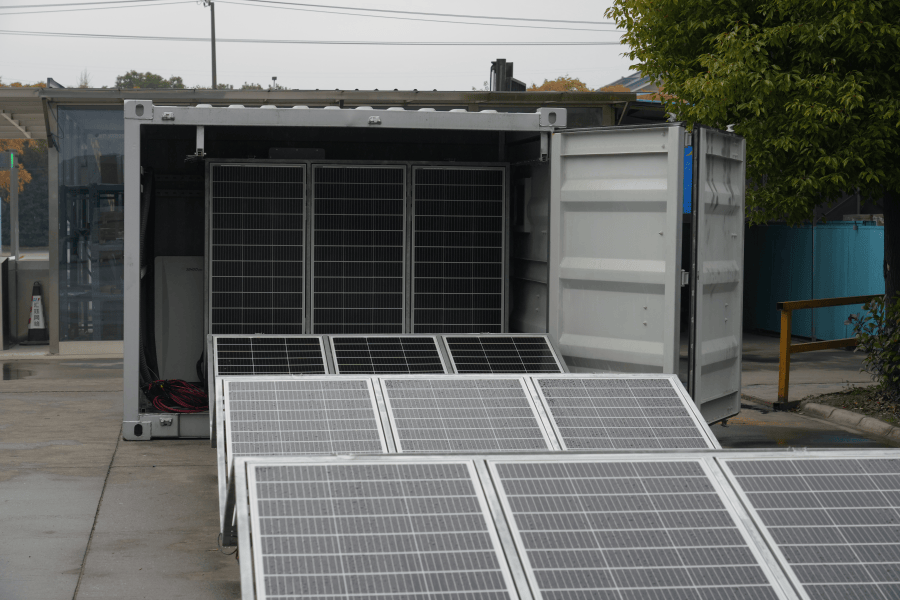
Table of Contents
- The Universal Grid Challenge: More Than Just Power
- Why "Off-Grid" Conditions Test a BESS Like Nothing Else
- The 20ft High Cube: From Shipping Container to Power Hub
- Key Optimization Levers: It's Not Just About Capacity
- Lessons from the Field: Why This Matters for Your Project
The Universal Grid Challenge: More Than Just Power
Let's be honest. Whether you're looking at a remote village in the Philippines or a manufacturing plant in Ohio or a renewable park in Spain, the core challenge is startlingly similar. It's about achieving energy resilience. For our clients in the US and Europe, the "grid" might be more present, but its reliability isn't a given anymore. I've seen firsthand on site how a voltage dip can halt a production line costing thousands per minute, or how curtailment of solar/wind assets directly hits the project's bottom line. The problem isn't just having energy storage; it's having storage that's robustly optimized for the specific, often harsh, realities of where it's deployed. This is where looking at extreme use cases, like rural electrification, teaches us invaluable lessons.
Why "Off-Grid" Conditions Test a BESS Like Nothing Else
Rural electrification projects, especially in archipelagos like the Philippines, are the ultimate stress test. Think about it: high ambient temperatures, humidity, salt air (for coastal sites), limited or no grid support, and often, a skeleton crew for maintenance. If a BESS fails here, there's no backup. The community goes dark. The financial and social cost is immediate. This agitates the core pain points we see everywhere, just amplified: unscheduled downtime, safety concerns in remote monitoring, and a total cost of ownership (TCO) that can spiral if the system isn't designed for longevity.
The International Renewable Energy Agency (IRENA) highlights that mini-grids with solar and storage are the most cost-effective solution for over half of the rural population without access. But for that to be true, the storage must work flawlessly. A system optimized for these brutal conditions inherently becomes more reliable for any application. It forces engineers to solve for the worst-case scenario, not just the spec sheet.
The 20ft High Cube: From Shipping Container to Power Hub
So, how do you build a system that can handle this? The 20ft High Cube containerized BESS has emerged as the sweet spot. It's globally transportable, pre-fabricated for quality control, and scalable. But the container is just the shell. The magic - and the optimization - happens inside.
At Highjoule, we don't just drop standard battery racks into a box. We start with the end environment in mind. For a Philippines-like rural electrification profile, which mirrors many off-grid industrial or microgrid applications, optimization focuses on three non-negotiables: Cycling Profile, Thermal Stability, and Autonomous Operation.

Key Optimization Levers: It's Not Just About Capacity
Here's the technical talk, but I'll keep it coffee-chat simple. When we optimize a 20ft High Cube BESS for a demanding duty cycle, we're tweaking these levers:
- C-Rate & Cycling Depth: In rural setups, the system might need to discharge deeply and frequently - sometimes a full cycle daily. We spec cells and design the battery management system (BMS) for a sustainable, higher C-rate (the speed of charge/discharge) that doesn't cook the batteries. This directly impacts the Levelized Cost of Energy (LCOE), making the project viable long-term. A system rated for 0.5C continuous is very different from one rated for 1C, and the wrong choice shortens lifespan dramatically.
- Thermal Management: This is the big one. High heat is the enemy of lithium-ion batteries. In a 40C+ ambient environment, a standard air-cooled system struggles, leading to accelerated degradation and safety risks. We insist on a liquid-cooled thermal system for such applications. It maintains a tight temperature band across all cells, ensuring uniform performance and longevity. It's a bit more upfront cost, but honestly, it pays back multiple times over the system's life by preserving capacity. This is equally critical for a BESS sitting in a Texas sun or a Spanish desert.
- Grid-Forming Inverters & Robust EMS: In a weak or non-existent grid, the BESS isn't just following; it's creating the grid. It needs grid-forming inverters that can establish voltage and frequency from scratch. The Energy Management System (EMS) must be sophisticated enough to handle generator coupling, load shedding, and renewable forecasting autonomously. We've integrated these capabilities into our platforms, tested to the latest IEEE 1547 and UL 1741 SB standards, because grid-support functions are becoming critical even in on-grid commercial applications.
Lessons from the Field: Why This Matters for Your Project
Let me tie this back to a project closer to home. We deployed a system for an industrial client in Northern Germany. Their challenge wasn't lack of grid, but volatile energy prices and the need for uninterrupted power for a critical process. The site had limited, expensive space. By applying the same optimization principles we use for rural projects - prioritizing a high-cycling, thermally robust design within a compact 20ft footprint - we delivered a solution that maximizes their ROI through arbitrage and provides seamless backup. The core engineering tenet was the same: assume minimal external support and maximize internal resilience.
This is the Highjoule approach. Whether your project is in the Philippines or Pennsylvania, optimization starts by asking the hard questions about the environment, the duty cycle, and the real-world operational risks. It means building in safety and compliance (like UL 9540 and IEC 62933) from the cell up, not as an afterthought. It means designing for a low LCOE over 15+ years, not just a low capital cost.
The takeaway? The next time you evaluate a BESS, don't just look at the nameplate capacity. Ask about its thermal management under peak load. Question the real-world cycling capability. Dig into the EMS logic for black start and islanding. The solutions honed in the world's most demanding electrification projects are, ironically, the ones that de-risk and add the most value to your commercial or industrial deployment. What's the one operational risk in your energy strategy that keeps you up at night?
Tags: UL Standard BESS LCOE Thermal Management Renewable Energy Microgrid Battery Energy Storage System Grid Stability
Author
James Zhang
20+ years agricultural energy storage engineer / Highjoule CTO