
Optimizing 215kWh Cabinet BESS for Reliable Remote Island Microgrids
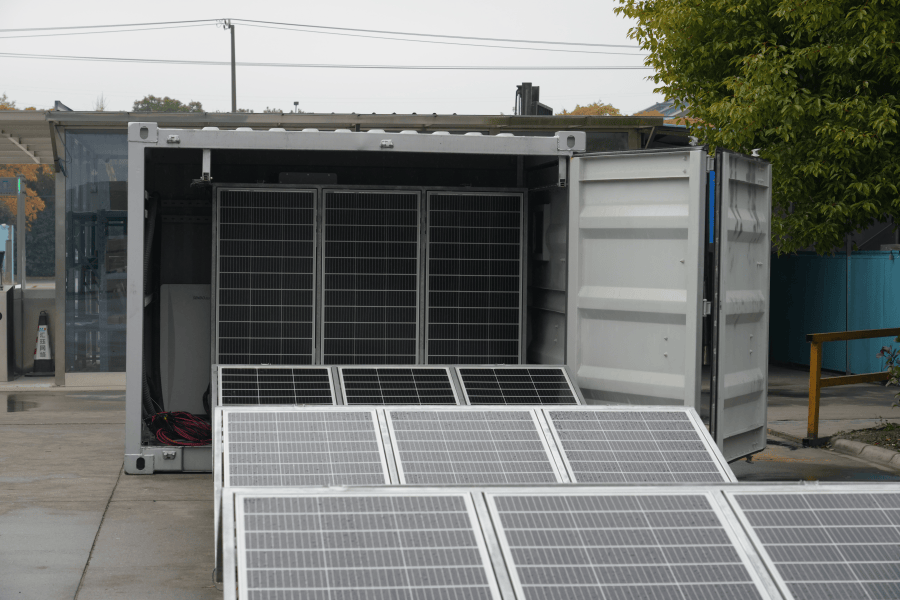
Island Power, Unchained: A Practical Guide to Optimizing Your 215kWh Cabinet BESS for Microgrids
Honestly, after two decades of deploying BESS from the Scottish Isles to the Caribbean, I can tell you one thing for certain: an island microgrid is the ultimate test for any energy storage system. It's not just another project; it's a commitment to keeping the lights on, the water flowing, and the community connected when you're miles from the nearest grid support. And that 215kWh cabinet you're looking at? It's more than a box of batteries. It's the beating heart of your energy independence. But only if it's optimized for the unique, unforgiving reality of island life.
Table of Contents
- The Real Problem: It's Not Just Capacity, It's Confidence
- The Cost Trap: When Cheap Storage Gets Very Expensive
- The Optimized Solution: Engineering the 215kWh Cabinet for Island Duty
- Case in Point: A 215kWh BESS Anchoring a Mediterranean Microgrid
- Key Optimization Levers: C-Rate, Thermal Management & LCOE Explained
- Beyond the Cabinet: The Deployment Mindset for Island Success
The Real Problem: It's Not Just Capacity, It's Confidence
Here's the scene I've seen too many times. A remote community invests in solar, maybe a wind turbine, and pairs it with a standard, off-the-shelf battery cabinet. On paper, the 215kWh capacity looks perfect. But then, the first major storm hits. Fuel shipments are delayed for weeks. The demand spikes as everyone hunkers down, and that battery is cycling deep, day after day. Suddenly, you're not thinking about kilowatt-hours; you're thinking about battery degradation, thermal runaway risks, and whether the system's controls can handle the wild swings in renewable generation. The core pain point isn't storage - it's predictable, resilient, and safe storage over a 10+ year horizon. A study by the National Renewable Energy Laboratory (NREL) highlights that microgrid failure in remote locations often stems from undersized or poorly integrated storage that can't handle real-world duty cycles, not the initial generation capacity.
The Cost Trap: When Cheap Storage Gets Very Expensive
Let's agitate that pain point a bit. Choosing a BESS based solely on upfront $/kWh is the biggest mistake I see in island projects. Why? Because the true cost is in the Levelized Cost of Storage (LCOS) - the total cost over its entire life, including degradation, maintenance, and replacement. A cabinet not built for high ambient temperatures (common on islands) will see its lifespan slashed. Inefficient thermal management forces the system to waste precious energy on cooling. And if the battery chemistry or BMS isn't tailored for frequent, deep cycling, you might be looking at a costly replacement years ahead of schedule. This isn't a theoretical risk. I've been on site where a poorly specified system led to a 40% capacity loss in under 3 years, turning a promised 10-year ROI into a financial sinkhole.
The Optimized Solution: Engineering the 215kWh Cabinet for Island Duty
So, what does an optimized 215kWh Cabinet BESS look like for a remote island microgrid? It's a system where every component, from the cell to the cooling fan, is selected and integrated with one goal: maximizing reliable life in harsh conditions. At Highjoule, when we talk optimization for islands, we're focusing on three pillars beyond the nameplate capacity: Cyclical Resilience, Thermal Stability, and Grid-Forming Intelligence. It's about building a system that doesn't just survive but thrives, delivering on its promised kWh year after year.

Why the 215kWh Form Factor is a Sweet Spot
You might wonder, why focus on 215kWh? It's a practical, scalable building block. It's large enough to provide meaningful stability to a small-to-medium island microgrid (think 500-2000 inhabitants) or critical commercial/community facilities, yet it's containerized and modular. This means it can be shipped relatively easily, deployed quickly, and later scaled by adding more cabinets. It hits the sweet spot between capability and logistical feasibility for remote locations.
Case in Point: A 215kWh BESS Anchoring a Mediterranean Microgrid
Let me give you a real example. We deployed two of our optimized 215kWh cabinets on a small Greek island, part of a hybrid system with 300kW of solar and a backup diesel genset. The challenge? Total grid isolation, summer temperatures consistently above 35C (95F), and a tourism-driven demand that doubled seasonally. The standard BESS specs wouldn't cut it.
Our optimization included:
- Chemistry & C-Rate Tuning: We used LFP cells but selected a grade optimized for a higher continuous C-rate (0.5C) to handle rapid solar ramps and sudden load surges from the small port.
- Aggressive Thermal Design: We integrated a liquid-cooling system with redundancy, ensuring the pack stayed below 28C even on the hottest days. This alone, based on our data, is projected to reduce degradation by over 25% compared to air-cooled models in that environment.
- Grid-Forming Inverters: The cabinets were paired with inverters that could "form" the grid voltage and frequency without relying on the diesel genset, allowing for 100% renewable operation for long periods.
The result? The diesel runtime has been reduced by over 80%, and the community has confidence during peak season. The system's built-in compliance with UL 9540 and IEC 62933 standards also streamlined local approval, which is a huge, often overlooked, factor in deployment speed.
Key Optimization Levers: C-Rate, Thermal Management & LCOE Explained
Let's break down the tech in plain terms, the way I'd explain it over coffee.
- C-Rate (The "Athleticism" of Your Battery): Think of it as the battery's power personality. A 1C rate means your 215kWh cabinet can deliver 215kW of power. For islands, you need a good balance. A high C-rate (like 0.5C-1C) gives you the "burst" to start large loads or smooth out big wind gusts. But consistently running at a very high C-rate can stress the battery. Optimization means right-sizing the C-rate for your specific duty cycle - maybe it's 0.25C for most daily cycling but with a 1C peak capability for emergencies.
- Thermal Management (The Battery's Climate Control): Heat is the enemy of battery life. Every 10C above about 25C can roughly double the rate of chemical degradation. In an island setting, you can't just rely on ambient air. An optimized cabinet needs active cooling (liquid is superior for uniformity) that's energy-efficient. You don't want the cooling system consuming a huge chunk of the energy you just stored.
- LCOE/LCOs (The True Price Tag): This is your ultimate scorecard. Levelized Cost of Energy/Storage. An optimized BESS might have a higher upfront cost but a dramatically lower LCOE because it lasts longer (more cycles) with less capacity fade, and it operates more efficiently (less energy wasted). When we model a system for a client, we show the 15-year LCOE projection, not just the Day 1 invoice. That's where the real savings for an island community are realized.

Beyond the Cabinet: The Deployment Mindset for Island Success
Finally, the hardware is just part of the story. Optimizing a 215kWh BESS for an island microgrid requires a holistic mindset. This includes:
| Consideration | Why It Matters for Islands | Optimization Action |
|---|---|---|
| Controls & Software | Must seamlessly integrate solar/wind/diesel, prioritize loads, and enable remote monitoring. | Implement advanced, predictive energy management software (EMS) that can be managed remotely with limited local IT support. |
| Logistics & Service | Spare parts and expert technicians are not readily available. | Choose systems with modular design for easy swap-out, and ensure the provider offers robust remote diagnostics and has a clear, pre-planned logistics chain for critical parts. |
| Standards Compliance | Essential for insurance, financing, and community safety. | Insist on full UL 9540 (system level) and UL 1973 (battery unit) certification, or equivalent IEC standards for the EU. Don't accept compromises here. |
At Highjoule, we've built our service model around this reality. Our cabinets are designed for what we call "remote resilience," and our team is structured to support you from initial modeling through to remote performance monitoring. Because in the end, your success on that island - keeping the power stable and costs predictable - is the only metric that truly matters.
So, what's the biggest operational headache your microgrid is facing right now? Is it the diesel bill, unpredictable maintenance, or simply the anxiety of whether the system will hold up? Let's talk about how to engineer the worry out of your energy storage.
Tags: UL Standard LCOE Optimization Renewable Energy Integration Remote Island Microgrid Battery Energy Storage System 215kWh BESS
Author
James Zhang
20+ years agricultural energy storage engineer / Highjoule CTO