
Optimizing Air-Cooled 5MWh BESS for Telecom Base Stations: A Practical Guide
Beyond Backup: Making Your 5MWh Air-Cooled BESS Work Harder for Telecom
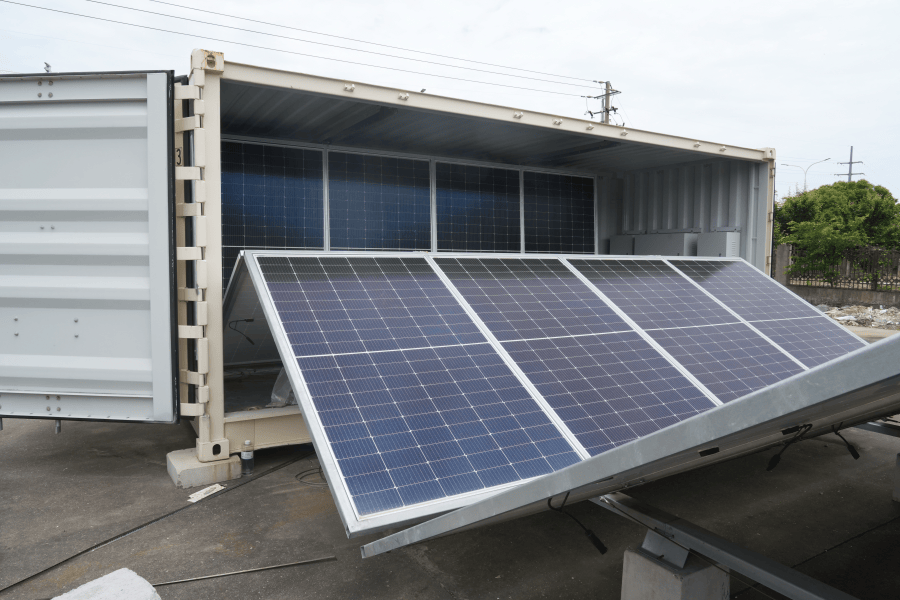
Honestly, when I'm on site visiting telecom base stations, especially in remote areas or places with shaky grids, I see a common pattern. The energy storage system is there, ticking away, but it's often treated like a black box - a necessary expense for backup power. But here's the thing I've learned over two decades: that 5MWh container sitting next to your tower isn't just a cost center. If optimized right, it's a revenue-protecting, grid-stabilizing, and ultimately, money-saving asset. The shift from viewing Battery Energy Storage Systems (BESS) as simple backup to intelligent, grid-interactive assets is the single biggest opportunity in telecom energy management today.
Quick Navigation
- The Real Problem: More Than Just Keeping the Lights On
- Why Optimization Matters: The Cost of Getting It Wrong
- Core Optimization Strategies for Your 5MWh BESS
- A Case in Point: Optimization in Action
- Making It Real: Your Next Steps
The Real Problem: More Than Just Keeping the Lights On
Let's talk brass tacks. Deploying a utility-scale, air-cooled 5MWh BESS at a telecom site solves one immediate problem: backup power during outages. But it introduces a few others if not carefully planned. The biggest one I see? Thermal management. An air-cooled system relies on ambient air and fans. In a hot Arizona summer or a dusty Texas plain, that ambient air is your enemy. Batteries generate heat, especially during high C-rate events (that's the speed of charge/discharge - think of it like revving a car engine). If the cooling can't keep up, the system derates itself to protect the cells. You paid for 5MWh, but on the hottest day, when you might need it most, you're only getting 3.8MWh. That's a direct hit to your resilience and potential revenue.
Then there's the longevity question. According to a National Renewable Energy Laboratory (NREL) study, improper thermal management can accelerate battery degradation by up to 30%. That means your 10-year asset might need a costly refresh in year 7. Suddenly, the Levelized Cost of Energy Storage (LCOE) - the total lifetime cost per MWh - starts looking a lot less attractive.

Why Optimization Matters: The Cost of Getting It Wrong
I've seen this firsthand. A telecom provider in Central Europe deployed several 5MWh units, standard off-the-shelf designs. They met the basic IEC safety standards, which is good, but they weren't optimized for the specific duty cycle of a base station - frequent, shallow discharges mixed with occasional deep, high-power draws for backup. Within 18 months, performance divergence between cells was noticeable. The system's energy management software was generic, not tailored for telecom load profiles. The result? Higher-than-expected maintenance calls, reduced effective capacity, and missed opportunities to participate in local grid flexibility schemes that could have generated income.
This is the agitation phase, as we call it. The pain isn't just technical; it's financial. It's CapEx not delivering its full OpEx value. It's stranded capacity. And in a sector as competitive as telecom, where every operational efficiency counts, that's a direct impact on the bottom line.
Core Optimization Strategies for Your 5MWh BESS
So, how do you optimize? It's not about one magic bullet. It's a system-level approach. Here's what we focus on at Highjoule when we configure a system for a telecom client:
1. Intelligent, Site-Aware Thermal Management
Air-cooled doesn't mean "set it and forget it." Optimization starts with computational fluid dynamics (CFD) modeling for the specific container layout and expected local climate data. We design for the worst-case scenario, not the average. This means oversized, redundant fans with variable speed drives, smart ducting to eliminate hot spots, and intake filters that are easy to service for those dusty locations. The battery management system (BMS) must talk directly to the thermal management system, pre-cooling the space before a high C-rate event is anticipated. This proactive approach is what keeps the full 5MWh available, 24/7/365.
2. Chemistry and Configuration for the Telecom Duty Cycle
Not all Lithium-ion is the same. For telecom, where cycles are often partial and reliability is paramount, we often lean towards Lithium Iron Phosphate (LFP) chemistry. It has a flatter degradation curve and superior thermal stability, which is a huge plus for safety and longevity. But the real optimization is in the configuration - matching the battery module's C-rate capability to the actual load profile of the base station and its potential grid services. Over-specifying can waste money; under-specifying kills batteries. Getting this balance right is an art backed by a lot of data.
3. Grid-Interactive Intelligence & Safety by Design
This is where the value multiplies. An optimized BESS should do more than backup. With the right UL 9540 and IEEE 1547 compliant inverter and controls, it can provide voltage support, frequency regulation, or participate in demand response programs. This turns a cost into a potential revenue stream. But safety is non-negotiable. Every design choice we make, from cell spacing to fire suppression system integration, is viewed through the lens of the stringent UL 9540A test standard. Compliance isn't a checkbox; it's the foundation. A safe system is a reliable, insurable, and long-lasting one.
A Case in Point: Optimization in Action
Let me give you a real example. We worked with a regional telecom operator in Northern Germany. They had a cluster of base stations in an area with excellent wind resources but grid congestion issues. Their challenge was reliability during grid faults and managing peak demand charges.
We deployed a 5MWh air-cooled BESS, but with key optimizations:
- Climate-Adaptive Cooling: The system was pre-configured with winter and summer operational modes, adjusting fan curves and internal airflow based on ambient temperature sensors.
- Advanced Cycling Logic: The energy management system was programmed for the specific telecom load, prioritizing shallow cycles for daily peak shaving and reserving deep cycles only for true backup events.
- Grid Services Ready: The system was certified to provide primary frequency response to the German grid, creating a small but steady revenue stream that directly offsets the LCOE.
The result? Two years in, the capacity fade is tracking 15% better than the standard model's projection. They've avoided significant peak demand charges, and the frequency response revenue has turned the project's financial model from positive to strongly positive. The local utility sees them as a grid asset, not just a load.
Making It Real: Your Next Steps
Look, I get it. The world of C-rates, LCOE, and IEC standards can feel distant from the day-to-day of running a telecom network. But the optimization journey starts with a shift in perspective. Start by asking your team or your vendor some pointed questions:
- Is the thermal design based on my actual site conditions, or a generic spec sheet?
- How does the BMS strategy specifically account for the partial, irregular cycling typical of a base station?
- Beyond UL/IEC certification, what specific design features mitigate thermal runaway risk?
- Is the system capable of providing grid services today, or is it a costly retrofit later?
At Highjoule, we built our reputation by not just selling containers, but by sweating these details in the design phase. Because we know that what gets engineered in on day one can't be bolted on later. The most efficient, safest, and most valuable 5MWh BESS for your telecom site is the one that's built for its unique job from the ground up.
What's the one operational headache at your remote sites that a truly smart battery could solve?
Tags: UL Standard BESS LCOE Thermal Management Telecom Energy Storage Utility-scale Battery
Author
James Zhang
20+ years agricultural energy storage engineer / Highjoule CTO