
Optimizing Grid-forming Solar Containers for Remote Island Microgrids: A Practical Guide
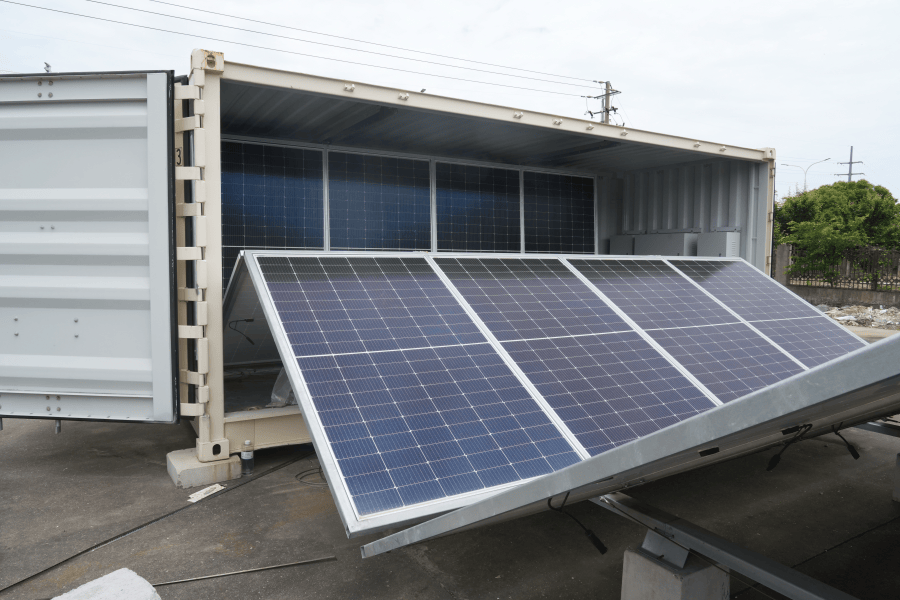
Optimizing Grid-forming Solar Containers for Remote Island Microgrids: A Practical Guide
Honestly, if you're managing power for a remote island community or an off-grid industrial site, you know the struggle is real. Diesel generators are loud, expensive, and let's not even talk about the fuel logistics and emissions. Over the last two decades, I've been on-site from the Caribbean to the Scottish Isles, and I've seen firsthand the shift towards solar-plus-storage. But here's the thing everyone's talking about now: it's not just about adding batteries; it's about optimizing grid-forming solar containers to create a truly resilient, independent microgrid. Let's chat about how to get it right.
Quick Navigation
- The Real Problem: More Than Just Keeping the Lights On
- Beyond the Basics: What "Grid-Forming" Really Demands
- The Key Levers for Optimization
- A Case in Point: Lessons from a Pacific Island Project
- Making It Happen: Your Path to a Robust Microgrid
The Real Problem: More Than Just Keeping the Lights On
The dream is simple: harness the sun, store the energy, and power your community independently. The reality? Many first-generation solar+storage setups for islands are what we call "grid-following." They need a stable signal - usually from those diesel gensets - to sync up and operate. When the grid stutters, they shut down to protect themselves. That's a major single point of failure.
The pain agitates when you look at the numbers. According to the International Energy Agency (IEA), islands often pay two to ten times more for electricity than mainland communities, with fuel making up a huge chunk of that cost. Every time your solar container disconnects due to a minor frequency wobble, you're burning more diesel. The financial and environmental cost is staggering. It defeats the purpose.
Beyond the Basics: What "Grid-Forming" Really Demands
This is where grid-forming (GFM) technology changes the game. A GFM-capable solar container acts like the "brain" of the microgrid. It creates its own stable voltage and frequency waveform, essentially becoming the foundation that other sources (like solar inverters or even legacy gensets) follow. But specifying "grid-forming" on a datasheet is just the start. The magic - and the challenge - is in the optimization for the harsh, remote island environment.
From my site visits, the gap between a standard GFM unit and an optimized one comes down to three brutal truths:
- Cycling to Death: Island grids are small. A single cloud passing can cause massive ramping needs for the BESS. An undersized or poorly configured system will undergo excessive charge/discharge cycles (a high effective C-rate), wearing out the battery years ahead of schedule.
- The Thermal Battle: Tropical heat or confined containers bake batteries. Passive cooling often fails. I've seen systems derating power output by 40% on a hot day because their thermal management was an afterthought. That means no power when you need it most.
- The Standards Maze: For the US market, UL 9540 for system safety and IEEE 1547-2018 for grid interconnection are non-negotiable. In Europe, IEC 62933 series is key. An optimized container is designed from the ground up to meet these, not retrofitted. It's your ticket to permitting and insurance.
The Key Levers for Optimization
So, how do we tweak the system? Think of it like tuning a high-performance engine for endurance racing, not a sprint.
1. Battery Chemistry & Sizing for Duty, Not Just Peak
Lithium Iron Phosphate (LFP) is the go-to now for safety and cycle life. But optimization means looking at the Levelized Cost of Energy (LCOE) over 20 years. You might need to oversize the battery capacity relative to the inverter to reduce the depth of discharge per cycle. This lowers stress, extends life, and improves your long-term LCOE, even if the capex is slightly higher. It's a financial calculation we run for every Highjoule project.
2. The Inverter Heart: GFM Capabilities & Black Start
The inverter must do more than form a grid. It needs seamless mode switching (islanded to grid-tied and back), precise frequency-watt control for generator integration, and crucially, black start capability. Can the entire microgrid boot up from a total shutdown using only the energy in the batteries? That's a hallmark of a resilient, optimized system.

3. System Intelligence & Controls
The container needs a brain on board - an advanced Energy Management System (EMS). A good one forecasts solar generation, schedules diesel genset runs for optimal efficiency (or keeps them off entirely), and manages load shedding. It's the difference between a component and a turnkey power plant.
4. Ruggedization & Serviceability
Salt spray, 100% humidity, and limited technical staff. Hardware must be marine-grade. More importantly, the system must be remotely monitorable and serviceable. We design our containers with modular components. If a fan fails, a local technician can swap it in minutes without specialized tools, guided by our remote support team over satellite internet.
A Case in Point: Lessons from a Pacific Island Project
Let me give you a real example. We deployed a 2 MW/4.8 MWh GFM solar container system for a resort and community microgrid in the South Pacific. The challenge: eliminate 90% of diesel use, survive frequent tropical storms, and allow the local team to manage it.
The optimization wins weren't glamorous:
- We specified a NEMA 3R enclosure with corrosion-resistant coatings and an HVAC system rated for continuous 45C operation.
- The EMS was pre-programmed with multiple operating scenarios (storm mode, high-guest-load mode) for one-button activation.
- We conducted virtual reality training for the local engineers on O&M procedures before shipment.
The result? Diesel usage down by 94% in the first year. The system weathered two major storms, black-starting the resort each time while the main grid was down for days. The key was treating the container not as a commodity, but as the core of a tailored energy ecosystem.
Making It Happen: Your Path to a Robust Microgrid
The journey to an optimized grid-forming solar container starts with asking the right questions. Beyond "what's the price per kWh?", ask: "What's the projected cycle life in my specific duty cycle?", "How do you ensure compliance with UL 9540A for fire safety?", and "Can you simulate my load and generation profile before we break ground?"
At Highjoule, this is our daily bread. We've built our container solutions around this philosophy of optimization for the real world - not just the test lab. It's about delivering a system that you can forget about, in the best possible way. It just works, year after year, keeping the lights on and the diesel off.
What's the one operational headache in your current microgrid that keeps you up at night? Is it the fuel bill volatility, the maintenance complexity, or the fear of a prolonged outage? The solution likely starts with a conversation about getting the fundamentals of your storage right.
Tags: UL Standard BESS LCOE Solar Container IEEE 1547 Grid-forming Island Microgrid Remote Power
Author
James Zhang
20+ years agricultural energy storage engineer / Highjoule CTO