
Optimize Rapid Deployment BESS Containers for Reliable EV Charging

Beyond the Grid Constraint: Making Your EV Charging Investment Future-Proof
Honestly, if I had a dollar for every time a commercial property manager or fleet operator told me their EV charging expansion plans were being held back by the local utility, I'd be writing this from a beach in the Mediterranean. It's the single biggest headache I see on the ground, from California to North Rhine-Westphalia. You want to install those fast chargers, but the grid connection quote is astronomical, or the timeline is measured in years, not months. The promise of rapid EV adoption meets the slow, capital-intensive reality of grid infrastructure. But there's a way to bridge that gap, and it's sitting in a shipping container in your parking lot. Let's talk about how to truly optimize a rapid deployment energy storage container for your EV charging stations, not just as a battery box, but as the intelligent, financial, and operational heart of your project.
Quick Navigation
- The Real Bottleneck Isn't the Charger
- Why Containers Make Sense (And Where They Fall Short)
- The Optimization Playbook: It's More Than Just Batteries
- A Tale of Two Sites: Seeing is Believing
- Key Considerations for Your Deployment
The Real Bottleneck Isn't the Charger
Here's the core problem we need to address: the grid wasn't designed for the simultaneous, massive power draw of multiple DC fast chargers. When you request a new connection or an upgrade for a charging hub, you're essentially asking the utility to build new infrastructure for a load that might only peak for a few hours a day. They pass that cost on to you, the customer, in the form of demand charges and costly infrastructure upgrades. The National Renewable Energy Lab (NREL) has highlighted that these demand charges can constitute up to 90% of a commercial site's electricity bill for EV charging. That's a business model killer.
I've seen this firsthand on site. A logistics company in New Jersey had a perfect location for a depot charging 30 electric trucks overnight. The utility's estimate to upgrade the substation was over $2 million and a 3-year wait. Their entire electrification plan was about to be shelved. That's the agitation point C it's not just about cost, it's about opportunity cost and lost revenue while you wait for the grid to catch up.
Why Containers Make Sense (And Where They Fall Short)
Rapid deployment containerized BESS are the obvious answer. They're pre-assembled, tested, and can be dropped on a concrete pad and connected relatively quickly. They bypass the multi-year grid delay. But C and this is a big but I need to stress C not all containers are created equal. An "optimized" container for an EV charging application is fundamentally different from one designed for solar firming or frequency regulation.
The standard container might have the right energy capacity (kWh), but if its power output (C-rate) is too low, it can't deliver the burst of power needed for several 350kW chargers kicking in at once. I've walked sites where the thermal management system was an afterthought, leading to power derating on a hot Arizona afternoon just when customers needed full speed. Optimization means designing the system from the ground up for the specific, brutal duty cycle of EV charging: rapid, high-power discharges followed by slower recharges, 24/7.

The Optimization Playbook: It's More Than Just Batteries
So, how do you optimize? Think of it as a three-legged stool: Technical Specs, Intelligence, and Total Cost.
1. Right-Sizing the Heart (The Battery & Power Electronics): You need a high C-rate battery chemistry that can handle the stress. But pairing it with the right inverter is crucial. The system must have a peak power capability that matches or exceeds the simultaneous peak draw of all your chargers. At Highjoule, when we build a container for this use case, we overspec the power conversion system not for the battery's continuous rating, but for the 30-second surge rating of the chargers. This prevents clipping and ensures every vehicle gets the promised charge speed.
2. The Brain: Advanced Energy Management System (EMS): This is where the magic happens. A basic EMS turns the battery on and off. An optimized one is a financial and grid-aware orchestrator. It must:
- Predict & Smooth Loads: Using software to forecast charging sessions and manage the power flow between the grid, battery, and chargers in real-time to absolutely minimize demand charges.
- Prioritize Grid Services (where allowed): In markets like Texas or parts of the EU, the container can participate in frequency response programs when it's not charging vehicles, creating a new revenue stream. Our systems are designed with this dual-purpose architecture in mind.
- Integrate Seamlessly: It has to speak the language of the charging network software (OCPP) and the utility meter. Plug-and-play isn't a buzzword; it's a necessity for rapid deployment.
3. Calculating the Real Cost (LCOE - Levelized Cost of Energy): Don't just look at the upfront capital cost per kWh. You need to model the Levelized Cost of Energy for the electricity delivered to your EVs over the system's life. A cheaper container with poor thermal management will degrade faster, reducing its effective capacity year after year. A system with a smarter EMS will slash more from your demand charges. Optimizing for the lowest LCOE often means investing more upfront in quality components and intelligence for a much higher long-term return.
Safety & Standards: The Non-Negotiable Foundation
All of this optimization is meaningless without the bedrock of safety. In the US, this means UL 9540 (the standard for ESS) and UL 9540A (the rigorous fire test). In Europe, it's IEC 62933. These aren't just stickers; they represent a design philosophy. Our containers, for instance, are built with compartmentalization, early detection gas sensors, and passive fire suppression as standard C because a thermal event in a parking structure is simply not an option. Compliance isn't a feature; it's the license to operate.
A Tale of Two Sites: Seeing is Believing
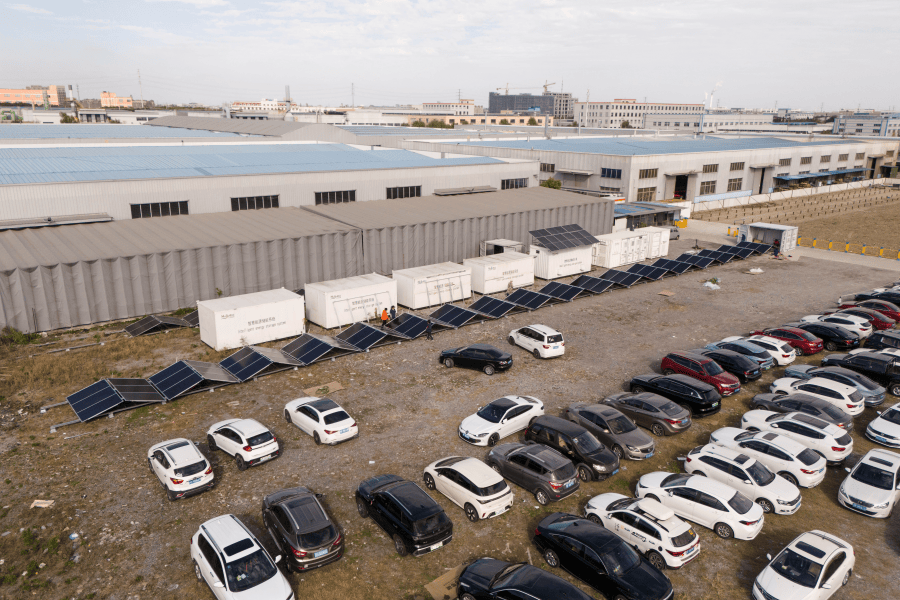
Let me give you a real example from Germany. A retail chain near D1sseldorf wanted to install six HPC chargers at their flagship store. The grid upgrade cost was prohibitive. We deployed a 1 MWh / 1.5 MW containerized BESS, optimized for high-cyclic duty. The key was the EMS, which was programmed to prioritize charging the battery from the store's existing on-site solar during the day, then discharge during the evening charging peak. It also capped the grid draw at a level below the threshold for a costly upgrade.
The result? They deployed the chargers in under 4 months. Their grid upgrade cost was zero. And by shaving the peak demand, they're saving over ?40,000 annually on capacity charges alone. The container wasn't an expense; it was the enabler that made the entire project financially viable overnight. That's the power of optimization.
Key Considerations for Your Deployment
Before you spec out a container, ask these questions:
- Duty Cycle: Is this for a highway hub (constant, high throughput) or a workplace (slow, daytime charging)? The battery chemistry and cooling strategy will differ.
- Grid Dynamics: What are your specific utility rate structures? Time-of-use rates? Demand charges? Your EMS strategy hinges on this.
- Future-Proofing: Are you planning to add solar or more chargers in 2 years? Your container's DC bus and inverter should have some headroom for expansion.
- Local Support: Who is going to maintain it? A container is a long-term asset. Partnering with a provider that has local service technicians, like Highjoule's network in the EU and North America, is critical for minimizing downtime over its 15+ year life.
The goal isn't just to buy a battery container. The goal is to buy energy resilience and financial predictability for your EV charging venture. When done right, the optimized container transforms from a cost line item into the strategic asset that unlocks revenue, satisfies customers, and future-proofs your investment against an uncertain grid. What's the first grid constraint you'd solve if you had that kind of power sitting in your parking lot tomorrow?
Tags: Energy Storage Container UL Standard BESS Europe US Market Renewable Energy EV Charging
Author
James Zhang
20+ years agricultural energy storage engineer / Highjoule CTO