
How to Optimize Rapid Deployment Lithium Battery Storage for Construction Site Power
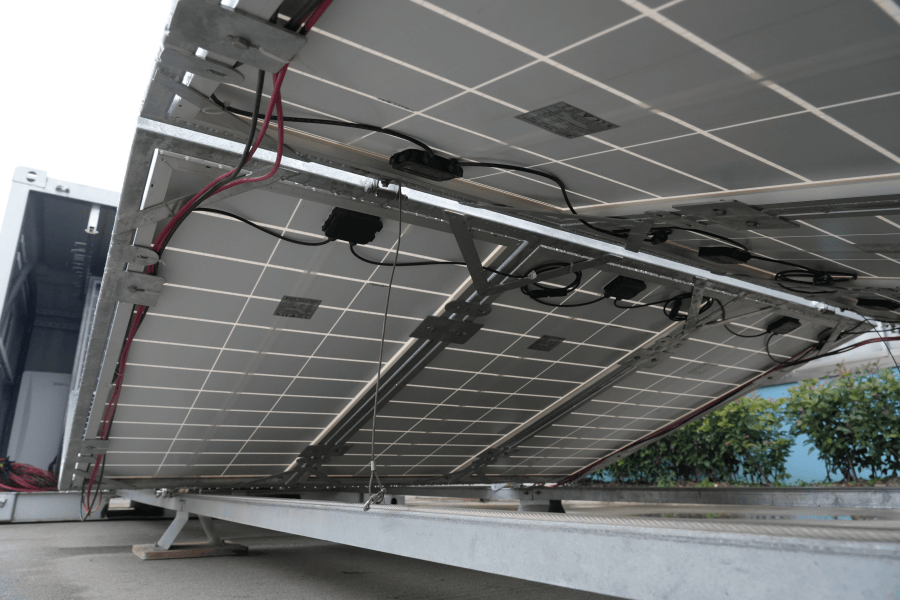
Table of Contents
- The Silent Cost Killer on Your Construction Site
- Why the "Easy" Diesel Fix Actually Fails You
- The Anatomy of an Optimized Rapid Deployment Container
- A Real-World Case: From Noise Complaints to Silent Power
- Making the Move: It's Simpler Than You Think
The Silent Cost Killer on Your Construction Site
Hey there. Let's be honest, when you're managing a construction project, power is often the last thing you want to worry about. You've got timelines, crews, materials, and a thousand other details. The standard playbook is simple: call the utility, get a temporary connection, and if that's too slow or expensive, roll in the diesel generators. It's been the way for decades. But sitting here after 20+ years on sites from Texas to Bavaria, I can tell you that this "standard" approach is quietly bleeding your project dry.
I'm talking about the hard costs you see - the soaring price of diesel, the rental fees for those rumbling gensets - and the soft costs you feel: the delayed permits because of noise ordinances, the work stoppages when the utility can't meet your timeline, the sheer inefficiency of power that's either "on" at full blast or "off." The International Energy Agency (IEA) has highlighted the construction sector's lag in energy efficiency and decarbonization, and honestly, the power setup is a big part of that. You're essentially building a 21st-century project with a 20th-century power grid that you have to provision and manage yourself.
Why the "Easy" Diesel Fix Actually Fails You
Let's agitate that pain point a bit. I've seen this firsthand on site. A generator is rated for, say, 500 kW. But your site load isn't constant. Maybe you're running heavy machinery for a few hours, then it's mostly tools and lighting. That generator is horribly inefficient at partial load, guzzling fuel and money while still emitting at full capacity. The noise isn't just an annoyance; it can limit your work hours, upset the neighborhood, and trigger fines. And then there's the carbon footprint - more and more project owners and municipalities are demanding cleaner operations.
The promise of a temporary utility connection isn't much better. The lead times can be months. The demand charges - fees based on your peak power draw - can be astronomical for construction, where you might need a huge surge of power for a short time. You end up paying a premium for the potential to draw power, not just the power you use. It's a lose-lose situation: high cost, low flexibility, and zero contribution to your project's sustainability goals.
The Anatomy of an Optimized Rapid Deployment Container: It's Not Just a Big Battery
This is where the real solution lies: a properly optimized rapid deployment lithium battery storage container. Notice I said "optimized." Anyone can drop a battery in a box. Making it work seamlessly, safely, and cost-effectively for the brutal, dynamic environment of a construction site is the real engineering challenge. It's the difference between a tool and a liability.
So, how do we optimize? Let's break it down like I would over a coffee:
- Right-Sizing & C-Rate Intelligence: This isn't about max capacity; it's about the right power (kW) and energy (kWh) mix. We look at your load profile. Do you need short, high-power bursts for crane operations (that's a high C-rate discharge)? Or longer, steady power for site offices and tools? An optimized system balances this. It's like having a sprinter and a marathon runner on your team, ready for different tasks.
- Thermal Management That Works in Phoenix and Finland: Lithium batteries hate temperature extremes. A container sitting in a Texas summer sun or a Minnesota winter needs an integrated thermal system that's more robust than a standard unit. We use active liquid cooling that's whisper-quiet and incredibly efficient, keeping cells at their happy place (around 25C/77F) for maximum lifespan and safety. This isn't an add-on; it's built into the DNA of our Highjoule containers.
- The LCOE (Levelized Cost of Energy) Winner: This is the financial metric that matters. By combining solar panels (even temporary ones) with a storage container, you create a microgrid. You use cheap, stored, or solar power for 80% of your needs and only use the grid or a small generator as a backup. This slashes your fuel costs and demand charges. Over the project's life, your LCOE plummets. The National Renewable Energy Lab (NREL) has tons of data showing how solar-plus-storage microgrids are now outcompeting traditional gensets on pure economics.
- Safety & Compliance as a Default: This is non-negotiable. An optimized container for a transient, rugged site must be built to the highest standards. Every Highjoule system is engineered from the ground up to meet and exceed UL 9540, IEC 62933, and relevant IEEE standards. We don't just get a certificate; we design with multi-layer protection - from cell-level fuses to advanced BMS (Battery Management System) that continuously monitors for any anomaly, to integrated fire suppression that uses clean agents. You get peace of mind, and your site safety officer gets a system they can trust.
Honestly, the magic isn't in any single part. It's in the integration. It's the software that intelligently juggles solar input, battery storage, and backup power without your crew needing a PhD to operate it. It's the plug-and-play design where the container is delivered, positioned, and powered up in a matter of hours, not months.
A Real-World Case: From Noise Complaints to Silent Power
Let me give you a concrete example from a project we supported in the Pacific Northwest. The contractor was building a multi-use residential complex in a dense urban area. Their temporary utility connection was delayed, and their diesel generators were hitting strict city noise and emission limits, forcing them to stop work at 6 PM.

The challenge was clear: maintain full construction schedules, eliminate noise complaints, and reduce diesel use by over 70% to meet project sustainability mandates.
We deployed two of our 500 kWh / 250 kW optimized containers, coupled with a temporary array of solar panels on the site fencing. The system was configured to:
- Use solar and stored battery power as the primary source for all daytime tools, lighting, and site offices.
- Use a single, smaller, sound-dampened generator (running at its optimal, efficient load) only to recharge the batteries if a string of cloudy days depleted them.
- Provide a "peak shaving" function, meaning if a piece of equipment needed a huge surge of power, the battery would supply it instantly, avoiding a massive spike in demand from the generator.
The result? Work hours extended. The neighborhood complaints stopped overnight - literally. The fuel deliveries went from weekly to monthly. The project manager told me his single biggest surprise was how "set it and forget it" the system was. His team just had power, cleanly and quietly. That's the power of optimization.
Making the Move: It's Simpler Than You Think
I know what you might be thinking: "This sounds great, but it's another complex system to manage." That's where the "rapid deployment" and partnership come in. With Highjoule, you're not buying just hardware; you're getting a solution. We handle the design based on your site plans and load estimates. We manage the logistics and delivery. Our local service partners handle the commissioning and are on call for the project's duration. We even offer flexible OpEx models like Energy-as-a-Service, so you can avoid a large upfront CapEx hit.
The question isn't really if battery storage will become the standard for temporary construction power - the economics and regulations are pushing that way fast. The question is, will your first experience be with a generic box that causes headaches, or with an optimized system designed specifically for the chaos and promise of a construction site?
What's the one power-related constraint on your next project that keeps you up at night?
Tags: Construction Site Power UL Standard BESS Rapid Deployment Energy Storage Optimization
Author
James Zhang
20+ years agricultural energy storage engineer / Highjoule CTO