
How to Optimize a 5MWh Utility-Scale BESS with Tier 1 Cells for Construction Sites
The Real-World Guide to Powering Your Job Site with a 5MWh Battery Beast
Let's be honest. When you're managing a major construction project, temporary power is often an afterthought - a noisy, fume-spewing, expensive line item you just have to tolerate. You rent a fleet of diesel generators, budget for the fuel and the maintenance headaches, and hope they don't fail during a critical pour. But I've been on enough sites from Texas to Bavaria to tell you there's a smarter, cleaner way. The conversation is shifting from diesel gensets to Battery Energy Storage Systems (BESS). And not just any BESS, but a properly optimized, utility-scale 5MWh system built with top-tier (Tier 1) battery cells. It's not a simple plug-and-play swap, though. Getting it right means navigating a maze of technical and practical considerations. So, grab a coffee, and let's talk about how to actually do this.
Quick Navigation
- The Real Cost of "Temporary" Power
- Why Just Buying a BESS Isn't Enough
- The Optimization Framework: Safety, Performance, Cost
- Case in Point: A German Industrial Park Project
- Pulling the Right Levers: C-rate, Thermal Management & LCOE
- Making It Work On Your Site
The Real Cost of "Temporary" Power
We all know diesel is costly and dirty. But the pain runs deeper. On a remote site, fuel logistics are a nightmare. Price volatility can blow your OPEX budget. Noise regulations can limit your working hours. And let's not forget the emissions - increasingly, project tenders in Europe and North America have strict carbon footprint clauses. The International Energy Agency (IEA) notes that construction is a major source of urban emissions, and on-site power is a key area for decarbonization.
But here's the agitating part I've seen firsthand: many project managers see a big battery as a silver bullet. They procure a standard 5MWh container, plop it down, and expect miracles. What they get is often underperformance, safety concerns, and a total cost of ownership that doesn't make the CFO happy. The system might be designed for a steady grid-support role, not the brutal, start-stop, high-surge demand of cranes, welders, and concrete pumps. Without optimization, you're just trading one set of problems for another.
Why Just Buying a BESS Isn't Enough
Optimization is the bridge between having a battery and having a reliable, economical power asset. A 5MWh system with Tier 1 cells (think CATL, LG, Samsung) is a great starting point - it implies quality, consistency, and a long cycle life. But the cells are just the raw ingredient. How you configure and manage them for the specific "recipe" of construction site loads is everything. It impacts everything from safety certification to your final Levelized Cost of Energy (LCOE).
The Optimization Framework: Safety, Performance, Cost
So, how do we optimize a Tier 1 cell-based 5MWh BESS for a construction site? You need a framework that addresses three pillars simultaneously.
1. Safety & Compliance: The Non-Negotiable Foundation
This isn't just about ticking boxes. On a crowded, dynamic job site, risk is amplified. Your BESS must be built and certified to the highest local standards - UL 9540 and UL 9540A in North America, IEC 62933 and relevant parts of IEC 62477 series in Europe. This goes beyond the container sticker. It means the battery modules, thermal management, fire suppression, and electrical integration are all designed and tested as a cohesive system. At Highjoule, for instance, our site-ready BESS units have their thermal runaway propagation prevention validated, because a single cell failure cannot be allowed to compromise the entire asset or, more importantly, worker safety.
2. Performance Tuning for Site Demands
Construction load profiles are spiky, not smooth. You need high power (in MW) for short durations, not just high energy (in MWh). This is where C-rate becomes critical. A cell's C-rate is basically how fast you can charge or discharge it. For site power, you'll likely need a system designed for a higher continuous and peak discharge C-rate than a typical solar-smoothing application. This influences how the battery management system (BMS) is programmed and how the power conversion system (PCS) is sized. Optimizing here prevents premature degradation of those expensive Tier 1 cells.

3. Total Cost of Ownership (TCO) & LCOE
The goal is to beat diesel on cost, reliably. LCOE for a BESS factors in capital cost, cycle life, efficiency, and maintenance. Optimization directly targets these:
- Cycle Life: By managing depth of discharge (DoD) and temperature, you can extend the system's usable life well beyond the project, preserving its residual value.
- Efficiency: Every percentage point lost in conversion (AC-DC-AC) is wasted energy. High-quality, correctly sized PCS and minimal parasitic loads (like cooling) are key.
- Operational Flexibility: Can the system also capture solar from a temporary site array to offset daytime demand? This dual-use dramatically improves economics.
Case in Point: A German Industrial Park Project
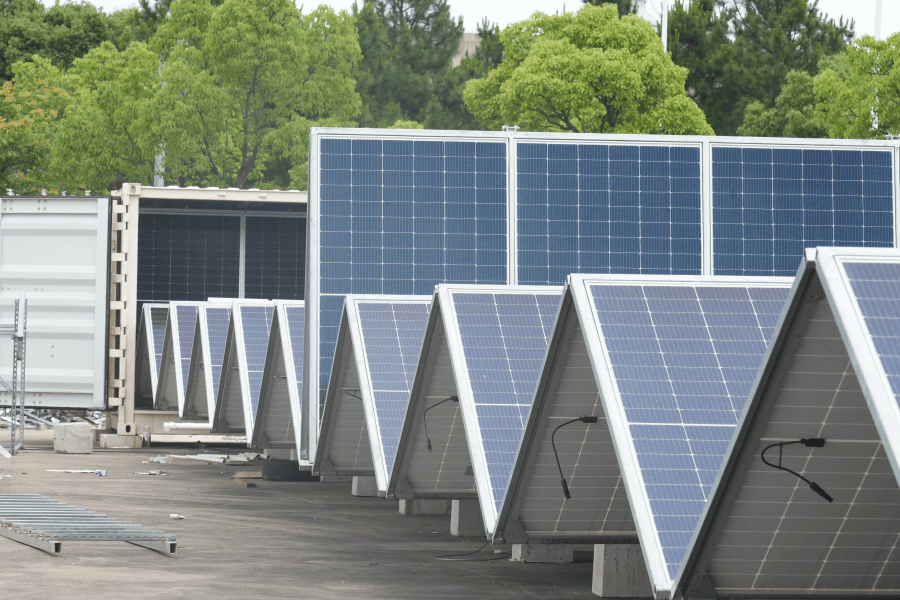
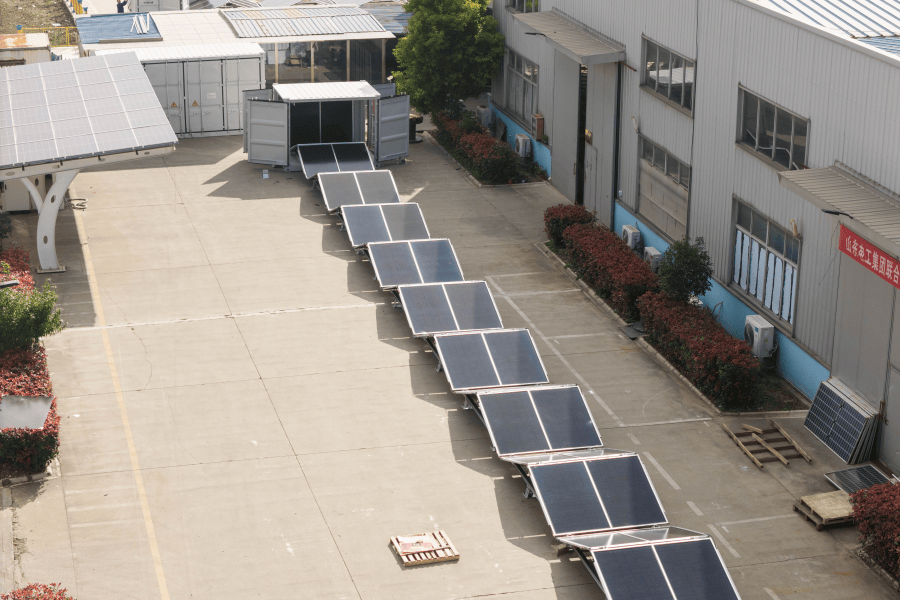
Let me give you a real example. We worked on a large logistics hub construction in North Rhine-Westphalia. The challenge was powering the site without connecting to the constrained local grid and meeting the developer's sustainability mandate. The solution was a 5MWh Highjoule BESS, paired with a temporary 1.5MWp solar canopy.
The Optimization: We didn't just deliver a standard unit. We configured the system for a higher peak power output (2.5MVA) to handle simultaneous crane and fabrication shop loads. The thermal management was upgraded for the project's 18-month timeline across all seasons. Most importantly, the control software was programmed for dual-mode operation: primarily drawing from the grid at night during low-tariff periods, but seamlessly switching to solar self-consumption during the day. This cut their diesel usage by over 95% and provided a predictable, locked-in energy cost. The system was certified to VDE-AR-E 2510-50, the go-to standard for Germany.
Pulling the Right Levers: C-rate, Thermal Management & LCOE
Let's demystify these terms a bit more, like I would on a site tour.
C-rate: Think of it as the "engine" of the battery. A 1C rate means a 5MWh battery can discharge 5MW in one hour. A 0.5C rate means 2.5MW. For construction, you might need bursts at 1C or more. But running Tier 1 cells constantly at their max C-rate wears them out fast. The optimization is in the system design - using enough cells in parallel to deliver the site's required power at a moderate, cell-friendly C-rate. It's about engineering headroom.
Thermal Management: This is the battery's climate control. Batteries hate being too hot or too cold. Poor thermal management leads to capacity fade, safety risks, and a short life. An optimized system for a dusty, outdoor site uses a robust, sealed liquid cooling or advanced forced-air system with variable speed fans. It maintains that sweet spot (usually 20-30C) regardless of whether it's a Texas summer or a Canadian fall, ensuring you get the full cycle life you paid for.
LCOE (Levelized Cost of Energy): This is your ultimate metric. It's the "price per kWh" over the system's life. By optimizing the above factors - plus ensuring high round-trip efficiency (aim for >92% from AC to AC) - you drive down the LCOE. According to the National Renewable Energy Laboratory (NREL), continued innovation and optimization are pushing BESS LCOE down rapidly, making it competitive for more applications like construction power.
Making It Work On Your Site
Alright, so you're convinced on the "why" and the "what." The "how" comes down to partnership. You need a provider that doesn't just sell containers but understands construction logistics. Can the BESS be delivered on a standard lowboy? How quickly can it be commissioned? Is the interface simple enough for your site electricians? What's the remote monitoring and support plan?
This is where our two decades of field experience at Highjoggle truly translate into value. We think about cable entry points, site leveling requirements, and providing clear, localized documentation. We design our systems with serviceability in mind - so if a component needs attention, it's accessible without a full shutdown. The goal is to give you a power plant that just works, silently and reliably, so you can focus on pouring concrete and raising steel.
The future of construction power is electric, quiet, and smart. The question isn't really if you'll switch to battery storage, but how well your first system will be optimized for the brutal, beautiful reality of a construction site. What's the biggest power challenge on your upcoming project?
Tags: Construction Site Power UL Standard BESS LCOE Energy Storage Renewable Energy Utility-Scale
Author
James Zhang
20+ years agricultural energy storage engineer / Highjoule CTO