
Remote Microgrid BESS Maintenance: A 20ft Container Checklist for Longevity
Your Remote Island's Power Lifeline: Why a Simple Checklist is Your Most Critical Tool
Honestly, after two decades of deploying battery systems from the Scottish Isles to the Caribbean, I've learned one thing: the most sophisticated 1MWh containerized storage unit is only as reliable as the plan to keep it running. Especially when you're on an island, and the nearest service technician is a boat or helicopter ride away. Let's talk about what really keeps the lights on.
Quick Navigation
- The Silent Problem: "Deploy and Forget"
- The Real Cost of "It's Still Working"
- Your Solution: More Than a Clipboard
- The Checklist Unpacked: A Site Engineer's View
- Beyond the Box: The System View
The Silent Problem: "Deploy and Forget"
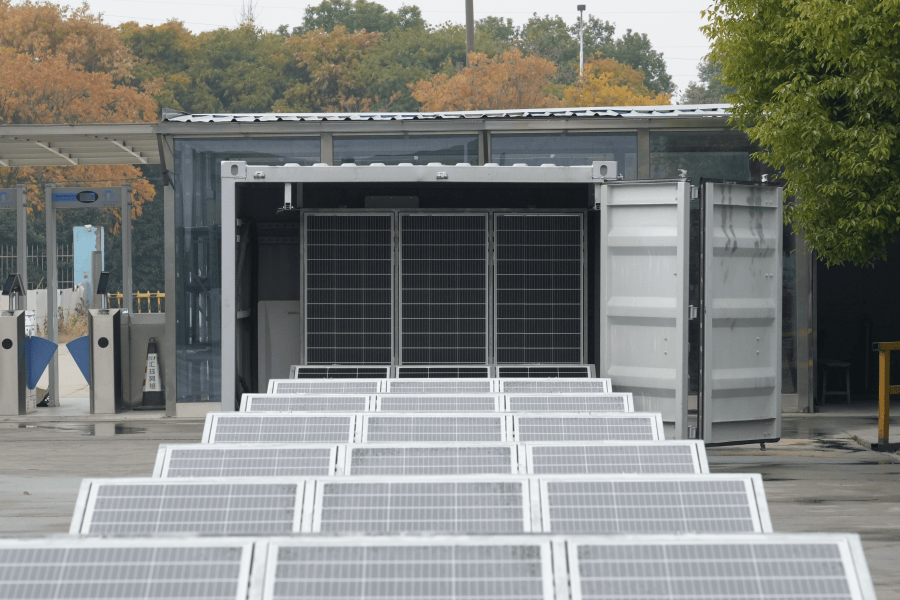
Here's a common scene I've witnessed firsthand: A 20ft High Cube container, packed with a megawatt-hour of energy storage, gets commissioned on a remote island. The solar panels are gleaming, the inverters humming. The project is signed off, and the team moves on. The local operator is given a thick, generic manual - often a translated version meant for a grid-connected, easily accessible site. The assumption? The system is "smart" and will mostly take care of itself.
This is where the vulnerability begins. According to a 2022 analysis by NREL, a significant portion of battery performance degradation and safety incidents can be traced back to operational and maintenance practices, not just hardware failure. In a remote microgrid, you're not just managing batteries; you're managing the entire energy resilience of a community or critical facility. A failed cell isn't just a component swap; it's a potential blackout.
The Real Cost of "It's Still Working"
Let's agitate that pain point a bit. What happens when maintenance is reactive?
- LCOE Spikes: The Levelized Cost of Energy (LCOE) - your true cost per kWh over the system's life - skyrockets. Premature degradation from poor thermal management or improper cycling can cut your asset's life from 15 years to 10 or less. Replacing that entire bank early is a capital cost nightmare for an island utility.
- Safety as an Afterthought: A dusty filter isn't just about efficiency. In a sealed container, impaired thermal management leads to hotspots. Batteries have a sweet spot, and consistently running even 5-10C above it accelerates aging and, in worst-case scenarios, can lead to thermal runaway. UL 9540 and IEC 62933 standards aren't just for certification; they're a blueprint for safe operation, which requires active maintenance.
- The Downtime Domino Effect: On a remote island, a component failure doesn't mean a next-day delivery. It means weeks of running on expensive, noisy diesel gensets. I've seen a community's energy costs triple in a month waiting for a specialized cooling pump to clear customs and arrive on site.
Your Solution: More Than a Clipboard
This is where a purpose-built Maintenance Checklist for a 20ft High Cube 1MWh Solar Storage for Remote Island Microgrids transitions from an administrative task to your core risk mitigation strategy. It's not a generic document. It's a site-specific, condition-based playbook that turns your local operator into a first-line defense.
At Highjoule, we don't ship a container without what we call the "Living System Manual." It's built from lessons learned on projects like the one we supported in the Outer Hebrides, Scotland. There, the challenge was salt-laden air, high humidity, and limited technician visits. Our checklist wasn't just about the BESS; it integrated visual checks for corrosion on external connectors, specific humidity setpoints for the container's environmental control, and clear protocols for remote data validation with our 24/7 NOC (Network Operations Center).

The Checklist Unpacked: A Site Engineer's View
So, what's actually on this critical list? Let's break down a few key items that go beyond "check battery voltage."
Thermal & Environmental Management (The Heart of Longevity)
- Air Filter Inspection/Replacement: Monthly check, quarterly replacement minimum. This is the lungs of your system. A clogged filter makes the HVAC work harder, consuming your stored energy just to cool itself.
- Thermal Imaging Scans: Quarterly, using a simple handheld camera. You're looking for temperature differentials >5C between cells or modules. This is often the first sign of a failing cell or loose connection.
- Condensation Drain Check: Crucial for humid islands. A blocked drain can lead to internal pooling, a major electrical hazard and corrosion source.
Electrical & Safety Integrity
- Torque Check on DC Busbars: Annual check. Vibration from shipping and thermal cycling can loosen connections. A high-resistance connection creates heat and fire risk.
- Grounding Impedance Verification: Biannual. Salt air corrodes. A compromised ground is a silent safety killer, negating your UL/IEC safety design.
- BMS Event Log Review: Weekly, by a trained operator. Don't just acknowledge alarms. Track trends in cell voltage deviations or insulation resistance. It's the system talking to you.
Performance & Data Health
- Capacity Test (C-rate Verification): Annual or bi-annual. This isn't just a full cycle. It's about verifying the system still delivers its rated power (the C-rate) when the microgrid needs it most - like starting a large water pump. A 10% drop in deliverable capacity might mean you need to reconfigure your peak load schedules.
- Communications Failover Test: Quarterly. Simulate a primary comms loss. Does the satellite or cellular backup kick in? Your remote monitoring is useless without a reliable data pipe.

Beyond the Box: The System View
A container is one node. Your checklist must consider the microgrid. Are you checking the integrity of the DC coupling to the solar array? The setpoints of the diesel genset controller for smooth transition? At Highjoule, our approach embeds the BESS checklist into the wider microgrid operational protocol. This holistic view is what we implemented for an industrial microgrid in Northern California, where the BESS coordinates with both solar and a legacy genset. The checklist includes verifying grid-forming mode parameters after any software update, ensuring the entire system remains stable.
The goal is to move from preventive to predictive maintenance. By consistently executing a tailored checklist, you build a historical data baseline. That data, when reviewed by experts, lets us spot anomalies long before they become failures. Honestly, that's the real value we provide post-deployment: turning your operational data into actionable intelligence and peace of mind.
So, what's the first item on your checklist? Maybe it's downloading ours as a starting point and asking: "Does this reflect the real-world conditions on my island?" Let's have that conversation.
Tags: UL Standard BESS Microgrid IEEE Standard Solar Storage Maintenance Remote Island Energy
Author
James Zhang
20+ years agricultural energy storage engineer / Highjoule CTO