
Black Start Maintenance for Off-Grid Solar: A Utility's Critical Checklist
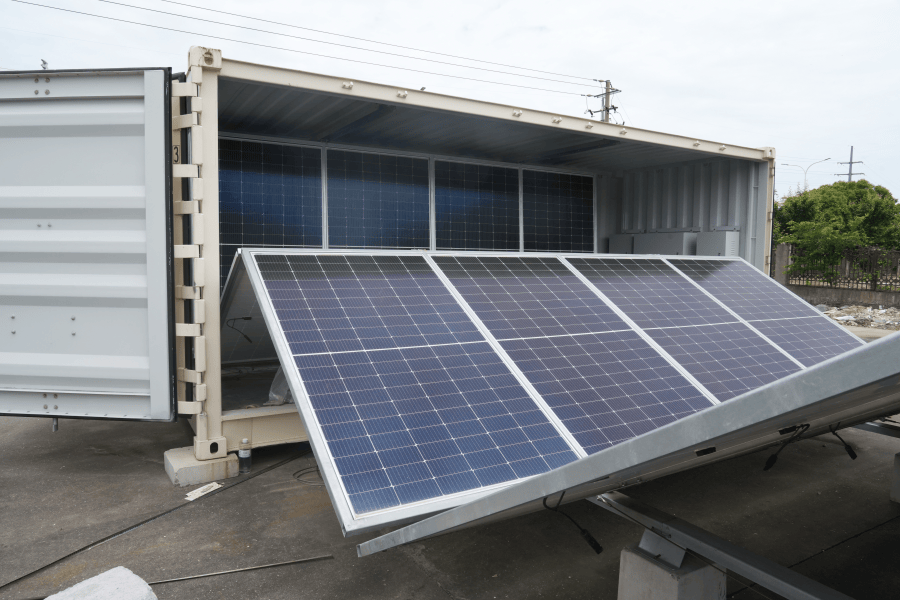
The Checklist You Can't Afford to Miss: Keeping Your Black Start Solar Generator Ready for Action
Honestly, over two decades in this field, I've seen a pattern. Utilities across the US and Europe are investing heavily in off-grid, black start-capable solar + storage systems. It's a smart move for grid resilience. But here's the quiet part no one says out loud at conferences: a lot of these systems are treated like "set-and-forget" assets once they're commissioned. And that, my friends, is where the real risk begins.
In This Article
- The Problem: False Security in a Black Box
- The Agitation: When "Backup" Becomes a Liability
- The Solution: A Pragmatic Maintenance Mindset
- Your Core Maintenance Checklist
- The Expert View: Beyond the Checklist
The Problem: False Security in a Black Box
The phenomenon is simple. You've deployed a sophisticated, containerized BESS paired with a dedicated solar array, designed to island and perform a black start - bringing a section of the grid back online from a complete outage. It passed all the factory acceptance tests (FAT) and site acceptance tests (SAT). The NREL's research on BESS performance consistently shows that initial performance is rarely the issue. The problem is what happens after 12, 18, 24 months of sitting in "standby" mode, cycling occasionally, exposed to the elements.
I've been on site for "routine" checks where we found corrosion on DC busbars because a gasket failed, or battery management system (BMS) communication errors that went unnoticed because the system wasn't under real load. These aren't design flaws; they're maintenance gaps. The system looks operational on the SCADA dashboard, but its guaranteed performance - especially the high C-rate discharge needed for black start sequences - is silently degrading.
The Agitation: When "Backup" Becomes a Liability
Let's agitate that a bit. What's the impact? First, financial. A failed black start attempt during a regional outage isn't just an operational hiccup. It can mean extended downtime for critical infrastructure, commercial losses, and, frankly, regulatory scrutiny. The Levelized Cost of Energy (LCOE) for that backup power skyrockets when it doesn't work when needed.
Second, safety. A poorly maintained lithium-ion battery system is a hazard. Thermal management systems must be flawless. I recall a project in Northern Germany where a quarterly check revealed blocked air filters on the liquid cooling system. The ambient temperature was mild, so the system wasn't stressing. But under the high load of a simulated black start, the temperature gradient across the modules would have been severe, accelerating degradation and risking a thermal event. This is why adherence to UL 9540 and IEC 62933 isn't just for installation; it's a continuous operational mandate.
Finally, reputation. For public utilities, trust is everything. A black start system that fails is a headline risk.
The Solution: A Pragmatic Maintenance Mindset
The solution isn't a magic product. It's a process - a disciplined, documented, and proactive regimen centered on a comprehensive Maintenance Checklist for Black Start Capable Off-grid Solar Generator for Public Utility Grids. This checklist isn't a generic service manual. It's a living document tailored to the unique duty cycle of a standby, high-reliability asset. It shifts the mindset from reactive "fix-it-when-it-breaks" to predictive "prove-it-will-work."
At Highjoule, we build this mindset into our long-term service agreements. Our systems, designed from the cell up to meet UL 9540A and IEEE 1547 standards, come with predictive analytics tools. But even the best tools need a human following a solid checklist. Let me give you a real case from California.
A Case in Point: The California Microgrid
We partnered with a municipal utility in California on an off-grid, black start capable system for a critical services corridor. The challenge wasn't the tech; it was creating a maintenance protocol the local crew could own. We co-developed a checklist that moved beyond "check battery voltage" to items like:
- Validate Black Start Sequence Logic: Quarterly, simulate a grid-loss signal and run the start sequence up to the point of breaker closure (without actually islanding). Log communication times between the generator controller, BMS, and power conversion system (PCS).
- C-rate Verification Test: Bi-annually, perform a controlled, high-power discharge (e.g., 2C for 5 minutes) into a load bank to verify the battery pack can still deliver the peak power required for motor starting loads during black start.
This proactive approach caught a slight drift in PCS response time last year, which was traced to a firmware issue. Fixed during a planned outage, not during a crisis.

Your Core Maintenance Checklist Framework
Based on the standards and what I've seen work, here's the framework your checklist must cover. Think of it in layers:
1. Safety & Compliance Layer (Monthly/Quarterly)
- Physical & Environmental: Inspect container integrity, HVAC/thermal system filters and coolant levels, fire suppression system pressure and charge dates, clear access paths.
- Electrical Safety: Torque check on critical AC/DC connections (thermal cycling can loosen them), insulation resistance testing, ground resistance verification.
2. Performance & Readiness Layer (Quarterly/Bi-Annually)
- Battery Health: Full BMS data review for cell voltage deviation, temperature uniformity, and isolation resistance. Capacity verification test (a full, slow cycle) at least annually.
- Solar Generator Side: Inspect PV array for damage or soiling, verify maximum power point tracker (MPPT) functionality, test off-grid islanding detection and transfer switches.
- Black Start Subsystem: Test the dedicated black start battery (if separate), fuel system and prime mover for any backup diesel genset, and the sequence logic as described in the California case.
3. System Integration & Cyber Layer (Semi-Annually)
- Controls & Communication: Validate all communication links (BMS to PCS, PCS to SCADA, grid-sensing relays). Update and document firmware/software versions. Test remote access and manual override procedures.
- Cybersecurity: Review access logs, ensure all IEC 62443 patches are applied. This is non-negotiable now for any grid-connected asset.
The Expert View: Beyond the Checklist
Here's my insight from the field: a checklist is only as good as the people and the data behind it. When we talk about Thermal Management, you're not just checking if the cooler is on. You're analyzing historical temperature data from the BMS. Is Module #12 consistently 1.5C warmer than the others? That's an early warning, not a pass/fail item.
On LCOE: proactive maintenance directly lowers it. By extending battery life through balanced cycling and optimal temperature control, you're delaying a massive capital expenditure. You're also avoiding the "cost of failure," which dwarfs service contract fees.
This is where Highjoule's approach is different. Our systems provide unparalleled data granularity, and our service teams are trained to interpret it in the context of black start readiness. We don't just send a report; we send a recommendation: "Schedule the load bank test before winter, as we've seen a 5% increase in internal resistance on Bank C."
The final question isn't whether you have a checklist. It's whether your checklist is a bureaucratic exercise or the heartbeat of your grid resilience strategy. Is your off-grid solar generator truly ready to perform its most critical mission, or is it just an expensive insurance policy with fine print you haven't read?
Tags: UL Standard BESS Black Start Grid Resilience Off-grid Solar Utility Grid Maintenance Checklist IEEE
Author
James Zhang
20+ years agricultural energy storage engineer / Highjoule CTO