
Military Base BESS Maintenance: A Proactive Checklist for C5-M Anti-Corrosion PV Containers
Contents
- The Silent Threat to Your Base's Energy Security
- Why "Reactive" Maintenance Fails in Harsh Environments
- The Proactive Shield: Introducing the C5-M Anti-Corrosion Checklist
- Beyond the Checklist: Real-World Insights from the Field
- Partnering for Long-Term Resilience
The Silent Threat to Your Base's Energy Security
Let's be honest. When you're planning a solar-plus-storage project for a military installation, the big-ticket items get all the attention: the megawatt-hours of capacity, the inverter specs, the projected LCOE (that's Levelized Cost of Energy, a key metric for lifetime project cost). What often gets filed under "later" is the long-term care plan for the physical system, especially the containerized unit housing it all. I've walked sites from coastal bases in the Carolinas to arid posts in Nevada, and the story is often the same C a brilliant energy asset slowly being eaten away by its environment.
The real problem isn't just rust on a steel box. It's about mission-critical reliability. A 2023 NREL report on grid resilience highlights that for critical infrastructure, uptime isn't a goal; it's a mandate. When your BESS is part of a microgrid ensuring base operations during an outage, a failure due to a corroded busbar or a compromised seal isn't an "operational hiccup." It's a vulnerability. This is where a generic maintenance plan falls painfully short. You need a protocol built for the specific, punishing reality of a C5-M corrosion environment C that's the ISO standard category for severe industrial and coastal atmospheres with high salinity and chemical exposure.
Why "Reactive" Maintenance Fails in Harsh Environments
Here's the agitating truth I've seen firsthand: by the time you see visible corrosion or get a moisture alarm, the degradation process is already well underway. Reactive maintenance C fixing things after they break C is a cost multiplier in these settings. It leads to unplanned downtime, emergency repair bills that would make your finance officer wince, and can potentially void warranties if the manufacturer's environmental operating conditions weren't met.
Think about thermal management. A BESS's cooling system is its lifeblood. If corrosion clogs air filters or builds up on heat exchanger fins, the system has to work harder. Fans run longer, consuming more of the very energy you're trying to save. More critically, uneven cell temperatures accelerate degradation. A cell operating just 10C above its ideal range can see its lifespan halved. Suddenly, your projected 15-year ROI calculation is out the window. You're not just maintaining a container; you're safeguarding the core financial and operational thesis of your entire energy asset.

The High Cost of "Set and Forget"
I recall a project at a National Guard facility in the Gulf Coast region. They had a well-specified BESS, but the maintenance was an afterthought, a generic schedule from a vendor not familiar with salt-air assault. Within 18 months, we were called in for a performance issue. We found early-stage corrosion on electrical enclosures and significant particulate buildup in the thermal management system. The remediation cost C for specialized cleaning, coating repairs, and component replacement C was nearly 40% of a year's energy savings. It was a tough lesson on false economy.
The Proactive Shield: Introducing the C5-M Anti-Corrosion Checklist
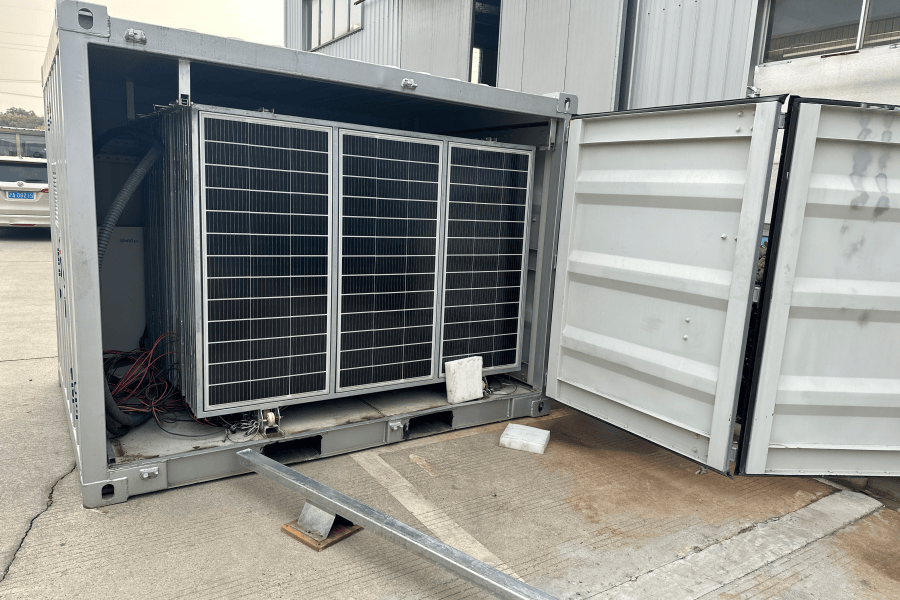
So, what's the solution? It's shifting from reactive to proactive and prescriptive. This is exactly why a dedicated Maintenance Checklist for C5-M Anti-corrosion Pre-integrated PV Container for Military Bases isn't just another document; it's your system's long-term health insurance policy. It translates the ISO C5-M standard from a static spec sheet into a living, breathing action plan for your O&M team.
At Highjoule, when we engineer a pre-integrated container for harsh environments, we don't just use thicker-gauge steel or a standard coat of paint. We design with maintenance access in mind. But the hardware is only half the battle. The checklist is the other half. It breaks down the complex into manageable, scheduled tasks:
- Weekly/Monthly Visual & Sensor Checks: Not just "look at the container," but specifically inspect zinc-nickel coated structural joints for white rust, check door seal integrity with a gauge, verify the positive pressure of the HVAC system is maintained (to keep contaminants out), and cross-reference all sensor data (humidity, temperature, corrosion probes) against baselines.
- Quarterly Detailed Inspections: This is where you go deeper. Torque checks on critical electrical connections (vibration can loosen them), infrared thermography of busbars to spot hot spots caused by corrosion, cleaning or replacing air filters with a specific MERV rating suitable for the locale, and inspecting the dedicated anti-corrosion coating system for any chips or scratches that need touch-up with the exact, manufacturer-specified product.
- Annual Comprehensive Review: This ties it all together. A full performance data analysis, checking the battery management system's (BMS) logs for any cell voltage deviations that might indicate environmental stress, and a functional test of all safety interlocks and the fire suppression system.
This checklist ensures compliance with the environmental assumptions behind UL 9540 and IEC 62933 standards, keeping your safety certifications valid.
Beyond the Checklist: Real-World Insights from the Field
Let me share a more positive case. We deployed a 2 MWh system for a forward-operating base simulation microgrid in Texas. The spec called for C5-M protection, but the client, a savvy energy manager, insisted the maintenance checklist be part of the training for his team and be integrated into their computerized maintenance management system (CMMS).
The challenge was dust storms and wide temperature swings, not just salt. Our checklist was adapted to include more frequent inspections of the air-intake storm shields and a specific procedure for checking moisture traps in the air-handling system post-storm. Three years in, the system's performance degradation is tracking 15% better than the baseline model. Why? Consistent thermal management. The batteries are operating in their sweet spot, which means better efficiency, longer life, and a lower real-world LCOE. The checklist moved from being a compliance item to a key performance driver.

Expert Insight: It's About the System, Not Just the Battery
Here's my take after two decades: decision-makers get fixated on the battery cell chemistry (and rightly so), but the container is the life-support system. Think of C-rate C the speed at which you charge or discharge the battery. In a military app, you might need a high C-rate for a rapid power surge. That generates heat. If your thermal management is compromised by a dirty filter or a struggling fan, the BMS will throttle the C-rate to protect the cells. You won't get the power you need when you need it most. The checklist ensures the ancillary systems are primed to support the battery's full, designed capability.
Partnering for Long-Term Resilience
The core of Highjoule's approach isn't just selling a box that meets UL and IEC standards. It's about delivering predictable, resilient energy outcomes for the life of your project. That means providing a C5-M engineered solution and the tailored roadmap C the checklist C to keep it that way. We've built our service capability around this, with localized technicians trained not just on our hardware, but on executing these environment-specific protocols.
So, the question I leave you with is this: Does your current BESS maintenance plan feel like a generic car manual, or is it a bespoke flight manual written for the specific climate and mission profile of your installation? Getting this right from day one isn't an extra cost; it's the smartest capital preservation strategy you can employ. What's the one environmental factor keeping you up at night regarding your base's energy resilience?
Tags: LCOE BESS Maintenance UL Standards PV Container C5-M Anti-Corrosion Battery Safety Military Base Energy Storage
Author
James Zhang
20+ years agricultural energy storage engineer / Highjoule CTO