
Maintaining Your Mobile BESS for Farm Irrigation: A Practical Checklist for Longevity
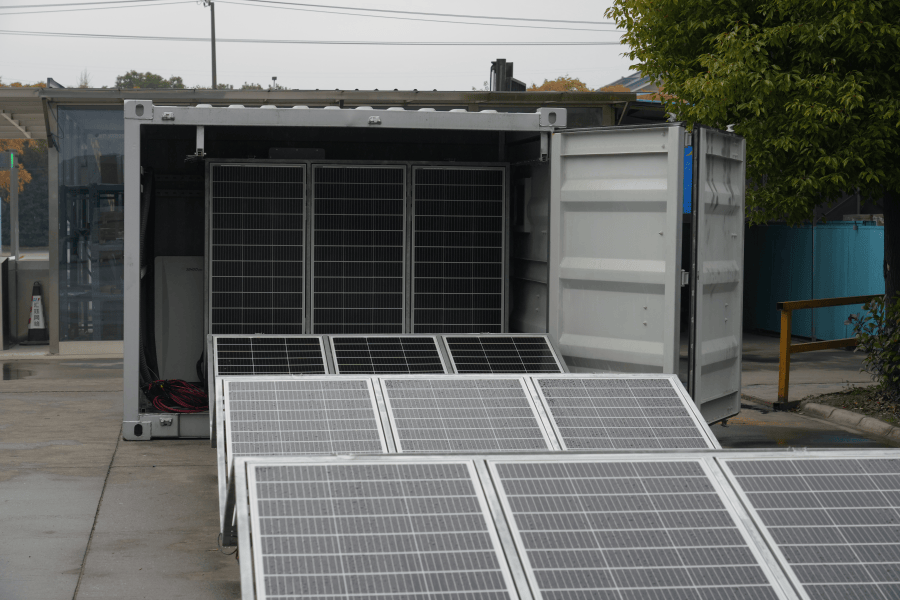
Table of Contents
- The Silent Cost on Your Farm: When "Set-and-Forget" Fails
- Beyond the Spec Sheet: Why IP54 is Just the Starting Line
- Your Practical Maintenance Checklist: From Site Walk to Data Dive
- Real-World Proof: A California Vineyard's Story
- The Expert Angle: It's About LCOE, Not Just kWh
The Silent Cost on Your Farm: When "Set-and-Forget" Fails
Let's be honest. When you invest in a mobile battery energy storage system (BESS) to power your irrigation pumps or pivot systems, the last thing you want is another piece of high-maintenance equipment. You're thinking about water schedules, crop yields, and energy bills. The promise is simple: a rugged, IP54-rated container that sits out there by the field, quietly shifting solar power or cheap grid power to run your pumps when you need it. The expectation? "Set it and forget it."
I've seen this firsthand on site. That expectation is where the trouble starts. In the U.S. and Europe, we're deploying these systems in some of the harshest environments imaginable - dusty plains, humid coastal areas, and places with huge daily temperature swings. A National Renewable Energy Laboratory (NREL) report highlights that improper operation and maintenance can erode 20-30% of a BESS's projected value over its lifetime. For you, that translates directly to higher Levelized Cost of Energy (LCOE) - a fancy term for the real, total cost of every kilowatt-hour your system delivers. A failure during a critical irrigation window? That's not just an energy cost; that's a potential crop yield cost.
The core problem isn't the technology. It's the assumption that an outdoor-rated container is immune to its environment. Dust accumulation on ventilation filters, moisture ingress in connector housings, thermal stress on battery cells from repeated high-power (C-rate) discharges for pumps, and even wildlife intrusion - these aren't theoretical. They're the daily grind that turns a capital asset into a liability.
Beyond the Spec Sheet: Why IP54 is Just the Starting Line
IP54 sounds great on paper: dust-protected and resistant to water splashes. But here's the insider perspective: that rating is a snapshot from a test lab. Real-world farming conditions are a relentless, multi-year endurance test. Thermal management is the silent hero (or villain) of your BESS. The system might handle a 95F day, but what about a week of them, with the internal heat from the batteries themselves? Excessive heat is the fastest accelerator of battery degradation. Conversely, in colder climates, you need to ensure heating systems are functional to preserve performance and safety.
Furthermore, compliance with UL 9540 (the standard for energy storage systems) and IEC 62485 (safety requirements for secondary batteries) isn't a one-time certification. It's a commitment to ongoing safe operation. Your maintenance routine is what keeps the system within those certified safety parameters. A loose DC connection or a faltering cell monitoring board won't trigger an immediate alarm, but over time, they create imbalance, reduce capacity, and in worst-case scenarios, become safety concerns. This is why a structured Maintenance Checklist for IP54 Outdoor Mobile Power Container for Agricultural Irrigation isn't paperwork - it's the playbook for protecting your investment.

Your Practical Maintenance Checklist: From Site Walk to Data Dive
Based on two decades of field deployments with Highjoule, here's a distilled, actionable version of what we run with our clients. Think of it in two parts: the physical walk-around and the digital check-up.
Physical/Visual Inspection (Monthly/Quarterly)
- Enclosure & Site: Check the IP54 integrity. Look for any physical damage, corrosion on hinges/latches, or compromised seals around doors and cable entry points. Ensure the site is clear of debris, vegetation, and pest nests.
- Ventilation & Thermal Systems: Inspect air intake and exhaust vents. Clean or replace filters - this is the #1 issue I see. Listen for abnormal fan noises. Verify coolant levels (if liquid-cooled) and check for leaks.
- Electrical Connections: (Performed by qualified personnel) Visually inspect for signs of overheating (discoloration), corrosion, or loose terminals on main DC and AC disconnects.
- Safety Systems: Verify the clear access to emergency stops and fire suppression system indicators (if equipped). Check first aid and safety signage is legible.
Data & Performance Review (Weekly/Monthly)
- Battery Management System (BMS) Logs: Review for any persistent cell voltage or temperature alarms. Look for growing voltage differences between cell groups - this indicates imbalance.
- Thermal Performance: Track average and maximum module temperatures against ambient temperature. A widening delta can signal filter blockage or cooling system loss of efficiency.
- State of Health (SOH): Monitor the system's calculated SOH trend. A sudden drop is a red flag. Compare actual energy throughput against expected.
- Event Logs: Scrutinize any unscheduled shutdowns or deratings. Was it a grid fault, or an internal protective trip?
This checklist is the baseline. At Highjoule, we bake this logic into our remote monitoring platform for clients, turning data into plain-English alerts like "Filter maintenance likely needed in 3 weeks" or "Cell imbalance detected, scheduling service."
Real-World Proof: A California Vineyard's Story
Let me give you a concrete example. We deployed a mobile, IP54 BESS for a vineyard in Sonoma County. Their challenge was peak shaving - running pumps during the expensive afternoon rate period using stored solar. After 18 months, they reported a slight but noticeable drop in runtime. Our remote data showed normal SOH but creeping average module temperatures.
The on-site checklist run by their technician revealed the issue: the fine, powdery dust from the dry summer roads had completely choked the intake filters, which they hadn't checked since installation. The cooling system was struggling, causing the BMS to derate power to protect the cells. A simple 30-minute filter replacement restored full performance. The lesson? The Maintenance Checklist for IP54 Outdoor Mobile Power Container for Agricultural Irrigation caught a $50 filter issue that was on track to cause thousands in lost value and potential long-term degradation. It's always the simple things.
The Expert Angle: It's About LCOE, Not Just kWh
So, what's the big picture? As an engineer, I don't just see a battery container. I see a financial asset delivering a critical service. Every time you prevent excessive degradation through proactive maintenance, you're directly lowering your system's LCOE. You're extending its profitable life. You're also ensuring it's ready for that 72-hour continuous irrigation run during a heatwave.
The checklist is your primary tool. But the mindset is more important: shift from reactive to predictive. Use the data your modern BESS is already giving you. Partner with a provider that understands the agricultural duty cycle - the high bursts of power, the seasonal dust, the humidity. At Highjoule, our designs for agri-storage emphasize serviceability for this exact reason: easy-access filters, clear diagnostic ports, and local technician training.
What's the one item on your current maintenance routine that you might be overlooking? Maybe it's time for a fresh site walk with a new perspective.
Tags: UL Standard BESS Energy Storage Agricultural Irrigation US Market Europe Market IP54 Outdoor Mobile Power Container Maintenance Checklist
Author
James Zhang
20+ years agricultural energy storage engineer / Highjoule CTO