
Black Start & Military Base Power: Why Manufacturing Standards for Pre-Integrated PV Containers Are Critical
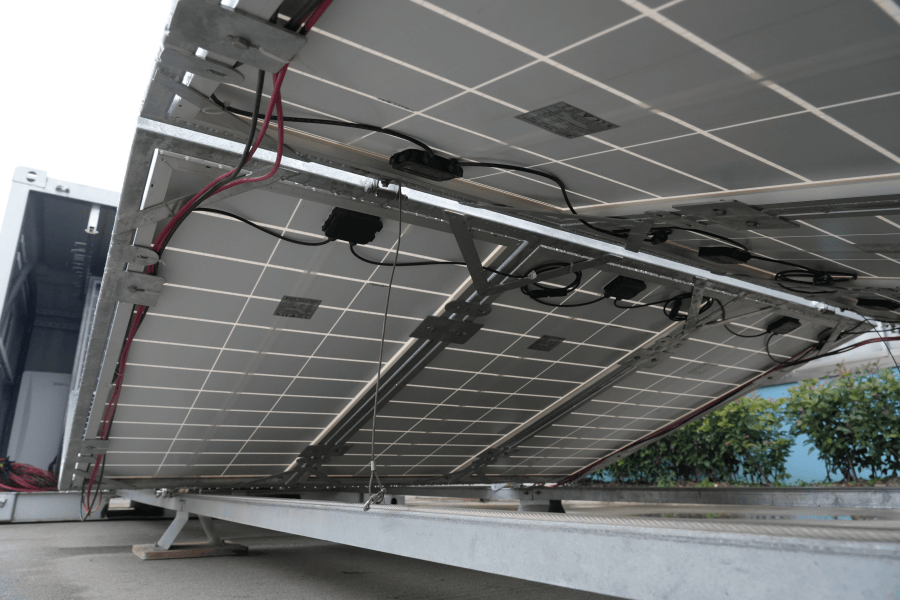
Table of Contents
- The Silent Problem: When "Backup Power" Isn't Enough
- Beyond the Battery: The Integrated System Challenge
- The Solution is in the Build: Manufacturing Standards as the Blueprint
- A Case in Point: Lessons from a European Microgrid Project
- Key Standards Decoded: What to Look For (Beyond the Spec Sheet)
- The Path Forward: Asking the Right Questions
The Silent Problem: When "Backup Power" Isn't Enough
Let's be honest. For a military base or any other mission-critical facility, talking about "backup power" is almost missing the point. The real question isn't just about having stored energy; it's about being able to reboot the entire island from a blackout - a total grid collapse - with zero external support. That's black start capability. And in my 20+ years on sites from Texas to Bavaria, I've seen too many systems that claim to be "black start ready" but are really just a collection of high-spec components thrown into a shipping container, hoping for the best.
The core problem isn't the components themselves. It's in the gaps between them. How does the PV inverter handshake with the battery management system during a chaotic, cold start? Can the thermal management system handle a full-power black start in the Arizona desert at 115F (46C) while keeping the lithium-ion cells in their perfect 77F (25C) sweet spot? These aren't theoretical questions. A failed black start during a real event isn't an inconvenience; it's a catastrophic failure of the facility's primary mission.
Beyond the Battery: The Integrated System Challenge
This is where the pain gets real. A standard commercial or industrial BESS is designed to interact with a live, stable grid. A black-start-capable system for a military base is a different beast. It must become the grid, instantly and reliably. The agitation here is threefold:
- Cost of Failure: Beyond the obvious security risks, the financial and reputational cost of a non-functional system after millions have been invested is staggering.
- Integration Hell: Sourcing PV panels, batteries, inverters, switchgear, and controls separately, then trying to make them work as one flawless unit on-site, is a project manager's nightmare. It extends timelines by months and introduces countless points of failure.
- Long-Term Operational Risk: Even if it works on day one, will it work in 5 years after firmware updates, component wear, and a few extreme weather events? Without a unified manufacturing standard, maintenance becomes a guessing game.
The International Energy Agency (IEA) has consistently highlighted the role of robust, standardized storage in energy security, a principle that applies tenfold to defense infrastructure. You can't have energy security without manufacturing certainty.
The Solution is in the Build: Manufacturing Standards as the Blueprint
So, what's the fix? It's shifting the focus from component procurement to system-level manufacturing standards. When we talk about Manufacturing Standards for Black Start Capable Pre-integrated PV Container for Military Bases, we're talking about a recipe for resilience. This means the entire container - PV generation, battery storage, power conversion, controls, cooling, and safety - is designed, assembled, and tested as a single, unified product in a controlled factory environment before it ever reaches the gate.
Honestly, this is the only way to guarantee performance. At Highjoule, we don't just build to these principles; we bake them into our DNA. Our pre-integrated containers arrive on-site with what we call "plug-and-play resilience." The hard work - the thousands of electrical and software integration points, the seismic bracing, the environmental hardening - is already done, validated, and signed off. This cuts deployment time dramatically and, more importantly, eradicates integration risk.

A Case in Point: Lessons from a European Microgrid Project
I remember a project for a forward-operating communications station in Northern Europe. The challenge was classic: provide off-grid and black-start power in a harsh, remote environment. The initial plan was a multi-vendor, site-integrated approach. After reviewing the risks - especially around winter black start sequences - the spec was changed to demand a single-source, pre-integrated container built to a strict set of military-grade standards, including MIL-STD-810 for environmental testing and specific black start protocols.
The difference was night and day. The pre-integrated unit was commissioned in weeks, not months. During acceptance testing, we simulated a complete blackout at -20C. The system initiated the black start sequence, the batteries supported the PV cold-start, and the microgrid was re-energized seamlessly. The key wasn't a magical component; it was the factory testing against the full system standard that caught and corrected a control logic flaw that would have failed in the field. That's the value, right there.
Key Standards Decoded: What to Look For (Beyond the Spec Sheet)
For decision-makers, here's my straightforward take on what those manufacturing standards must encompass:
- Safety First (UL & IEC): This is non-negotiable. Look for UL 9540 (Energy Storage Systems) and UL 9540A (Fire Test) for the overall system. Individual components should have UL 1973 (batteries), UL 1741 (inverters). For global projects, IEC 62619 is the key IEC standard for industrial batteries. This isn't just paperwork; it's a proven safety pedigree.
- Grid-Forming & Black Start Protocol (IEEE 1547-2018): This revised standard is a game-changer. It explicitly covers grid-forming functions - the ability to create a stable voltage and frequency waveform from scratch, which is the heart of black start. Ensure your system is built and tested to comply with the relevant sections of IEEE 1547.7 also provides guidance on black start planning.
- Thermal Management & C-Rate: This is where engineering insight matters. A black start demands high power fast - that's a high C-rate from the battery. But high C-rate generates immense heat. The manufacturing standard must ensure the cooling system is sized not for steady state, but for these peak, stressful events. We design for the worst-case thermal load, not the average.
- LCOE - The Real Cost: The Levelized Cost of Energy (LCOE) for a military base isn't just about dollar-per-kilowatt-hour. It's about cost-per-assured-kilowatt-hour. A higher upfront investment in a standardized, pre-integrated system slashes LCOE over 20 years by eliminating integration costs, reducing downtime, and guaranteeing performance when it's needed most. The lowest bid component can lead to the highest possible cost of failure.

The Path Forward: Asking the Right Questions
So, where does this leave you? If you're evaluating a black-start-capable solution, move beyond the datasheets. Ask your potential providers:
- "Can you show me the factory test protocol for the full-system black start sequence?"
- "How is your container's thermal system designed to handle the simultaneous peak load of black start and high ambient temperature?"
- "What specific UL and IEC standards is the complete, integrated assembly certified to, not just its parts?"
The goal is a system that doesn't just promise resilience but is manufactured to deliver it from the ground up. That's how you turn a critical vulnerability into a strategic asset. What's the one reliability concern keeping you up at night regarding your base's energy security?
Tags: UL Standard BESS Black Start IEEE Standards Pre-integrated PV Container Military Energy Resilience
Author
James Zhang
20+ years agricultural energy storage engineer / Highjoule CTO