
Manufacturing Standards for Rapid Deployment Off-grid Solar Generators in High-altitude Regions
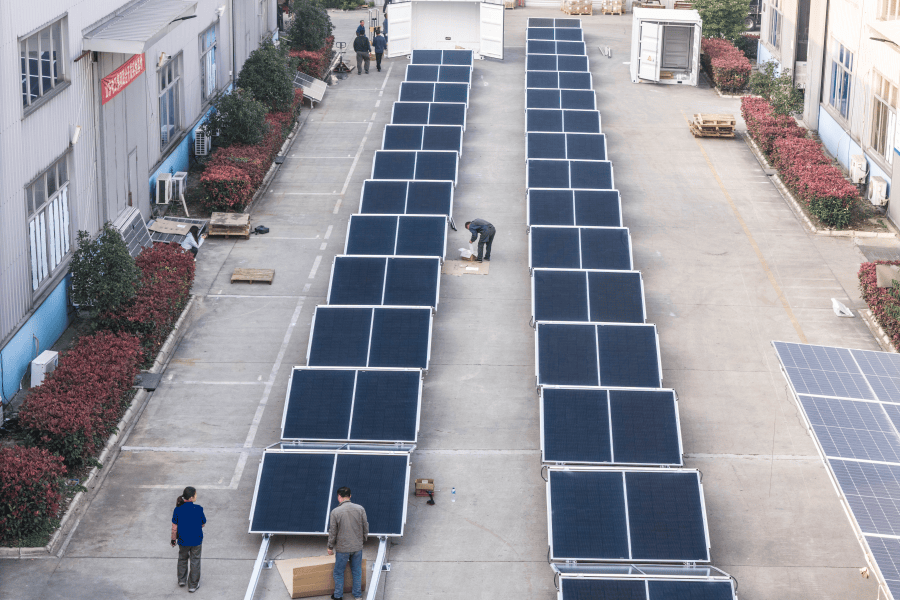
The Unseen Hurdle: Why Your High-Altitude Energy Storage Project Needs a Different Rulebook
Honestly, after two decades of hauling battery containers up mountains, to remote telecom sites, and across alpine microgrids, I've learned one thing the hard way: standard equipment often fails spectacularly when the air gets thin. You're not just battling cold; you're battling physics. I've seen it firsthand on site C a beautifully engineered BESS unit, perfect for a Texas industrial park, gasping for air and derating its output at 3,000 meters in the Andes, leaving a critical mining operation in the lurch. This isn't a niche problem. As the push for decarbonization reaches every corner of the globe, the demand for reliable, rapid-deployment off-grid power in high-altitude regions is exploding. But the manufacturing playbook for sea-level systems? It's a recipe for cost overruns and performance headaches.
Jump to Section
- The Thin-Air Reality Check: More Than Just Cold Feet
- When Standard Gear Falls Short: The Cost of Getting It Wrong
- Building for the Brink: The Core of High-Altitude Manufacturing Standards
- From Blueprint to Peak: A Nevada Case Study
- The Expert's Notebook: Thermal, Electrical, and Why LCOE Tells the Real Story
The Thin-Air Reality Check: More Than Just Cold Feet
Let's clear up a common misconception. When we talk high-altitude, everyone jumps to temperature. Sure, -30C is a beast. But the real silent killer is low atmospheric pressure. At 3,000 meters (about 10,000 feet), air pressure is roughly 30% lower than at sea level. This impacts everything. Cooling systems become less efficient because there's less air mass to carry heat away. Electrical insulation and clearance distances need re-evaluation C the same spark gap behaves differently. Internal components, from capacitors to fans, are often rated for specific pressure ranges. Deploy a standard unit up high, and you're asking components to operate outside their certified design envelope. It's not just about performance; it's a fundamental safety consideration that touches on core standards like UL 9540 and IEC 62933, which assume certain environmental baselines.
When Standard Gear Falls Short: The Cost of Getting It Wrong
The pain points here are brutally tangible. First, performance deration. A battery's power (its C-rate) is often limited by its thermal management system. If your air-cooled system is 30% less effective, your 2MW container might only safely deliver 1.4MW when you need it most. You've paid for capacity you can't use. Second, accelerated wear and tear. Fans and pumps working harder to compensate for thin air fail sooner. I've been on service calls where the maintenance cycle was halved because of altitude stress. Third, and most dangerous, is safety compromise. Thermal runaway risks can increase if monitoring and cooling are not specifically designed for the environment. According to a National Renewable Energy Laboratory (NREL) analysis on BESS in extreme environments, improper environmental adaptation is a leading contributor to long-term reliability issues and increased Levelized Cost of Energy (LCOE). You're not just buying a container; you're buying a 15-20 year asset. Its operating profile determines your financial return.

Building for the Brink: The Core of High-Altitude Manufacturing Standards
So, what does "Manufacturing Standards for Rapid Deployment Off-grid Solar Generator for High-altitude Regions" actually mean on the factory floor? It's a holistic design and build protocol that goes beyond slapping a bigger heater on a standard unit. At Highjoule, our framework is built on three pillars:
- Pressure-Compensated Thermal Design: This means oversizing heat exchangers, selecting fans with different performance curves, and often moving towards liquid cooling for critical components. It's about designing for the actual heat transfer coefficient at altitude, not the textbook sea-level value.
- Altitude-Derated Component Selection: Every relay, contactor, and transformer is specified with its altitude rating explicitly confirmed. We use components certified for 5000m operation, not just 2000m. This is non-negotiable for meeting the true intent of IEEE 1547 for interconnection safety and reliability.
- Rapid Deployment DNA: "Rapid" doesn't mean fragile. It means modular, pre-tested, and containerized with altitude-specific settings pre-loaded. Think of it as a plug-and-play unit where the "plug" includes high-altitude calibration. Our units ship with commissioning protocols that account for pressure-adjusted voltage levels and cooling system setpoints.
This integrated approach is what allows us to offer a competitive LCOE even for these challenging projects. By engineering the headaches out upfront, we minimize OpEx and maximize availability over the system's lifetime.
From Blueprint to Peak: A Nevada Case Study
Let me give you a real example. We had a client, a mid-tier mining company, setting up a new exploratory site in the Nevada mountains at 2,800 meters. Their challenge: power for camp and drilling, zero grid connection, and a six-month window to be operational. Diesel was their baseline, but fuel logistics were a nightmare and ESG goals pushed them to solar+storage.
The "standard" BESS quotes they got were all caveated with massive derating factors and scary maintenance clauses. Our solution was a pre-integrated, off-grid solar generator system built to our high-altitude standard. The key differentiators in deployment were:
- Pre-commissioning at a simulated altitude chamber in our partner's lab to validate thermal performance.
- All electrical gear with documented 3000m+ ratings, simplifying the local AHJ (Authority Having Jurisdiction) approval.
- A hybrid cooling system that seamlessly switched modes based on ambient pressure and temperature, optimized for the daily swing.
The system was air-lifted in four modules and was producing power within 72 hours of ground assembly. Two years on, its availability is over 98%, and the mine's diesel consumption for base load is zero. The project paid back faster because the system delivered its full, rated power from day one. That's the value of a purpose-built standard.
The Expert's Notebook: Thermal, Electrical, and Why LCOE Tells the Real Story
If you take one thing from this chat, let it be this: Always ask for the altitude derating curve. Any reputable manufacturer should be able to provide a graph showing expected power output and cooling capacity versus elevation. If they can't, that's a red flag.
Here's a simple way to think about the key technical interplay:
| Factor | Sea-Level Thinking | High-Altitude Reality |
|---|---|---|
| Thermal Management | Air density is ~1.2 kg/m3. Standard fans work. | Air density can be <0.9 kg/m3. You need more airflow or liquid assist. |
| Electrical Clearance | Designed for standard atmospheric pressure. | Lower pressure can reduce dielectric strength. Creepage/clearance may need increase per IEC 60664-1. |
| System C-rate | Defined by battery chemistry & BMS. | Effectively capped by the cooling system's altitude-adjusted capacity. |
| True LCOE | Calculated on nameplate capacity. | Calculated on altitude-available capacity and altitude-impacted lifetime. |
The International Energy Agency (IEA) has highlighted the critical role of fit-for-purpose storage in enabling the renewable transition in remote areas. This isn't just a technical tweak; it's an enabler of energy equity and industrial development.

For companies like Highjoule, this deep dive into environmental specifics isn't an extra C it's the core of our engineering service. It allows us to stand behind our performance warranties with confidence, whether the unit is destined for the Alps or the Rockies. The goal is to give you a system that you can forget about, that just works, so you can focus on your core business, not on managing an underperforming power plant.
So, what's the altitude specification on your next project's RFP? Getting that detail right in the planning phase is the first, and most crucial, step to a successful deployment.
Tags: UL Standard BESS Energy Storage Renewable Energy Off-grid Solar IEC Standard High-altitude Deployment
Author
James Zhang
20+ years agricultural energy storage engineer / Highjoule CTO