
20ft Containerized 1MWh BESS for Island Microgrids: A Real-World Case Study
Contents
- The Island Problem: More Than Just Scenery
- Why Standard Grid Solutions Fail on Remote Shores
- The Containerized Answer: A Real-World Blueprint
- Inside the Box: The Tech That Makes It Work
- Beyond the Install: The Real Measure of Success
- Is a Containerized System Right for Your Project?
The Island Problem: More Than Just Scenery
Picture this: a stunning island community. The tourism is booming, local businesses are growing, but the constant hum in the background isn't the ocean - it's the diesel generators. I've been on site for these projects, and honestly, the smell of diesel and the noise are the first things you notice. For remote communities, islands, and industrial sites far from the grid, this isn't just an inconvenience; it's a massive, multi-faceted problem. The cost of shipping fuel is astronomical and volatile. Every kilowatt-hour comes with a carbon cost that feels increasingly out of step with the pristine environment. And the reliability? Let's just say I've seen more than one hotel's bad review start with "the power went out..."
This is the core dilemma for thousands of locations. According to the International Renewable Energy Agency (IRENA), islands often pay two to ten times more for electricity than mainland communities, with diesel accounting for up to 90% of their power. The push for solar is obvious, but the sun doesn't shine at night, and clouds roll in. Intermittency kills the economics and the reliability of a pure solar play.
Why Standard Solutions Fail on Remote Shores
So, why not just drop in a standard battery system? In my two decades, I've learned that "standard" rarely fits the "remote." The challenges are unique:
- Logistical Nightmares: Getting equipment to a dock, then onto a barge, then onto a rocky shore with limited crane access - it's a puzzle where every piece is heavy and expensive.
- Space at a Premium: Land is scarce and valuable. A sprawling, custom-built battery room isn't an option.
- Harsh Environments: Salt spray, sand, high humidity, and temperature swings. Off-the-shelf components corrode and fail fast.
- Skilled Labor Shortage: You can't assume there's a certified BESS technician living on the island. The system must be simple to commission and maintain.
I remember a project in the Caribbean where the initial design called for a multi-container, piecemeal system. The logistics quote alone was a project killer. We had to think differently, more integrated.

The Containerized Answer: A Real-World Blueprint
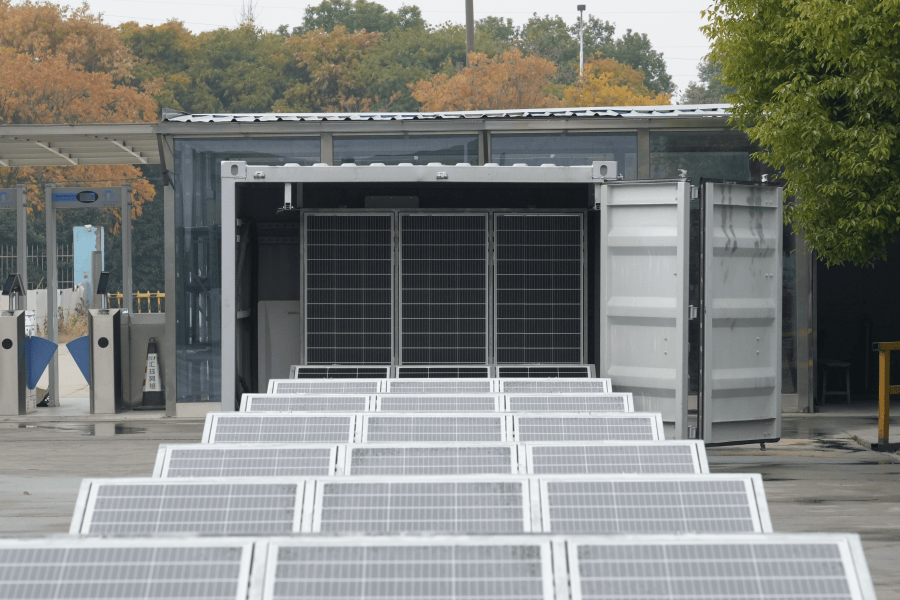
This is where the real-world case study of a 20ft High Cube, 1MWh solar storage system becomes the blueprint. It's not a theoretical concept; it's a solution we've deployed, and it directly tackles those pain points. Think of it as a "power plant in a box," but one that's been pre-engineered for the hardest trips and the toughest environments.
Let's talk about a project we completed for a resort and microgrid on a Pacific island. The goal was to slash diesel use by over 70% and provide 24/7 clean power. The challenges were textbook: limited laydown area, corrosive air, and a tight timeline before the high season.
The solution was a single 20ft container, pre-integrated at our facility with:
- A 1MWh lithium-iron-phosphate (LFP) battery bank (the safer chemistry choice, hands down).
- All power conversion systems (PCS), HVAC, and fire suppression built-in.
- Full compliance with UL 9540 and IEC 62933 standards - non-negotiable for insurance and financing, especially in the US and EU markets.
Because it was one container, it shipped as a single unit. It was lifted off the ship, placed on a simple concrete pad, connected to the solar field and the existing diesel gensets (which now act purely as backup), and was online in days, not months. The local team was trained on a simple, visual interface for basic monitoring. The complex stuff? We handle that remotely.
Inside the Box: The Tech That Makes It Work
Okay, let's get under the hood, without the jargon. The magic of this system isn't just the batteries; it's how they're managed. Here's what matters:
- Thermal Management: This is the unsung hero. Batteries degrade fast if they're too hot or too cold. Our system uses a closed-loop liquid cooling system that's incredibly efficient. It keeps the cells at their ideal temperature with minimal energy use, which is critical when every kWh of overhead is a kWh not powering the community. Compared to standard air-conditioning, it's like comparing a scalpel to a sledgehammer.
- The Right C-rate: You'll hear engineers throw this term around. Simply put, it's how fast you charge or discharge the battery. For a microgrid, you don't always need a super-fast "sports car" battery. You need a "reliable workhorse." We optimize for a moderate C-rate, which reduces stress on the cells, extends the system's life to well over 10 years, and improves the overall Levelized Cost of Energy (LCOE) - the true measure of your cost per kWh over the system's lifetime.
- Grid-Forming Inverters: This is the key tech that lets the BESS create a stable grid from scratch, syncing with solar and seamlessly kicking in the diesel genset only when absolutely needed. It's the brain of the operation.
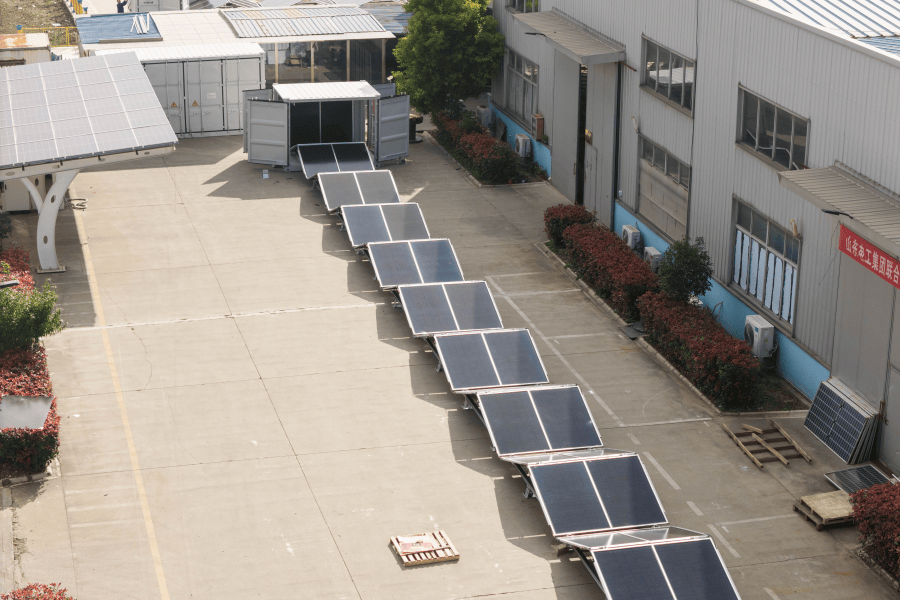
Beyond the Install: The Real Measure of Success
The installation is just day one. I've seen projects fail because no one thought about year two or five. For Highjoule, the service model is part of the product. With remote monitoring, we can predict maintenance needs, update software, and troubleshoot 90% of issues without sending a team on a costly trip. For the island resort, our quarterly performance reports show them exactly how much diesel they've saved, how much carbon they've avoided, and the health of their asset. That transparency builds trust and turns a capital expense into a clear, measurable ROI.
The data speaks for itself. The National Renewable Energy Lab (NREL) has shown that optimized solar+storage microgrids can reduce lifecycle costs by up to 30% compared to diesel-only systems. Our case study is living proof of that math.
Is a Containerized System Right for Your Project?
If you're looking at a remote site, an island grid, or even an industrial facility with unreliable power, the pre-fabricated, containerized 1MWh system is no longer just an option - it's often the most sensible starting point. It de-risks the project through simplified logistics, proven technology, and built-in compliance.
The question isn't really if you should move to solar and storage, but how to do it without the headaches. What's the single biggest operational cost or reliability headache your remote site is facing right now?
Tags: UL Standard BESS LCOE Europe US Market Renewable Energy Solar Storage Island Microgrid
Author
James Zhang
20+ years agricultural energy storage engineer / Highjoule CTO